






Why Bother with a Three-Minute Break?
Prolonged sitting, especially with the forward-hunch posture common to computer work, puts continuous strain on your body. This can lead to tight chest muscles, weakened upper back muscles, and chronic tension in the neck and shoulders. Taking micro-breaks
to stretch every hour or so can work wonders. Studies suggest that even short one-to-three-minute movement breaks can reduce discomfort and improve productivity. The goal isn't a full workout; it's to interrupt the cycle of static posture, increase blood flow, and give your muscles a much-needed release before tightness turns into pain.
1. The Seated Neck Release
This is a gentle stretch to ease tension in the sides of your neck and upper shoulders, an area that holds significant stress. Sit tall in your chair with your feet flat on the floor. Gently tilt your right ear toward your right shoulder, stopping when you feel a mild stretch. Do not force it or pull with your hand. The weight of your head is enough. To deepen the stretch slightly, you can hold onto the side of your chair with your left hand. Hold for 20-30 seconds, breathing calmly, then slowly return to the center and repeat on the left side. This targets the upper trapezius and levator scapulae muscles, which often get tight from holding your head in one position.
2. The Doorway Chest Opener
Hunching forward shortens the muscles in your chest. This stretch directly counteracts that. Stand in an open doorway and place your forearms on the frame, with your elbows just below shoulder height. Step forward with one foot until you feel a comfortable stretch across your chest and the front of your shoulders. Keep your core engaged to avoid arching your lower back. Hold the position for 20-30 seconds, focusing on deep, even breaths. This is one of the most effective ways to open up your posture and relieve the strain on your upper back muscles, which are often overworked trying to pull your shoulders back.
3. The Overhead Reach and Triceps Stretch
This movement lengthens the sides of your body and your triceps. While seated or standing, interlace your fingers and push your palms toward the ceiling, straightening your arms. Try to push your arms up and slightly back to feel a stretch through your shoulders and upper back. Hold for 15 seconds. From there, release your hands and bring your right arm overhead. Bend your elbow so your right hand is behind your head. Use your left hand to gently pull your right elbow toward your head for a triceps stretch. Hold for 15-20 seconds and switch sides.
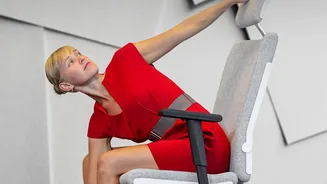
4. The Seated Spinal Twist
A stiff mid-back can contribute to neck and lower back pain. This gentle twist helps restore mobility. Sit sideways in your chair, or sit forward with your feet firmly planted. Keeping your hips facing forward, gently twist your upper body to the right, using the chair back for a light assist. Only rotate as far as is comfortable. You should feel the stretch between your shoulder blades, not in your lower back. Hold for a few breaths, then slowly return to the center and repeat on the other side. This movement targets the thoracic spine, which often becomes rigid from hours of sitting still.
5. The Forearm and Wrist Extender
Hours of typing can lead to tight, sore forearms and wrists. To counter this, extend your right arm in front of you with your palm facing up. With your left hand, gently pull your right fingers down and back toward your body until you feel a stretch in your forearm. Hold this for 20 seconds. Next, flip your hand so your palm faces down. Use your left hand to gently press the back of your right hand toward you. Hold for another 20 seconds. Repeat the entire sequence on your left arm. This helps relieve the repetitive strain from keyboard and mouse use.