



Why Look Beneath the Surface?
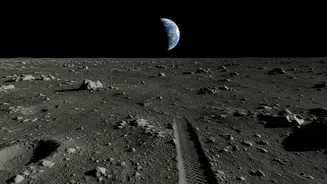
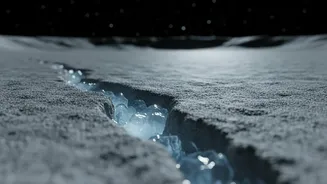
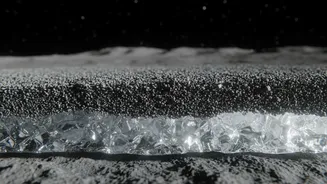
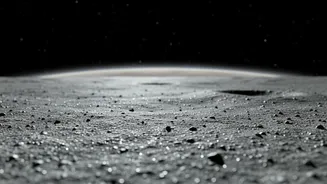
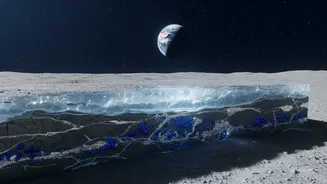
The Moon’s surface is harsh, exposed to extreme temperatures and radiation. But just beneath the dusty topsoil, known as regolith, conditions could be right for preserving valuable resources. The most sought-after is water ice, which could be used for drinking
water, producing breathable oxygen, and creating rocket fuel for missions deeper into the cosmos. Beyond water, the lunar subsurface holds a treasure trove of minerals. Identifying and mapping these resources, a concept known as In-Situ Resource Utilisation (ISRU), is critical for making future lunar habitats sustainable. Instead of hauling everything from Earth at enormous cost, future explorers could 'live off the land.' ISRO’s Chandrayaan missions are equipped with sophisticated instruments designed to peer beneath this veil of dust and create a resource map for the future.
A Thermal Detective Called ChaSTE
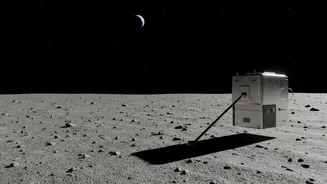
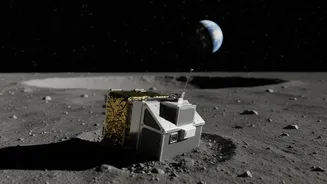
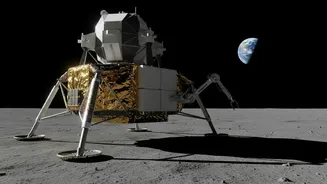
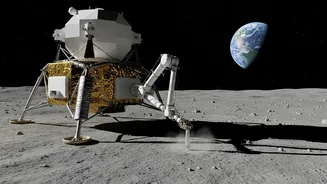
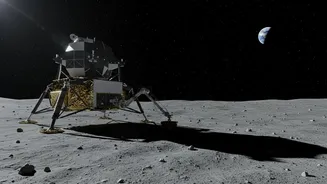
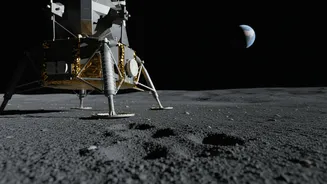
One of the star instruments of the Chandrayaan-3 mission is Chandra’s Surface Thermophysical Experiment, or ChaSTE. This payload, onboard the Vikram lander, did something no mission had done before at the lunar south pole: it physically penetrated the top 10 centimetres of the regolith to measure its temperature profile. The data revealed a surprisingly large temperature difference between the surface and just a few centimetres below. This indicates that the lunar topsoil is an excellent insulator. This is crucial information because it helps scientists understand how heat from the sun penetrates the ground, which in turn determines how stable water ice might be just beneath the surface in the polar regions. ChaSTE's findings suggest that even in sunlit areas near the poles, the insulating properties of the soil could help preserve shallow ice deposits.
Zapping Rocks for Elemental Clues
The Pragyan rover carries two powerful tools for on-the-spot chemical analysis: the Laser-Induced Breakdown Spectroscope (LIBS) and the Alpha Particle X-ray Spectrometer (APXS). LIBS fires an intense laser pulse at the lunar soil, vaporising a tiny amount into a plasma. By analysing the light from this plasma, scientists can determine which elements are present. This method made the first-ever in-situ confirmation of Sulphur in the south polar region, something orbiters couldn't definitively do. APXS complements this by bombarding the surface with alpha particles and X-rays to detect major rock-forming elements like silicon, aluminium, calcium, and iron. Together, LIBS and APXS provide a ground-truth inventory of the elemental building blocks available on the Moon, directly informing scientists about the mineral resources available for extraction.
Radar Vision to See the Unseen
While landers and rovers provide detailed spot-checks, ISRO's Chandrayaan-2 orbiter uses a powerful instrument to map the subsurface from above. The Dual-Frequency Synthetic Aperture Radar (DF-SAR) sends radio waves that can penetrate several metres below the lunar surface. By analysing how these signals bounce back, scientists can differentiate between rock, loose regolith, and, most importantly, water ice. The radar's L-band and S-band frequencies are specifically designed to detect the unique signature of ice deposits. Recent analysis of DF-SAR data has revealed strong evidence of subsurface ice in permanently shadowed craters near the south pole. Unlike optical cameras, radar can see through the darkness of these craters and penetrate layers of dust that may hide vast reserves of frozen water, making it an indispensable tool for lunar prospecting.
Putting the Pieces Together for a Lunar Blueprint
No single instrument tells the whole story. The true power of ISRO's approach lies in combining the data from all these different payloads. The orbital radar from Chandrayaan-2 provides a broad map, identifying promising regions for resources. The thermal data from ChaSTE on the Chandrayaan-3 lander helps refine models of where ice could be stable at shallow depths. Then, the rover's elemental analysis with LIBS and APXS provides the crucial ground-truth, confirming the presence of specific minerals and elements in the soil. This multi-layered approach, from orbit to the surface, allows ISRO to build a comprehensive and reliable blueprint of the Moon's subsurface. This detailed understanding is what transforms the speculative hunt for resources into a data-driven plan, paving the way for India's and humanity's future on the Moon.