




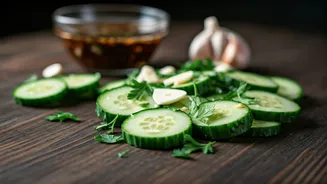


The Classic: Oi Muchim (Spicy Cucumber Salad)
If you've ever enjoyed the collection of small side dishes, or banchan, at a Korean restaurant, you've likely met Oi Muchim. This is the quintessential Korean cucumber salad, celebrated for its addictive combination of spicy, sweet, and savory notes.
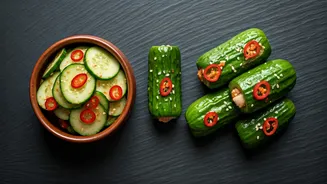
The preparation is incredibly quick and straightforward, often taking just a few minutes. Thinly sliced cucumbers are tossed in a dressing made from a few key Korean pantry staples. The star of the show is gochugaru (Korean chili flakes), which provides a vibrant red hue and a clean, fruity heat that's less intense than you might expect. This is balanced with the nutty aroma of toasted sesame oil, a touch of soy sauce for umami depth, minced garlic, and a little sugar to round out the flavors. Some recipes also add a splash of rice vinegar for a tangy kick. The beauty of Oi Muchim is its versatility; you can adjust the spice and sweetness to your liking, and it pairs perfectly with everything from grilled meats to a simple bowl of steamed rice.
A Note on Korean Chilli: Gochugaru vs. Gochujang
When exploring Korean recipes, you'll frequently encounter two types of chili products: gochugaru and gochujang. While both are made from Korean red peppers, they are not interchangeable. Gochugaru is a dry chili powder or flake, prized for its smoky flavor and ability to add pure heat and color to dishes like kimchi and salads. Gochujang, on the other hand, is a thick, fermented paste. It’s made by combining gochugaru with glutinous rice, fermented soybean powder, and salt. This fermentation process gives gochujang a complex flavor that is not just spicy, but also deeply savory, salty, and slightly sweet. Think of gochugaru as a seasoning that adds a direct spicy punch, while gochujang is a foundational ingredient used to build rich sauces and marinades. For most cucumber salads, gochugaru is the preferred choice for its clean heat and ability to lightly coat the vegetable without creating a heavy sauce.
The Showstopper: Oi Sobagi (Stuffed Cucumber Kimchi)
For those who want to take their cucumber game to the next level, Oi Sobagi is the answer. This dish is a type of fresh kimchi where small, crisp cucumbers are slit lengthwise to create a pocket, which is then filled with a flavourful stuffing. Unlike cabbage kimchi, which can ferment for weeks, Oi Sobagi is often enjoyed fresh or after just a day or two of fermentation, making it a much quicker project. The process involves first salting the cucumbers to draw out excess water, which keeps them crunchy. While they rest, a stuffing paste is made. This typically includes a mix of gochugaru, fish sauce, garlic, ginger, and finely chopped vegetables like Korean chives (buchu) and sometimes shredded carrots or radish. Once the cucumbers are brined and rinsed, the spicy paste is carefully rubbed into the crevices. The result is a visually stunning dish that delivers a powerful crunch and a burst of complex, spicy, and tangy flavors with every bite. It's a perfect, refreshing side for a hot summer day.
The Mild Alternative: Non-Spicy Cucumber Salad
Not everyone enjoys intense heat, but that doesn't mean you have to miss out. The core elements of Korean cucumber salads—the crisp texture and the savory, nutty notes of sesame—can be enjoyed without the spice. A non-spicy version, sometimes called Oi Namul, focuses on the other pillars of Korean flavor. Simply omit the gochugaru and you're left with a delightfully refreshing dish. Toss sliced cucumbers with rice vinegar, a touch of sugar or maple syrup, minced garlic, and plenty of toasted sesame oil and sesame seeds. This creates a light, tangy, and nutty salad that is just as compelling. It's a fantastic option for kids or for meals where you want a cooling counterpoint to other spicy dishes on the table. You can also add other vegetables like thinly sliced onions or carrots for extra crunch and sweetness.