




The Drink of the Gods
So, what exactly is Yerba Mate? At its core, it is a traditional herbal tea made from the leaves and twigs of the Ilex paraguariensis plant, a species of holly native to South America. For centuries, indigenous communities like the Guaraní have revered
it, considering it a sacred gift from the gods used to boost stamina and vitality. The flavour profile is distinct—earthy, grassy, and somewhat bitter, often compared to a strong green tea. While it can be an acquired taste, its unique character is part of its growing allure. Unlike the tea and coffee that dominate most of the world, mate offers a different kind of daily ritual, one steeped in history and community.
A Ritual Steeped in Tradition
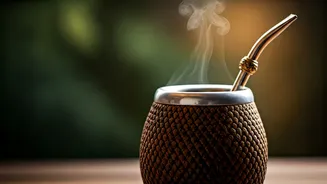
In countries like Argentina, Uruguay, and Paraguay, Yerba Mate is far more than just a beverage; it is a cultural cornerstone. The traditional method of consumption is a social ceremony in itself. Friends and family gather in a 'mate circle', sharing a single gourd (the 'mate') filled with the dried leaves. They sip the infusion through a metal straw called a 'bombilla', which has a filter at its end to strain the leaves. The gourd is passed from person to person, with one individual, the 'cebador' or server, refilling it with hot water for each participant. This act of sharing from a single vessel is a powerful symbol of friendship, hospitality, and community trust. It’s a moment to slow down, connect, and converse—an experience woven into the fabric of daily life.
Energy Without the Jitters?
Much of the buzz around Yerba Mate comes from its unique stimulant properties. It contains three key compounds: caffeine, theobromine (the mood-lifter found in chocolate), and theophylline. While it has a caffeine content similar to a cup of coffee, users often report a different kind of energy boost—one that is more balanced, sustained, and focused, without the notorious 'jitters' or subsequent crash associated with coffee. Beyond energy, Yerba Mate is packed with antioxidants and polyphenols, which are believed to help fight inflammation. Some studies have pointed to potential benefits in managing cholesterol and aiding weight management, making it a popular choice in health and fitness circles.
Know The Full Picture
While the benefits are compelling, it’s important to approach Yerba Mate with a complete understanding. Some studies have noted a correlation between long-term, heavy consumption of traditionally prepared mate and an increased risk of certain cancers of the mouth and throat. However, researchers believe this risk is primarily linked to the very high temperature—often scalding hot—at which the drink is traditionally consumed, rather than the herb itself. By preparing mate with water that is hot but not boiling (around 70-80°C), this risk can be significantly mitigated. As with any caffeinated beverage, moderation is key, and those sensitive to caffeine may experience side effects like restlessness or trouble sleeping.
Your Guide to Getting Started in India
Curious to try it? You no longer need to travel to South America. Yerba Mate is becoming increasingly accessible in India, available through online retailers and in specialty food stores. For an easy entry point, you can find it in convenient tea bags or as loose-leaf tea that can be prepared in a French press or teapot. Simply steep the leaves in hot (not boiling) water for a few minutes. For those wanting a more authentic experience, traditional gourds and bombillas are also available online. The growing interest in India reflects a broader trend of consumers seeking new, healthy, and culturally rich beverage options beyond the usual chai or coffee.