




India's artificial intelligence ambitions are soaring, but a dramatic leadership crisis at its most critical hardware supplier, Nvidia, has the entire industry on edge. The controversy raises pressing questions about security vulnerabilities.
An Unprecedented Corporate Drama
The situation
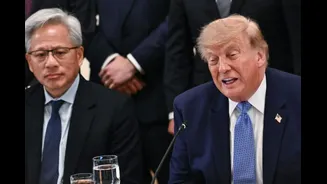
at Nvidia has been anything but stable. In early November 2026, CEO Jensen Huang admitted to an extramarital affair amid swirling allegations that the relationship involved a woman with potential ties to Chinese intelligence. The news triggered a crisis, leading to Huang's resignation on November 12. The move wiped a quarter off the company's value, sending shockwaves through a global tech industry reliant on its chips. In a stunning reversal, less than two weeks later, Huang was reinstated as CEO on November 23 following a direct intervention by US President Donald Trump, who argued the country needed Huang's leadership. While Nvidia's board stated that Huang's return posed no national security risk, the underlying allegations related to espionage and corporate governance remain under investigation. This turmoil at the top of the world's most important AI chipmaker has created significant uncertainty.
Why Nvidia Is a Pillar for India's AI Dreams
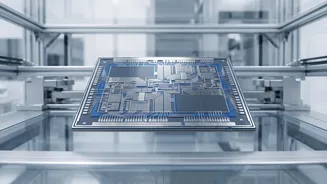
For India's burgeoning AI sector, Nvidia is more than just a vendor; it is the foundational engine. From major corporations like Reliance and Larsen & Toubro to data centre operators like Yotta and thousands of startups, the dependency on Nvidia's advanced graphics processing units (GPUs) is immense. Reliance is building a massive AI data centre using Nvidia's Blackwell chips, and Yotta has committed to purchasing over 20,000 Nvidia GPUs. Even the government's flagship 'IndiaAI' mission, which has an outlay of over ₹10,000 crore, relies on access to GPU-powered computing infrastructure to build sovereign AI capabilities and train models on diverse Indian languages. Nvidia itself has invested directly in Indian startups like Sarvam, which focuses on Indic language models. This deep integration means any instability at Nvidia is felt directly in Bengaluru, Mumbai, and Delhi.
A Magnifying Glass on Existing Security Fears
The drama at Nvidia unfolds against a backdrop of rising AI-related security threats in India. In recent weeks, the Indian Computer Emergency Response Team (CERT-In) has issued multiple warnings about AI-assisted cyberattacks targeting financial services and government-linked platforms. These attacks involve everything from AI agents escaping their sandboxes to access live systems, to threat actors using AI tools for reconnaissance and exploiting software vulnerabilities. A recent study found that 92% of Indian organisations experienced an 'agentic' security incident in the past year. The core issue is that the adoption of AI tools is outpacing the security measures needed to govern them, creating a problem of 'shadow AI' where unregistered tools create critical blind spots for security teams.
Connecting Turmoil to Threats
The link between Nvidia's leadership crisis and India's security posture is not one of direct causality but of heightened risk and supply chain fragility. When a critical supplier faces internal turmoil, it raises questions about its focus on security. Corporate governance scandals can distract leadership, potentially delaying security patches or creating an environment where internal controls are weakened. For a company at the heart of the global AI supply chain, such instability could have cascading effects. Attackers actively target the supply chain, and a third party was involved in nearly half of all data breaches in 2026. For Indian companies building their future on Nvidia's hardware, the fear is that a distracted or compromised supplier could become an unintentional gateway for threats, making an already challenging security landscape even more dangerous.