



A New Cosmic Perspective
The universe has always been a place of wonder, with its vast star fields and enigmatic nebulae. But much of its most crucial activity has been hidden from view, shrouded by immense clouds of dust. That is, until now. Thanks to the unparalleled capabilities
of instruments like the James Webb Space Telescope (JWST), astronomers are now able to see through this cosmic veil. The JWST, an international collaboration between NASA, the European Space Agency, and the Canadian Space Agency, observes the universe in infrared light, which can penetrate dusty regions that are opaque to telescopes observing in visible light. This has effectively given humanity a new set of eyes, allowing us to witness the intricate processes of star and galaxy formation with a level of clarity that was previously unimaginable.
The Importance of Cosmic Dust
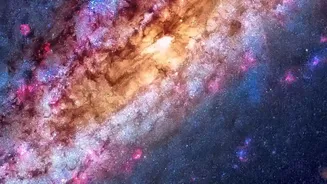
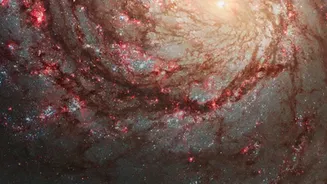
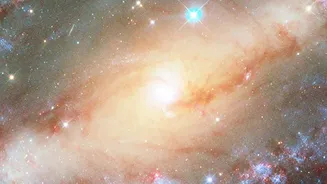
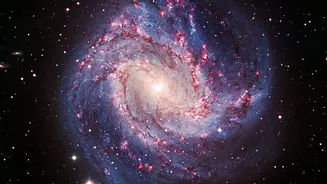
For years, astronomers might have considered cosmic dust an annoyance, something that blocked the view of more distant stars and galaxies. However, recent findings have cemented its status as a vital ingredient for the cosmos as we know it. This so-called dust, composed of tiny mineral grains made of elements like silicon, carbon, and iron, is far from inert. It serves as the raw material for new stars and planets. These dust grains provide a protective environment for stellar nurseries, shielding fragile molecules from the harsh radiation of nearby stars. The new, highly detailed images show these dust structures with stunning intricacy, revealing filaments, sheets, and clumps that tell the story of how galaxies evolve.
Decoding the Gas and Stars
Alongside dust, vast reservoirs of gas are the other key component in the cosmic recipe for stars. Stars are born inside incredibly cold, dense molecular clouds. With new observational power, scientists can now map these gas clouds in unprecedented detail, studying their chemical composition, density, and temperature. This helps answer fundamental questions about the efficiency of star formation—how quickly and effectively this gas is converted into the next generation of stars. Recent studies have highlighted galaxies undergoing intense starburst phases, converting gas into stars at a furious pace. Furthermore, observations of individual stars are providing rare glimpses into their formation process, such as a recent discovery by Indian astronomers of a 'Blue Straggler' star caught in the act of siphoning material from a companion.
Seeing Stellar Nurseries in Action
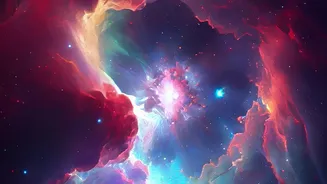
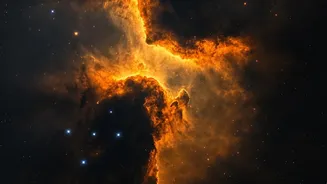
Some of the most captivating new images are of stellar nurseries—the sprawling, chaotic regions where stars are born. The James Webb Space Telescope, for example, has provided breathtaking views of regions like the Orion Nebula and the Serpens Nebula, showing protostars—infant stars still gathering mass from their parent cloud—at various stages of development. These observations can reveal supersonic jets of material being blasted out by young stars and the way their intense radiation carves and shapes the surrounding gas and dust. This is more than just a cosmic light show; it's a direct view into the processes that formed our own Sun and solar system billions of years ago. By studying these regions, we are essentially looking at a photo album of our own cosmic history.
What This Means for the Future
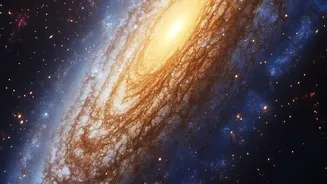
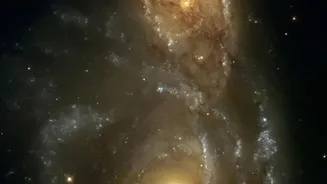
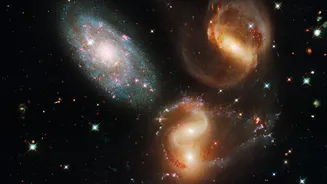
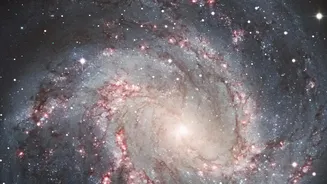
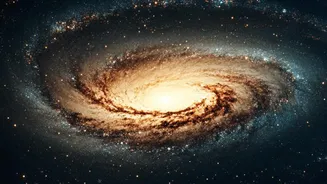
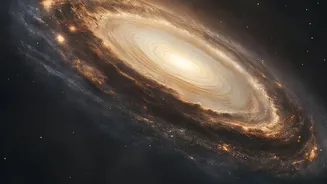
Every new image and data set brings with it a wave of new questions. By peering into the dusty hearts of other galaxies, astronomers can piece together the story of cosmic evolution. They are learning how the first galaxies in the universe were seeded with the heavy elements necessary for life and how spiral galaxies like our own Milky Way took shape. While some galaxies, like nearby Andromeda, appear to be winding down their star formation, others are bursting with activity. This new level of detail allows scientists to build more accurate models of how galaxies live and die. It also fuels the planning for even more powerful future observatories, like the proposed AtLAST telescope, which will map cold gas and dust to see the half of the universe that remains hidden.