







An Ancient Tradition Goes Viral
The practice is far from new. For centuries, women in countries like China and Japan have used the starchy water left over from rinsing rice to care for their hair. The most famous example comes from the Yao women of Huangluo village in China, who are renowned
for their exceptionally long, strong, and dark hair, which they traditionally wash with fermented rice water. This historical precedent gives the modern trend an air of time-tested authenticity, blending ancient wisdom with the shareable format of a TikTok tutorial. Today's wellness creators are tapping into this history, presenting it as a natural, low-cost alternative to chemical-laden commercial products.
The Science of Fermentation
So, what is fermented rice water? It's simply the starchy water left over after soaking or boiling rice, which has been allowed to sit at room temperature for a day or two. During this time, microorganisms naturally present on the rice begin to break down the starches and proteins. This fermentation process does two key things: it lowers the water's pH to be closer to the natural acidity of hair and skin, and it breaks down larger molecules into smaller, more usable compounds like amino acids and peptides. The resulting liquid is rich in nutrients like vitamins B, C, and E, as well as a compound called inositol, which is believed to repair and protect hair.
The Claims vs. The Reality
Advocates claim fermented rice water can do it all: make hair grow faster, reduce breakage, increase shine, improve skin elasticity, and even fade dark spots. While there is no large-scale scientific research to conclusively prove that rice water makes hair grow faster, the components do offer plausible benefits. The amino acids can help strengthen the hair shaft, reducing breakage and helping to retain length. The low pH helps to seal the hair cuticle, which reduces frizz and increases shine. For skin, the starchy liquid can have a temporary soothing and hydrating effect, and some dermatologists note its ingredients may help with hyperpigmentation.
How to Make Your Own Rice Water
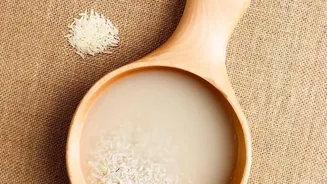
Creating your own rice water rinse at home is simple. Start by rinsing half a cup of uncooked rice to remove any impurities. Then, place the rinsed rice in a bowl with about two to three cups of water. Let it soak for at least 30 minutes, occasionally swirling and pressing the rice to help release the starches. Strain the cloudy water into a clean jar. You can use it immediately as a plain rice water rinse, or you can cover the jar and let it sit at room temperature for 12 to 48 hours to ferment. You’ll know it’s ready when it develops a slightly sour smell. Always dilute fermented rice water before use and store any excess in the refrigerator.
Potential Risks and Side Effects
Despite being a natural remedy, fermented rice water isn't without potential downsides. The high protein content can lead to "protein overload" if used too frequently, especially on low-porosity or fine hair. This can ironically cause the hair to become stiff, dry, and brittle. On the scalp, a starchy buildup can occur, leading to dryness or flakiness for some users. For skin, while generally well-tolerated, it can be irritating for those with very sensitive skin or conditions like eczema. It is always best to do a patch test before applying it broadly and to start by using it only once or twice a week, followed by a conditioner.