



An 'Eye in the Sky' Like No Other
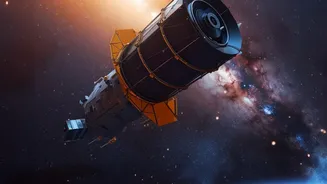
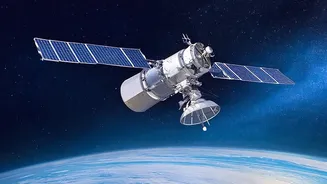
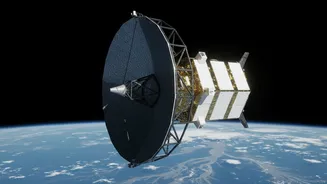
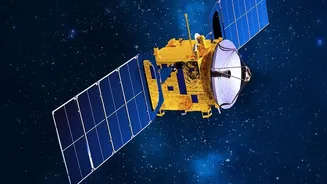
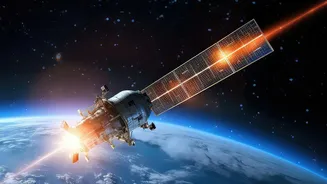
Imagine a satellite so powerful it can detect changes on Earth’s surface as small as a centimetre, all the way from orbit. That's the NASA-ISRO Synthetic Aperture Radar, or NISAR. It is a groundbreaking collaboration between the Indian Space Research
Organisation (ISRO) and the United States' National Aeronautics and Space Administration (NASA). Launched from Sriharikota, this mission is a testament to what international cooperation can achieve. What makes NISAR special is its dual-frequency radar system. It carries both an L-band and an S-band radar, allowing it to see through clouds, darkness, and even dense forests to map our planet with unprecedented detail every 12 days. This technology is like giving scientists a new pair of glasses to see our world, and one of the most crucial places it is watching is Antarctica.
Peering Beneath Antarctica's Icy Cloak
Antarctica can seem like a static, unchanging continent of white. But beneath the surface, it is a dynamic and sometimes violent place. NISAR's radar technology is uniquely equipped to uncover this hidden world. Unlike regular cameras that capture visible light, NISAR's radar sends microwave pulses to the ground and measures the returning signal. This allows it to 'see' the texture, shape, and even the movement of the ice. For instance, recent images have revealed stunning details of how ice flows around mountains, creating deep cracks called crevasses. In one striking case, the satellite captured an image of a rock formation and surrounding ice that looked remarkably like a hummingbird, showcasing the mission's ability to map hidden ice structures. By penetrating the top layers of snow and ice, scientists can finally observe the complex processes that drive glacial movement.
Tracking a Continent on the Move
One of NISAR's key missions in Antarctica is to track the speed and flow of its massive ice sheets. These are not static blocks of ice; they are slow-moving rivers that carry ice from the continent's interior to the ocean. NISAR's ability to measure centimetre-scale movements allows scientists to create detailed maps of ice velocity, identifying which glaciers are accelerating and why. This is crucial for understanding ice sheet stability. The satellite is also monitoring the 'grounding line' – the critical point where a glacier lifts off the land and begins to float on the ocean. Changes in this line are a major indicator of how quickly ice is being lost. This constant stream of data provides a global, consistent view that was not possible before, helping scientists build better models of how Antarctica is responding to climate change.
Why Antarctic Ice Matters to India
What happens in Antarctica, thousands of kilometres away, has a direct impact on India. The continent holds about 70% of the world's fresh water, and if it melts, it could cause global sea levels to rise by an estimated 60 metres. This would be catastrophic for India's long coastline and its major coastal cities like Mumbai, Chennai, and Kolkata. Even a small increase in sea level can lead to more frequent and severe coastal flooding, erosion, and contaminated groundwater. Furthermore, the massive influx of freshwater from melting polar ice can disrupt global ocean currents, which in turn can affect weather patterns like the Indian monsoon. Unpredictable monsoons threaten agriculture, which is the backbone of the Indian economy. NISAR's data helps us understand the scale and speed of these changes, giving us vital information to prepare for the future.
Your Future in Space and Science
The NISAR mission is more than just a satellite; it's an inspiration. It shows that some of the biggest challenges facing our planet, like climate change, can be tackled when nations work together. For young space enthusiasts in India, it’s a shining example of the country's growing prowess in space technology and research. The data from NISAR will be freely available to the public, meaning that scientists, researchers, and even students can use it to make their own discoveries. Whether your passion is in engineering, computer science, environmental science, or data analysis, missions like NISAR show that there are countless ways to contribute. By studying science and technology, you could be part of the next generation of explorers who use space-based tools to protect our home planet.