




What Makes a 'Dark-Sky' Destination?
A dark-sky place is an area recognised for its exceptionally clear and dark night skies, free from the glare of urban light pollution. The global authority on this is DarkSky International (formerly the International Dark-Sky Association), a non-profit
that certifies locations as Parks, Reserves, or Sanctuaries based on their commitment to preserving natural darkness. These certifications aren't just for show; they involve strict lighting regulations, community education, and efforts to protect the nocturnal environment for wildlife, science, and public enjoyment. For travellers, this certification is a guarantee that you are heading to one of the best possible places on Earth to experience a truly star-studded night. More than 80 percent of the world's population lives under light-polluted skies, making these protected zones invaluable portals to the universe.
Hanle, Ladakh: India's Celestial Sanctuary
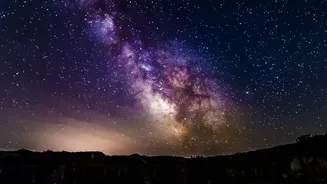
Perched at an altitude of 4,500 metres in the remote Changthang plateau, India is home to its very first Dark Sky Reserve: Hanle. Declared in 2022, this high-altitude desert offers some of the most pristine skies on the planet, with over 300 clear nights a year. The reserve covers a 22-kilometre radius around the Indian Astronomical Observatory, one of the world's highest. The local community is deeply involved, with villagers trained as 'Astronomy Ambassadors' who guide visitors through the cosmos using telescopes. Strict lighting protocols ensure that once the sun sets, the only things illuminating the landscape are the moon and a spectacular, shimmering Milky Way that seems close enough to touch. A trip here is not just about astronomy; it’s an experience of profound silence and solitude under an endless canopy of stars.
Aoraki Mackenzie, New Zealand: A Southern Hemisphere Jewel
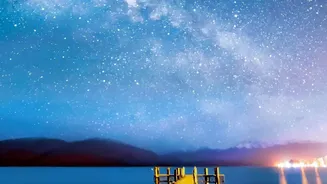
In the heart of New Zealand's South Island lies the Aoraki Mackenzie International Dark Sky Reserve, a vast 4,367-square-kilometre area that was the first of its kind in the Southern Hemisphere. Comprising Aoraki/Mt. Cook National Park and the Mackenzie Basin, this region has some of the clearest, darkest skies in the country. The area has a long history of appreciating the night, as the local Māori people used the stars for navigation and integrated astronomy into their culture. The reserve honours this heritage by protecting its celestial views. Visitors can take guided tours at the Mount John University Observatory or simply lay back by the stunning Lake Tekapo to watch constellations like the Southern Cross shine brightly in a sky rated as 'truly dark' on the Bortle scale.
NamibRand Nature Reserve, Namibia: Desert Stars
For an unforgettable African stargazing experience, look no further than the NamibRand Nature Reserve. It holds the distinction of being Africa's first International Dark Sky Reserve, certified with a 'Gold Tier' status, which signifies the highest quality of starry nights with minimal to no impact from artificial light. Located in the Namib Desert, one of the oldest deserts in the world, the reserve's nearest communities are almost 100 kilometres away, ensuring an environment almost entirely free of light pollution. The dry desert air provides exceptional clarity for viewing deep-sky objects. Many lodges within the reserve are designed with stargazing in mind, offering amenities like 'star-gazer' rooms open to the sky and guided astronomy sessions where you can learn about the cosmos.
Atacama Desert, Chile: A Window to the Universe
The Atacama Desert is renowned as one of the driest places on Earth, and this unique climate creates perfect conditions for astronomy. Its high altitude, clear air, and more than 300 cloudless nights a year have made it a global hub for both professional observatories and astro-tourism. While not a formally designated reserve in its entirety, the region's skies are so dark and clear that it attracts astronomers and stargazers from all over the world. San Pedro de Atacama serves as a base for countless stargazing tours. Here, you can join expert-led excursions to view planets, distant galaxies, and nebulae through powerful telescopes, often accompanied by lectures that unravel the secrets of the southern sky.