




Managing Day-to-Day Governance
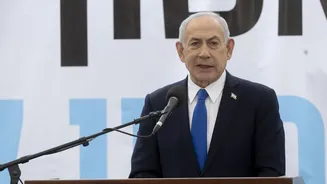
The primary function of a caretaker government is to ensure the continuous operation of the state. Under Israeli law, an outgoing government continues to perform its duties until a new one is sworn in, preventing a power vacuum. This principle of 'government
continuity' means Prime Minister Netanyahu and his ministers retain their executive powers to manage state affairs, foreign relations, and the general machinery of the government. However, this power is not absolute. Both the Attorney General and the Supreme Court have established that a caretaker government must operate under a 'duty of restraint'. This means it is expected to avoid launching major new policy initiatives or making long-term commitments that would tie the hands of a future administration. The focus is on maintaining the status quo and handling only matters that are urgent or essential for public administration.
Authority Over Senior Appointments
One of the most significant restrictions on a caretaker prime minister concerns the appointment of senior officials. The Supreme Court has repeatedly ruled that a transitional government should refrain from making permanent appointments to high-ranking positions, such as police commissioners, the state attorney, or other key civil service roles. The rationale is that such long-term appointments should be the prerogative of a government with a fresh democratic mandate from the public. Unless there is a vital and immediate public need to fill a position, these decisions are expected to be deferred. In practice, this can lead to vacancies in crucial posts or the use of temporary replacements. While the Prime Minister retains the power to dismiss and appoint ministers to fill a vacancy without Knesset approval, the broader power to shape the senior civil service is heavily curtailed.
Waging War and National Security
Perhaps the most potent and debated power of a caretaker prime minister is in the realm of national security. Legally, a caretaker government is not barred from going to war or launching significant military operations. Israel's Basic Law: The Government does not distinguish between a regular and a caretaker government in this regard. A decision to go to war must be made by the government cabinet, not the prime minister alone. However, security issues are often seen as the clearest exception to the 'duty of restraint', especially when there is a pressing necessity or an immediate threat. The Supreme Court has historically been reluctant to intervene in decisions related to war. This gives a caretaker prime minister considerable, though highly scrutinized, authority to respond to security developments and even initiate military action, a power that remains a point of intense political debate.
Economic and Legislative Limitations
While a caretaker government keeps the country running, its power over the national purse and new laws is limited. It cannot, for instance, pass a new annual state budget. Typically, the government would operate on a pro-rated version of the previous year's budget until a new government can pass a budget of its own. This prevents a caretaker administration from setting long-term economic priorities. Furthermore, while the Knesset can continue to legislate, a caretaker government lacks the political legitimacy to push through major, controversial new laws, especially those that could have irreversible consequences. An outgoing prime minister cannot use this period to advance legislation for personal benefit, such as laws related to an ongoing trial. The overarching principle is that a caretaker government acts as a temporary steward, not an architect of the nation's future economic and legal landscape.