





The New Frontier of Fitness
Step into any high-end gym or performance institute, and you might see something that looks straight out of a sci-fi movie: athletes running on treadmills while wearing elaborate masks, or sleeping in sealed tents. This isn't a bizarre fashion statement;
it's the face of simulated altitude training, also known as hypoxic training. The core idea is simple: deliberately reduce the oxygen available to your body during exercise or rest to trick it into becoming more efficient. Instead of just adding more weight to the bar, this method re-engineers your body's internal engine at a cellular level. It represents a fundamental shift from focusing purely on musculoskeletal strength to optimizing the entire physiological system that powers it. It's less about building bigger muscles and more about building a better, more resilient power supply for the muscles you already have.
The Science of 'Training Thin'
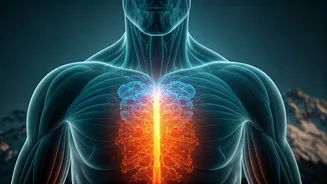
So, how does breathing less oxygen make you stronger? When your body senses a drop in oxygen—a state called hypoxia—it triggers a cascade of powerful adaptations. Think of it like your body's internal emergency response system kicking into gear. The most significant change is that your kidneys release more of a hormone called erythropoietin (EPO), which you might recognize from cycling scandals of the past. In this context, you’re just encouraging your body to make its own. EPO stimulates the bone marrow to produce more red blood cells. More red blood cells mean you can carry more oxygen from your lungs to your muscles. This increases your VO2 max, the gold-standard measurement of aerobic fitness. Essentially, you're training your body to do more with less. When you return to a normal-oxygen environment, your newly enhanced oxygen-delivery system gives you a massive performance boost. Your endurance skyrockets, and you can push harder for longer before hitting your limit.
Benefits Beyond Brute Strength
While heavy lifting is fantastic for building raw strength, muscle mass, and bone density, its benefits are primarily mechanical. Altitude simulation, on the other hand, offers a different set of advantages. Athletes report faster recovery times because their bodies become more efficient at clearing metabolic waste products like lactate. They also experience increased power output and stamina without the accompanying joint stress and muscular damage that comes from constantly lifting heavy. This makes it an invaluable tool for in-season athletes who need to maintain peak fitness without risking injury, or for endurance athletes looking for a legal, natural edge. It’s a method of adding training stress without adding physical impact, allowing for greater overall training volume and quicker gains in conditioning. The feeling is often described not as being 'stronger' in a lifting sense, but as having a 'deeper gas tank.'
It's Not an Either/Or Scenario
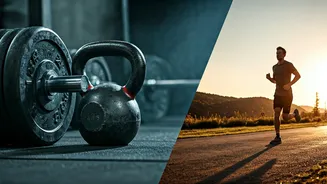
The headline presents a classic changing-of-the-guard narrative, but the reality on the ground is more nuanced. Elite coaches and athletes aren't throwing their squat racks in the garbage. Instead, they're integrating hypoxic training as a powerful supplement to their existing strength and conditioning programs. Think of it this way: heavy weights build the car's chassis and horsepower, while altitude training upgrades the fuel injection system and turbocharger. You need both to win the race. A strongman who only does altitude training won't be able to lift a car, and a marathon runner who only lifts heavy will lack the endurance to finish. The magic happens when these two methodologies are combined. Strength training provides the force, and altitude simulation provides the tireless engine to apply that force repeatedly. The modern elite athlete is a hybrid, using every scientific tool available to build a complete performance machine.