



The Problem with Prolonged Moisture
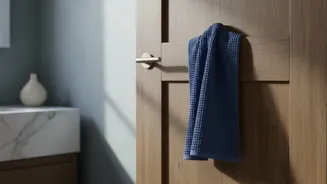
The core issue is straightforward: prolonged contact with moisture is bad for almost every part of a door. Wood is a porous material, meaning it naturally absorbs and releases moisture from the air. When you hang a damp towel directly on it, you’re creating
a concentrated zone of high humidity. This moisture doesn't just sit on the surface; it seeps into the door's materials, starting a chain reaction of damage that can be difficult and costly to reverse.
The Science of a Warped Door
The most common consequence of this habit is warping. When one part of a wooden door absorbs more moisture than another—in this case, the top edge where the towel rests—the wood fibres in that area swell. This uneven expansion causes the door to bend, bow, or twist out of its original shape. Soon, you might notice the door doesn't close properly, sticks in its frame, or a gap appears that lets in drafts and light. While this affects all wooden doors, it happens much faster if the top edge isn't properly sealed with paint or varnish, leaving the raw wood exposed.
Hollow-Core Doors Are Especially Vulnerable
Many modern interior doors are hollow-core, meaning they consist of a thin wood or composite veneer over a lightweight, often cardboard-based, internal frame. These doors are particularly susceptible to water damage. The moisture from a wet towel can easily penetrate the thin veneer and weaken the internal structure, causing it to break down. This can lead to the surface bubbling, delaminating, or developing soft spots that are impossible to repair. Once the internal core is compromised, the structural integrity of the entire door is at risk.
Damage to Paint and Finishes
Even if the door itself doesn't warp immediately, its finish will suffer. Constant dampness will cause paint to bubble, peel, and flake away. Varnish and other clear finishes can become cloudy, discoloured, or break down entirely, exposing the underlying wood to even greater moisture damage. This not only looks unsightly but also removes the protective barrier that is essential for the door's longevity, especially in a humid environment like a bathroom. In some cases, dyes from the towel can even transfer to the weakened paint, leaving permanent stains.
The Hidden Danger of Mould and Mildew
A damp towel pressed against a door creates a perfect breeding ground for mould and mildew. With limited air circulation, the area stays moist for hours, allowing fungal spores to flourish. This can lead to musty smells and ugly black or green stains on your door that are difficult to remove. More importantly, mould can pose health risks, releasing spores that may trigger allergies, asthma, and other respiratory issues. By hanging your towel in a poorly ventilated spot, you are not only damaging your home but potentially impacting your indoor air quality.
Smarter Ways to Dry Your Towels
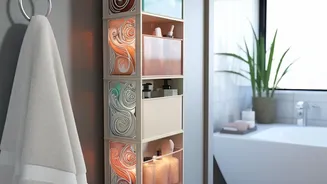
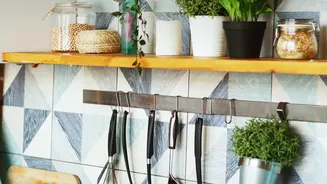
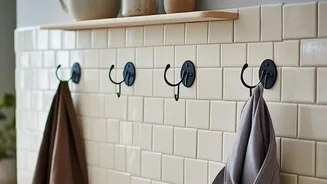
Breaking this habit is easy and doesn’t require a major bathroom renovation. The key is to allow for proper air circulation so the entire towel can dry evenly. Simple wall-mounted towel bars or hooks are the most effective solutions. A towel bar allows you to spread the towel out, maximizing its exposure to air. Hooks are a great space-saving alternative. If you lack wall space, consider a freestanding ladder-style holder or an over-the-door rack that is specifically designed for towels, as these hold the towel away from the door's surface. The goal is to let air move freely around the fabric, which prevents moisture from getting trapped against your door.