






A Policy Shift Sparks a Private Space Race
The single biggest catalyst for this change has been a deliberate policy shift by the Indian government. In 2020, the space sector was officially opened to private participation, leading to the creation of the Indian National Space Promotion and Authorisation
Centre (IN-SPACe). Functioning as a single-window agency, IN-SPACe is designed to promote, authorise, and supervise the activities of non-governmental entities, from building launch vehicles and satellites to providing space-based services. This move has unleashed a torrent of investment and innovation. Private investment in the sector surged from around $100 million in 2021-22 to over $600 million by early 2026. With India's space economy projected to grow from around $9 billion today to over $40 billion by the next decade, the ground is fertile for a new generation of space entrepreneurs and the talent they need to hire.
Meet the New Trailblazers
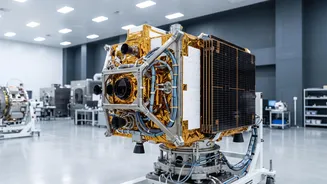
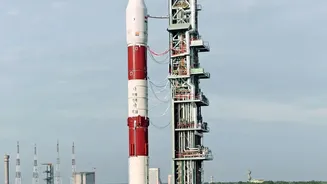
A vibrant ecosystem of over 400 startups is now taking shape, moving quickly from prototypes to commercial operations. Companies like Hyderabad-based Skyroot Aerospace, founded by former ISRO engineers, and Chennai-based Agnikul Cosmos are focused on building small-lift launch vehicles to deploy satellites. Skyroot successfully launched its Vikram-S rocket, proving private players could build and fly launch vehicles from India. Meanwhile, companies like Bengaluru-based Pixxel are building constellations of high-resolution hyperspectral satellites for earth observation, serving global clients in agriculture, energy, and environmental monitoring. Other key players include Dhruva Space, which focuses on satellite platforms, and Bellatrix Aerospace, which is developing advanced in-space propulsion systems.
What Jobs Are Actually Available?
The demand goes far beyond just aerospace engineers. These startups are aggressively hiring for a variety of specialised roles. A look at the careers pages of these companies reveals openings for propulsion engineers, avionics and FPGA engineers, embedded software developers, and specialists in Guidance, Navigation, and Control (GNC) systems. Skyroot, for example, lists roles for industrial engineers, CNC programmers, and thermal engineers. Agnikul hires for mission design software developers and launch vehicle operations strategists. Pixxel, with its focus on data, seeks image processing scientists, AI and data engineers, and spacecraft controllers. There is a significant demand for talent with 4-10 years of experience, as startups look for professionals who can execute projects immediately.
ISRO's Evolving Role: A Partner, Not a Competitor
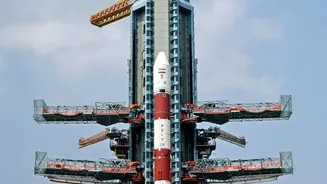
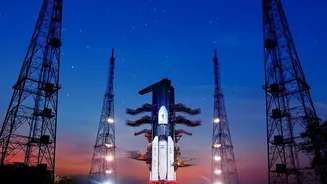
The rise of the private sector doesn't diminish ISRO's importance; it redefines it. The government and ISRO have clarified that the goal is not privatisation but the expansion of India's overall space ecosystem. According to the Indian Space Policy 2023, ISRO will transition away from the routine manufacturing of operational systems and focus more on advanced research and development, scientific discovery, and complex national missions like Gaganyaan. In this new model, ISRO acts as a mentor and enabler, transferring mature technologies to private firms. This symbiotic relationship allows the private sector to handle commercial manufacturing and launches at scale, freeing up ISRO's valuable resources for deep-space exploration and cutting-edge science.
Beyond Engineering: A Broadening Horizon
The ripple effects of the space economy are creating jobs in adjacent fields as well. One of the fastest-growing areas is geospatial data analytics. Companies that use satellite imagery for agriculture, urban planning, and disaster management need data scientists and remote sensing experts to make sense of the information beamed down from orbit. Furthermore, as the industry matures, it requires professionals in finance, marketing, business development, and even space law to manage contracts, secure funding, and navigate complex regulations. This means that a passion for space is no longer limited to those with a purely technical background; the ecosystem needs a wide array of skills to thrive.