




India's Most Complex Lunar Mission Yet
Chandrayaan-4 is not just another landing; it's a sample-return mission. The objective is to land near the Moon's south pole, collect soil and rock samples, and return them to Earth for scientific study. This feat has only been accomplished by the United
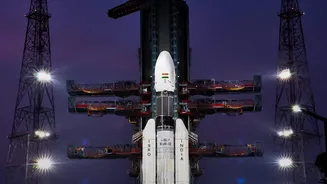
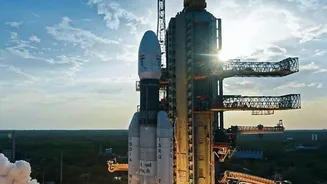
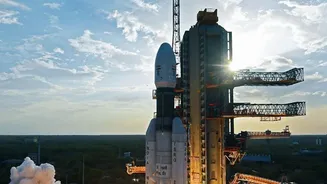
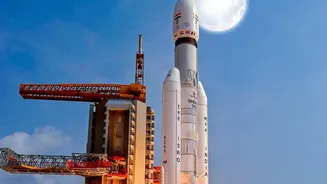
States, the former Soviet Union, and China. Unlike its predecessor, Chandrayaan-4 is a multi-stage operation of incredible complexity. It will involve launching five separate modules using two of India's powerful LVM3 rockets. These modules will then need to perform autonomous rendezvous and docking manoeuvres in orbit before heading to the Moon—a critical capability ISRO has been testing.
The Ultimate Prize: Lunar Water Ice
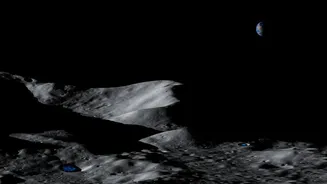
The mission's primary target is the lunar south pole, a region believed to hold vast quantities of water ice in permanently shadowed craters. This ice is more than just frozen water; it's considered the most valuable resource for future space exploration. It can be mined and processed to provide drinking water and breathable oxygen for future lunar habitats. More importantly, it can be broken down into hydrogen and oxygen, the primary components of rocket fuel. Having a fuel source on the Moon would dramatically reduce the cost and complexity of deep space missions, effectively turning the Moon into a refuelling station for journeys to Mars and beyond. Chandrayaan-4 aims to be the first mission to bring back physical samples from this strategic region.
A Symphony of Spacecraft
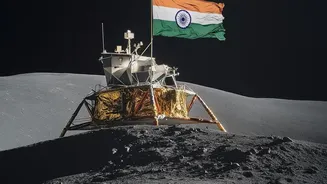
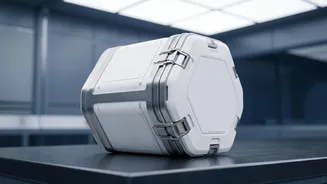
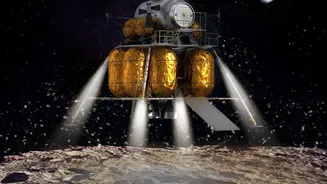
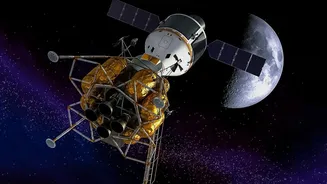
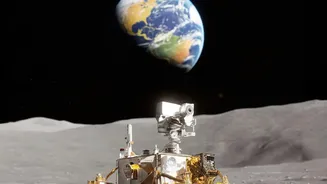
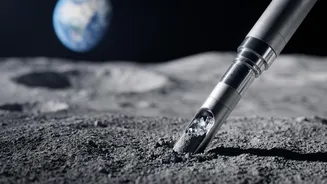
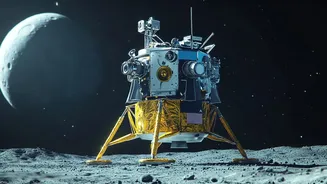
The mission's architecture reads like science fiction. After two separate launches, the components will dock in Earth's orbit to form a single integrated spacecraft. This craft will travel to the Moon, where a lander (Descender Module) and an ascent vehicle (Ascender Module) will separate for a soft landing. On the surface, a robotic arm and a drill will collect up to three kilograms of samples. These samples will be sealed in a container on the Ascender, which will then launch from the Moon's surface—a first for India. The Ascender will then dock with the waiting Transfer Module in lunar orbit, transfer the precious cargo to the Re-entry Module, which will finally make the journey back to Earth, protecting the samples from the fiery heat of re-entry.
Paving the Way for Future Ambitions
With a launch targeted for 2028, Chandrayaan-4 is a cornerstone of India's long-term space vision. The technologies being developed—from robotic arms and orbital docking to lunar ascent and re-entry—are all crucial for more complex missions on the horizon. This includes the Lunar Polar Exploration Mission (LUPEX), a joint project with Japan's space agency (JAXA) to further explore lunar water resources, and the ultimate goal of landing an Indian astronaut on the Moon by 2040. By mastering the sample-return process, ISRO is not just collecting rocks; it is building the foundational capabilities required to become a major player in the future lunar economy and a leader in sustainable space exploration.