


The Soul of the Sizzle
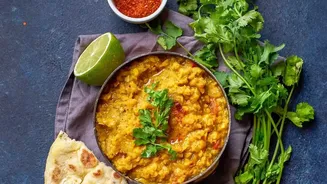
Anyone who has stood in an Indian kitchen knows the sound. It’s a sharp, percussive crackle that announces dinner is moments away. This is the sound of tadka, also known as 'chaunk' or 'baghar' in different regions. It’s the practice of blooming spices
in hot ghee or oil and pouring the fragrant, infused fat over a dish, most famously dal. While it may seem like a simple finishing step, tadka is a centuries-old technique that represents a masterful understanding of food science. It’s the difference between a flat, one-dimensional lentil soup and a complex, aromatic, and deeply satisfying dal. This final flourish doesn't just add flavour; it fundamentally changes the character of the dish, creating layers of aroma and taste that simply stirring in dry spice powders can never achieve.
Fat as a Flavour Carrier
To understand tadka, you must first understand the role of fat. Hot oil or ghee is not just a cooking medium; it is a solvent. Many of the aromatic compounds that give spices like cumin, mustard, and coriander their distinct character are fat-soluble, not water-soluble. This means their flavour molecules are 'hydrophobic'—they resist dissolving in water but are readily extracted by fat. When you drop cumin seeds into a pot of boiling dal, most of their warm, nutty flavour remains locked inside the seed's tough cellular walls. But when those same seeds hit hot ghee, the fat immediately begins to break down those walls and pull out the essential oils, like cuminaldehyde, infusing itself with their essence. This fragrant fat then acts as a perfect delivery vehicle, distributing the flavour evenly throughout the entire dish, ensuring every spoonful is as delicious as the last.
The Science of Speed: Kinetics in the Kitchen
The headline's mention of 'kinetics' points to the heart of the process: it’s all about heat and speed. Tadka is a high-temperature, short-duration event where incredible transformations happen in seconds. The high heat does more than just extract existing flavours; it creates entirely new ones through chemical reactions like the Maillard reaction. This is the same browning process that gives a seared steak or toasted bread its savoury depth. When spices like cumin or mustard seeds hit oil heated to just below its smoke point (around 180°C), the amino acids and sugars within them react, creating hundreds of new, complex flavour compounds that are deeper and more roasted than the raw spice. This process is extremely time-sensitive. A few seconds too long, and those aromatic compounds break down, turning bitter and acrid. The perfect tadka happens in that brief window between 'perfectly bloomed' and 'burnt'.
A Symphony of Spices
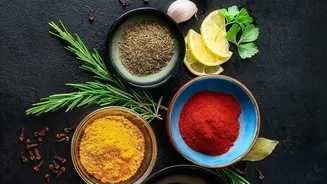
A well-made tadka is a carefully choreographed sequence. Different spices have different heat tolerances and release their flavours at different speeds. This is why there is a specific, time-tested order of operations. Hardy, whole spices like mustard and cumin seeds go in first; their popping provides an audible cue that the oil is at the perfect temperature. More delicate ingredients like dried red chillies, asafoetida (hing), and curry leaves, which can burn in seconds, are added next for a brief sizzle. Finally, ground spices, which have a large surface area and can burn almost instantly, are often added right at the end, sometimes after the pan is taken off the heat. This precise timing ensures each spice is perfectly cooked, contributing its unique aromatic profile without any bitterness, resulting in a harmonious and layered flavour infusion.
More Than a Delicacy: The 'Nourishing' Element
The term 'nourishing delicacy' isn't just poetic. Tadka also plays a role in making the nutrients in dal and spices more available to the body. Fat is essential for absorbing fat-soluble vitamins like A, D, E, and K. Spices like turmeric contain curcumin, a powerful anti-inflammatory compound that is significantly more bioavailable when consumed with fat and heat. Similarly, piperine in black pepper enhances the absorption of other nutrients. Spices like cumin, fennel, and asafoetida have long been used in Ayurveda to aid digestion, and tempering them in fat makes their beneficial properties more effective. By adding a tadka made with ghee (a source of healthy fats) and digestive spices, you're not just making the dal tastier—you're potentially making it easier to digest and unlocking more of its nutritional value.