



The Foundation of Cockpit Safety
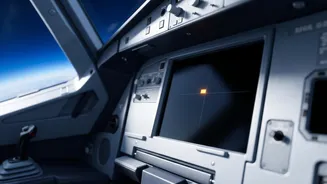
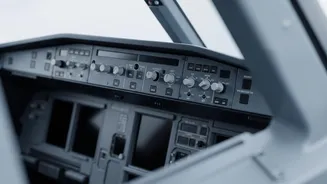
Modern commercial airliners are built on a two-pilot philosophy. At any given time, one person is the 'Pilot Flying' (PF) and the other is the 'Pilot Monitoring' (PM). The PF is actively in control of the aircraft's flight path, either manually or by
managing the autopilot. The PM's job is equally critical: they handle communications, run checklists, and cross-check the actions of the PF, providing a vital layer of redundancy. These roles are not fixed to the Captain or First Officer; they are typically swapped between flight legs. This shared responsibility ensures both pilots are always engaged and aware of the aircraft's status, forming the bedrock of safety that becomes essential during an emergency.
Recognising an Incapacitated Colleague
Pilot incapacitation can be obvious, such as a sudden collapse, or dangerously subtle. Pilots are trained to look for both. Gradual incapacitation might manifest as slurred speech, uncharacteristic errors, or a failure to respond to standard callouts. Because crew members are in constant communication and performing checks, a deviation from normal procedure is often the first sign something is wrong. If a pilot doesn't respond to two consecutive callouts during a critical phase like landing, they are often considered incapacitated, and the other pilot must take immediate action. This constant monitoring is a built-in safety check on the health and fitness of the crew.
Taking Sole Command of the Aircraft
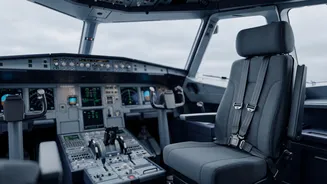
The instant incapacitation is recognised, the remaining pilot's first and most critical responsibility is to take positive control of the aircraft. Their immediate action is to announce, "I have control," and stabilise the flight path, often by engaging the autopilot to manage the workload. The next step is to deal with the incapacitated crewmate. This involves ensuring they cannot interfere with the flight controls by sliding their seat back and securing them with the shoulder harness and seatbelt. The remaining pilot will then summon the cabin crew to provide medical assistance and remove the pilot from the flight deck if possible.
Declaring an Urgency: The 'Pan-Pan' Call
With the aircraft stabilised, the pilot must communicate the situation. This is done by making a radio call to Air Traffic Control (ATC). The call isn't the well-known "Mayday," which signals grave and imminent danger to life or the aircraft itself. Instead, the pilot will declare an urgency by repeating "Pan-Pan" three times. This term, derived from the French word 'panne' (meaning breakdown), alerts ATC and other aircraft that there is an urgent situation that is not immediately life-threatening but requires priority assistance. This declaration ensures the pilot gets priority handling, a clear path to the nearest suitable airport, and emergency services on standby for arrival.
One Pilot, Two Jobs
The remaining pilot must now perform the duties of both the PF and PM. While challenging, modern aircraft automation significantly reduces the workload. The pilot will use the autopilot to manage speed and navigation while they work through checklists, re-plan the flight for a diversion, and communicate with ATC and the cabin crew. A flight attendant may be asked to sit in the empty pilot seat to help read checklists or look for traffic, but they will not fly the aircraft. ATC can provide immense support by giving the pilot a long, straight-in approach, which minimises complex maneuvering and allows more time to prepare for landing.
A Safe Landing
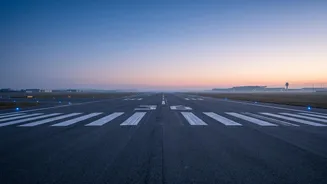
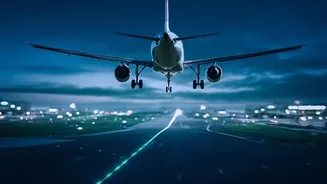
Landing is the final phase. While it can be done manually by the single pilot, modern jets are equipped with 'autoland' systems that can perform the entire landing automatically, especially in poor weather. The pilot's job becomes one of careful supervision, ensuring the aircraft is correctly configured with flaps and landing gear deployed. ATC will have cleared other traffic and directed emergency vehicles to be ready on the ground. After touching down, the pilot will taxi clear of the runway and shut down the aircraft, where medical personnel will be waiting to assist their colleague. The entire procedure is a testament to the layers of redundancy and training that underpin modern aviation safety.