



The Power in a Simple Movement
The bodyweight squat is one of the most fundamental and functional exercises you can do. Every time you stand up from a chair or get out of your car, you are performing a squat. By practicing this movement intentionally, you strengthen the major muscles
of your lower body, including the glutes, quadriceps, and hamstrings, as well as your core. This compound exercise boosts your metabolism, improves posture, and enhances the health of your joints in the hips, knees, and ankles by promoting flexibility and stability. Regular practice can help reduce the risk of injury in daily life and maintain physical independence as you age.
Mastering the Bodyweight Squat
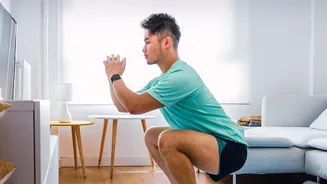
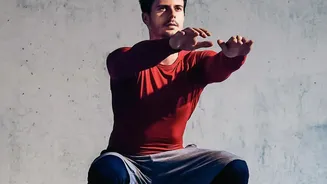
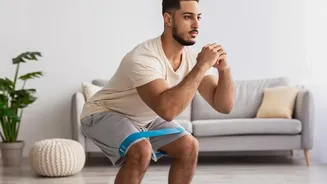
Proper form is crucial for getting the benefits without the risk of injury. Start by standing with your feet about shoulder-width apart, or whatever width feels comfortable for your hips. Point your toes slightly outward. Stand tall with your chest up and pull your shoulders back and down. To begin the movement, initiate by pushing your hips back as if you're about to sit in a chair. As you lower yourself, keep your chest lifted and your back straight, avoiding rounding. Allow your arms to extend forward for balance. Lower yourself until your thighs are parallel to the floor, or as far as you can comfortably go while maintaining good form. Your heels should stay planted firmly on the ground throughout the movement. To stand back up, drive through your heels and mid-foot, extending your hips and knees to return to the starting position.
Common Mistakes to Avoid
A few common errors can undermine your squat and lead to strain. The most frequent mistake is allowing your knees to cave inward. Always focus on tracking your knees over your feet. Another issue is lifting your heels off the ground, which shifts your balance forward and puts excess pressure on your knees. This often happens due to limited ankle mobility or initiating the squat by bending the knees first, instead of sitting the hips back. Dropping your chest and rounding your spine is also a common problem. Keep your gaze forward and your chest proud to maintain a neutral spine and protect your lower back.
Gentle Modifications for Every Body
If a full bodyweight squat is too challenging, there are excellent modifications. A great starting point is the chair squat. Stand in front of a sturdy chair and slowly lower yourself down until you are seated, then stand back up, focusing on using your leg and glute muscles. This provides safety and builds confidence. You can also perform a mini-squat by only lowering a few inches, which is perfect for those with limited mobility or joint discomfort. For balance support, hold onto a stable surface like a countertop or the back of a chair while you practice the movement. The goal is to establish a pain-free pattern before trying to increase your range of motion.
Your Five-Minute Squat Routine
A simple and effective five-minute routine can easily fit into your day. Use a timer and follow an interval structure. For example, perform squats for 30 to 45 seconds, focusing on slow, controlled movements. Then, rest for the remainder of the minute (15 to 30 seconds). Repeat this for five rounds. In the first round, you might do gentle mini-squats to warm up. For the next few rounds, you can move to your full, comfortable range of motion. On the final round, you could try holding the lowered squat position for 10-15 seconds before standing. This structure keeps your muscles engaged and your heart rate elevated without requiring you to rush.