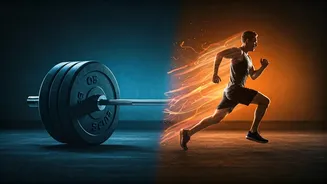





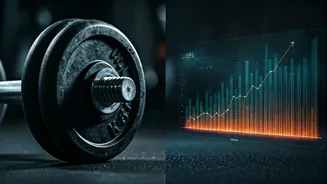


The Old Standoff: Cardio vs. Weights
The traditional thinking was simple and created a clear divide. If you wanted to lose weight, you were told to slave away on the treadmill, elliptical, or bike. Cardio was king for burning calories. If your goal was to build muscle, get stronger, or achieve
a 'toned' look, the weight room was your domain. This created a false binary, forcing people to pick a team. Many women shied away from weights, fearing they would get 'bulky', while many men dismissed cardio as something that 'kills gains'. This separation meant that most people were only getting half of the potential benefits, working hard but not necessarily smart.
Myth: Endless Cardio Is the Key to Fat Loss
Here’s the truth that the headline promised: endless, steady-state cardio is one of the most inefficient ways to lose fat. While it's true that you burn calories while you’re jogging or cycling, that calorie burn stops almost as soon as you do. Think of it like a job where you only get paid for the hours you're actively working. Furthermore, excessive cardio can sometimes lead to muscle loss, especially when done in a significant calorie deficit. Since muscle is your body’s primary engine for burning calories, losing it can actually slow down your metabolism over time, making long-term weight management harder.
Reality: Weight Training Reshapes Your Body and Metabolism
This is where the paradigm shifts. Unlike cardio, the main benefit of strength training isn’t the calories you burn during the workout, but how it changes your body’s entire operating system. Lifting weights builds lean muscle mass. This muscle is metabolically active tissue, meaning it requires energy (calories) just to exist, even when you're resting on the couch. The more muscle you have, the higher your resting metabolic rate (RMR), turning your body into a more efficient fat-burning machine 24/7. This is how strength training helps you lose fat and create a more defined physique, not just a smaller number on the scale.
The Real Secret: The 'Afterburn' Effect
The game-changing concept is called Excess Post-exercise Oxygen Consumption, or EPOC. Think of it as a metabolic 'afterburn'. Intense exercise, particularly strength training, pushes your body so far out of its comfort zone that it has to work hard for hours—sometimes up to 48 hours—to get back to normal. This recovery process of repairing muscle fibres and replenishing energy stores requires a significant amount of oxygen, which burns extra calories long after you've left the gym. While all exercise produces some EPOC, studies consistently show that high-intensity resistance training creates a much larger and longer-lasting afterburn effect compared to steady-state cardio.
The Unbeatable Team: Why Both Are Best
The great debate is over, and the winner is teamwork. The most effective approach for overall health, fat loss, and longevity is combining strength training and cardio, a strategy known as concurrent training. Recent studies from 2026 confirm that people who combine both forms of exercise have a significantly lower risk of mortality from all causes than those who only do one. Strength training builds the metabolic engine, while cardio strengthens your heart and improves endurance. For optimal results, experts suggest aiming for about 90 to 120 minutes of strength training per week, spread over two or more sessions, combined with your regular aerobic activity. You can do them on different days or in the same session—if you do, perform the exercise that aligns with your main goal first when you're fresh.