




More Than Just a Place to Cook
For generations, the Indian kitchen was a purely utilitarian zone, often tucked away at the back of the house. It was a space designed for the serious, often solo, business of cooking elaborate meals. Function was everything; form was an afterthought.
But a significant cultural and architectural shift is underway. Driven by the rise of open-plan living, a renewed love for home entertaining, and the visual language of social media, the kitchen has broken down its walls to become a central, celebrated part of the home. Today, homeowners want a kitchen that’s not just for cooking, but for living. It’s where children might do their homework, where friends gather for a cup of chai, and where the host can be part of the conversation while putting the finishing touches on dinner. This evolution has birthed a new design desire: a kitchen that works as hard as ever but looks and feels like a stylish, comfortable social space.
Decoding the 'Cafe Vibe'
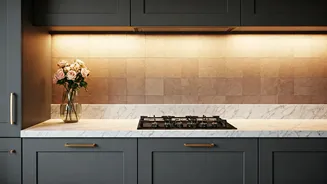
So, what does it mean for a kitchen to have 'cafe vibes'? It's an aesthetic that balances industrial chic with cozy comfort. Think of the elements that make your favourite coffee shop so inviting. Key features include open shelving displaying artisanal pottery or stylish jars of spices, instead of endless closed cabinets. Pendant lights hanging low over a breakfast counter or island create focused, ambient lighting. A small patch of chalkboard paint might serve as a charming family message board or a place to jot down a grocery list. It’s also about creating dedicated 'stations'. A corner for the coffee machine, complete with a mug rack and a selection of beans, instantly elevates the morning ritual. Materials play a huge role, too. Designers are mixing warm wood tones with matte black metal, subway tiles for backsplashes, and quartz countertops that mimic the look of concrete or marble, all contributing to a layered, textured, and deeply personal space.
Function Remains King
While aesthetics are gaining ground, let's be clear: the fundamental demands of an Indian kitchen have not changed. This is not about sacrificing practicality for a pretty picture. The modern Indian kitchen must still accommodate the holy trinity of a cooktop, sink, and refrigerator (the 'golden triangle'), handle the rigours of tadka, and provide ample, organised storage for a vast array of spices, utensils, and pantry staples. The 'cafe' look works only when it’s supported by powerful, invisible functionality. This is where smart design comes in. Architects and interior designers are integrating deep drawers for pots and pans, tall pantry units for bulk storage, and clever corner solutions like 'magic corners' to ensure no space is wasted. Appliance garages hide away the mixer-grinder and toaster, keeping countertops clear. The goal is to keep the clutter of a hardworking kitchen concealed, allowing the beautiful, curated 'cafe' elements to shine.
The Breakfast Counter: A New Centre of Gravity
Perhaps no single feature better represents this trend than the rise of the kitchen island or breakfast counter. It acts as a brilliant multi-functional hub. On one side, it provides extra prep space for the cook. On the other, with the addition of a few stylish bar stools, it becomes a casual dining spot, a workstation, or a bar for entertaining guests. This counter physically and symbolically bridges the gap between the person cooking and the rest of the household. It fosters interaction and turns the act of preparing a meal into a shared experience. It’s the perfect answer to modern family life, where informal, quick meals are just as common as elaborate weekend feasts.