




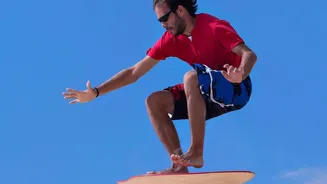

At a glance, hiking rugged trails and riding a skateboard seem worlds apart. Yet, both outdoor activities are fundamentally a dance of balance. But how do the physical and mental challenges of staying upright in these two sports truly compare?
The Ground Beneath Your Feet
The most
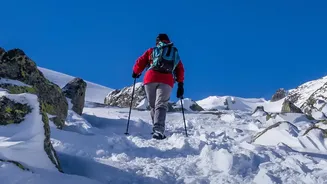
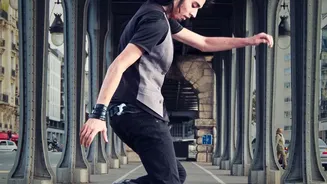
fundamental difference lies in the surface. Hiking is a battle against unpredictable terrain. Your feet contend with rocks, roots, loose soil, and shifting inclines, forcing constant, subconscious adjustments. This develops what experts call proprioception—your body's internal GPS for knowing where it is in space without looking. Every step on an uneven trail is a mini-balancing act that strengthens the small stabilizing muscles in your feet and ankles. Skateboarding presents the opposite challenge: mastering balance on a deliberately unstable object over a generally predictable surface, like pavement. The board itself is the source of instability, tilting and rolling under your feet. The challenge isn't adapting to the ground so much as it is taming the deck, making micro-corrections to control a moving platform.
Core Power and Muscle Engagement
Both activities demand a strong core, but they recruit it differently. In hiking, your core acts as a central anchor, keeping you stable as you navigate inclines and declines. It works in concert with your glutes and leg muscles—quads on the way down, glutes and hips on the way up—to maintain your center of gravity over a shifting base. In skateboarding, the core is engaged in a more dynamic, reactive way. It fires constantly to translate the subtle shifts in your hips and shoulders into commands for the board, all while absorbing the vibrations from the ground. While hiking builds lower-body endurance and stability, skateboarding develops explosive power and muscular coordination, with virtually every muscle in the body playing a role in maintaining balance and executing movements.
Reactive vs. Proactive Balance
Think of hiking as a form of proactive balance. You are constantly scanning the trail ahead, anticipating your next foot placement to maintain stability. Your movements are deliberate and controlled. Skateboarding, however, is a masterclass in reactive balance. The environment is filled with sudden variables—a crack in the pavement, a small pebble, a sudden turn—that require split-second corrections to avoid a fall. Skaters aren't just balancing; they are continuously recovering their balance from constant, small disruptions. This trains the body's reflexes in a way that static or predictable exercise cannot, building a powerful connection between your brain and the stabilizing muscles in your ankles and core that respond before you even have time to think.
The Mental Game of Staying Upright
The cognitive load of balancing also differs significantly. A hiker's focus is spread outward, reading the texture and angle of the trail yards ahead to plan a safe path. It is a state of broad environmental awareness. A skateboarder’s focus is intensely internal and immediate. They must feel the position of the board beneath them, sensing subtle shifts in tilt and pressure while also scanning for immediate obstacles. This dual focus—on the feeling of the board and the path just ahead—demands immense concentration and coordination. Both require sharp mental engagement, but hiking trains your brain for strategic, forward-thinking movement, while skateboarding hones its ability to react with precision in the blink of an eye.