

The Secret Season: Why Autumn?
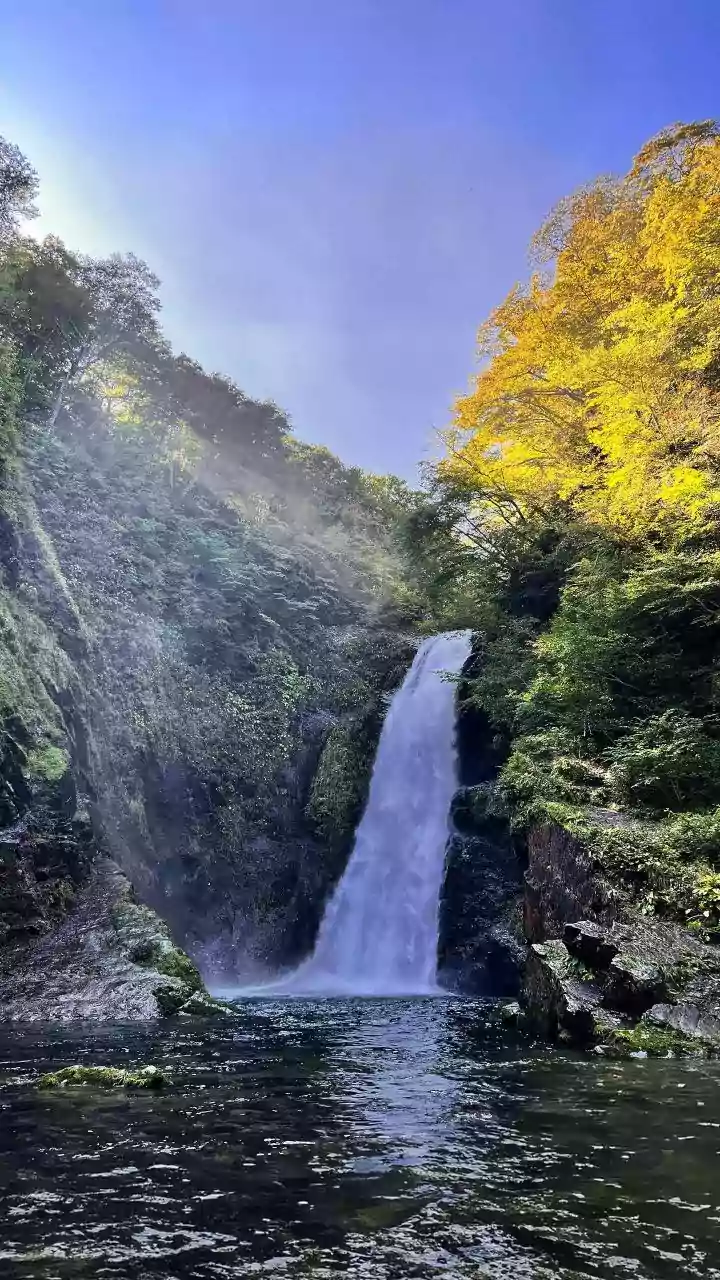
Imagine the state’s famous landscapes, still intensely green from months of rain, but bathed in gentle sunlight. This is Meghalaya from October to November. The relentless monsoons have subsided, leaving the weather comfortably cool and the air crisp.
This period offers a perfect balance: the region's famed waterfalls are still roaring with considerable post-monsoon volume, but the trekking trails are safer and less slippery. The thinning crowds also mean you can experience the state's natural splendour with a sense of serenity that is hard to find during peak season. It’s the ideal window for exploration, offering powerful natural beauty with more accessible and pleasant travel conditions.
Sohra: Chasing Post-Monsoon Waterfalls
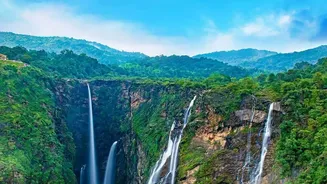
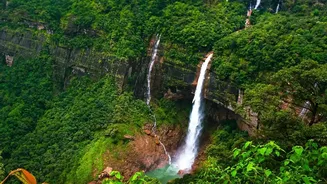
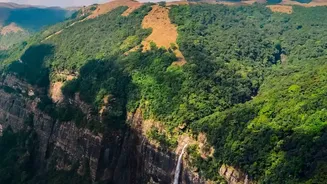
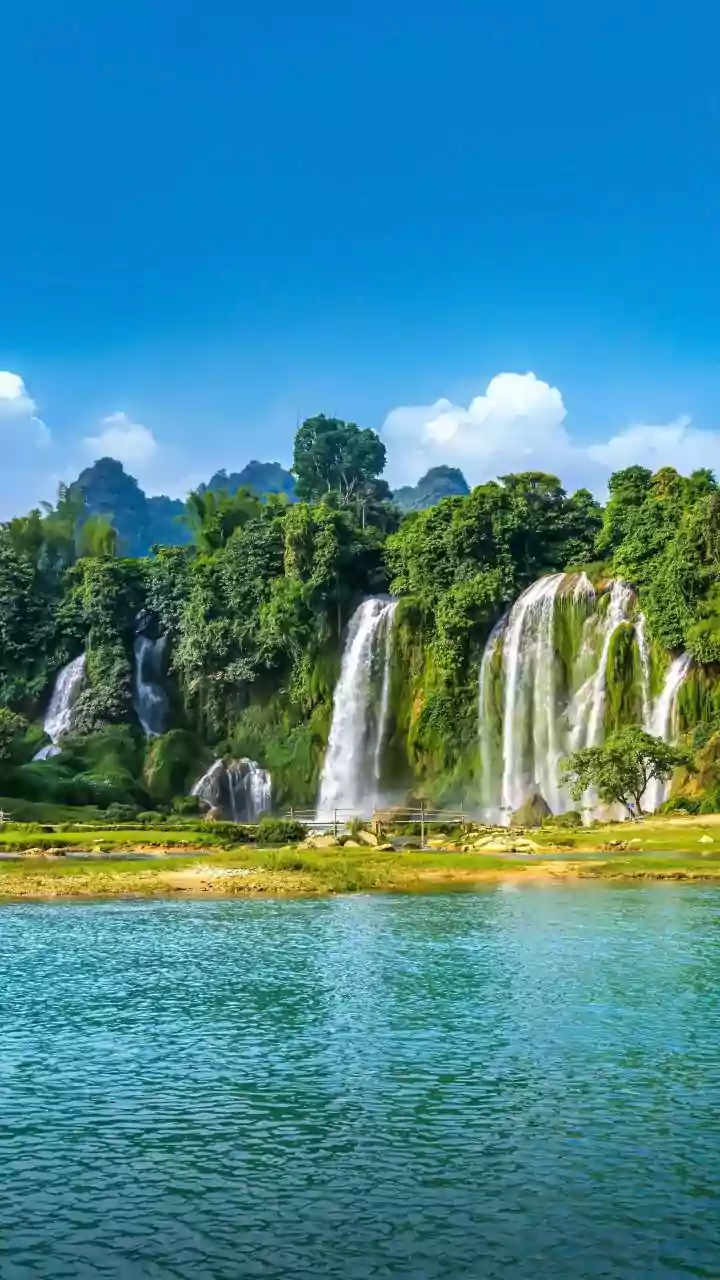
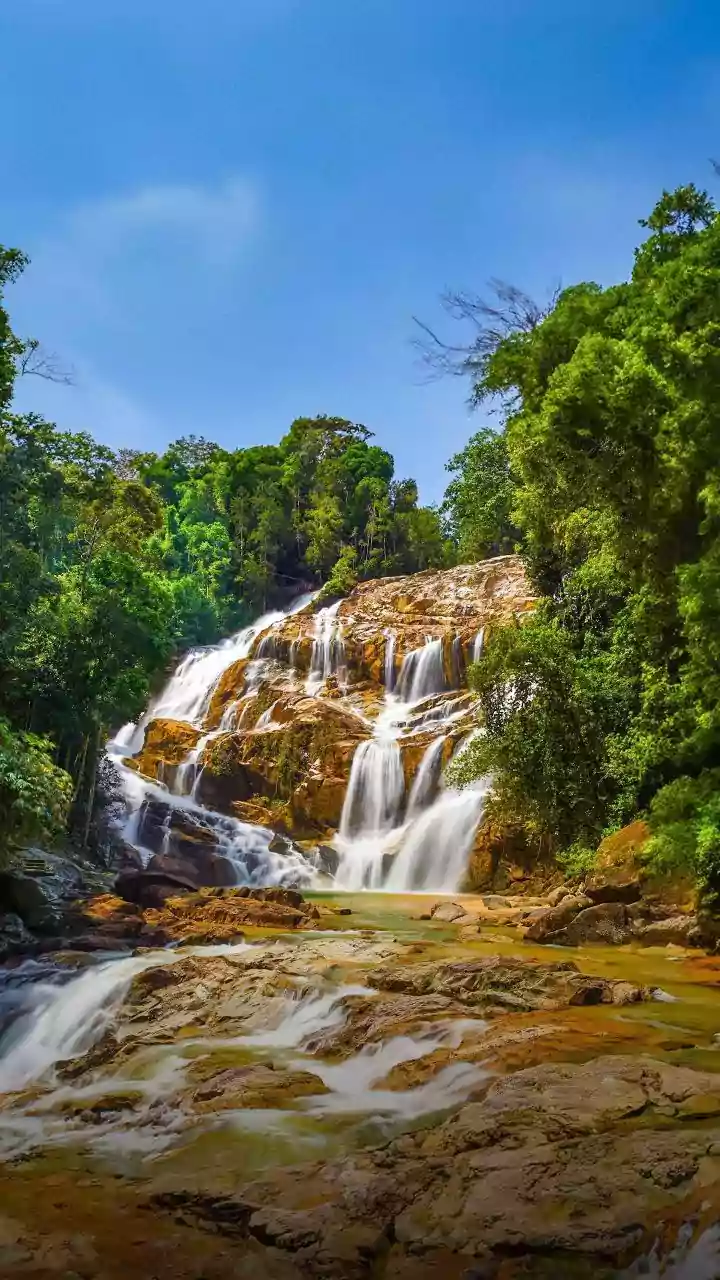
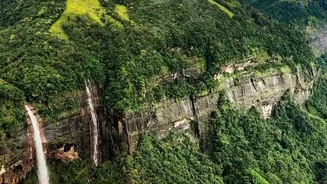
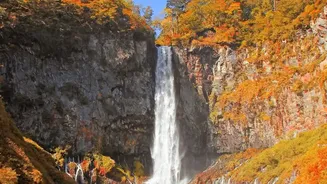
Sohra, formerly Cherrapunji, is legendary for its rainfall, and in autumn, you reap the rewards. The waterfalls, fed by the monsoon, remain powerful and deeply impressive. Nohkalikai Falls, India's tallest plunge waterfall, is a spectacular sight, dropping 340 metres into a vibrant turquoise-green pool. In autumn, visibility is often clearer than during the foggy monsoon months, allowing for breathtaking views. Nearby, the Nohsngithiang Falls, famously known as the Seven Sisters Falls, presents a majestic curtain of water cascading over limestone cliffs. While they flow most powerfully during the monsoon peak, they remain a beautiful sight in the following months, set against the crisp autumn sky.
The Living Root Bridges: A Trek into Natural Architecture
A journey to Meghalaya is incomplete without witnessing the bio-engineering marvel of its living root bridges. The most celebrated of these, the Umshiang Double-Decker Root Bridge in Nongriat village, is not built but grown, meticulously guided over centuries by the Khasi people from the aerial roots of rubber fig trees. Reaching it is an adventure in itself, involving a trek down approximately 3,500 stone steps from the starting village of Tyrna. The journey, which takes about 1.5 to 2.5 hours each way, leads you through dense tropical forests and across swaying suspension bridges. Autumn is arguably the best season for this trek; the path is safer when not slick with rain, and the lower humidity makes the strenuous climb more manageable. The reward is an unforgettable sight and the chance to walk across a 250-year-old living structure.
Beyond the Beaten Path
The "offbeat" in your autumn escape extends beyond the main attractions. While in the Sohra area, consider exploring its mystical caves. The Mawsmai Cave is well-lit and accessible, offering a fantastic introduction to the region's limestone formations. For a more adventurous experience, Arwah Cave is renowned for its visible fossils embedded in the cave walls, providing a unique glimpse into ancient geological history. Another nearby viewpoint is the Mawkdok Dympep Valley, which offers stunning panoramic views of the gorge on the road between Shillong and Sohra. These lesser-visited spots provide a deeper appreciation for the diverse and ancient landscape of the Khasi Hills.
Practical Tips for Your Autumn Trip
Guwahati Airport is the nearest major airport, with Shillong being a 3-4 hour drive from there. It's best to base yourself in Sohra for easy access to the waterfalls and the root bridge trek. For the Nongriat trek, start early to avoid the midday sun and allow enough time to return before dusk, as the full journey can take 5-7 hours. Sturdy shoes with good grip are non-negotiable. While the weather is generally clear, it can be unpredictable, so packing a light waterproof jacket is wise. Carry enough cash, as digital payments and ATMs are scarce in remote villages. To comfortably explore the main highlights without rushing, a trip of at least 5-6 days is recommended.