


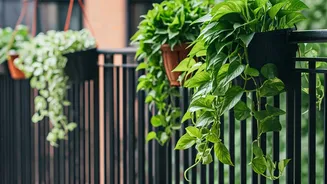
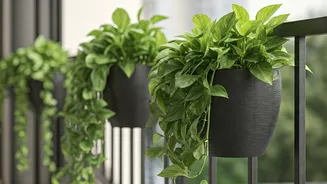


Why Choose String of Pearls?
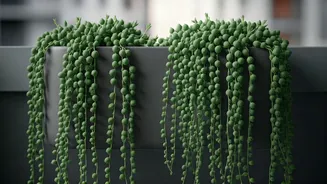
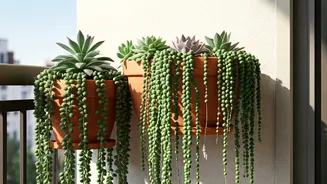
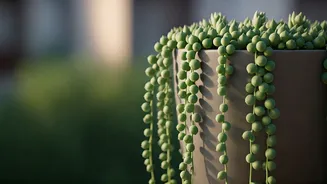
The String of Pearls (Senecio rowleyanus) is a trailing succulent native to the dry regions of Southwest Africa. Its most striking feature is its long, slender stems adorned with small, spherical leaves that look like a delicate pearl necklace. This cascading
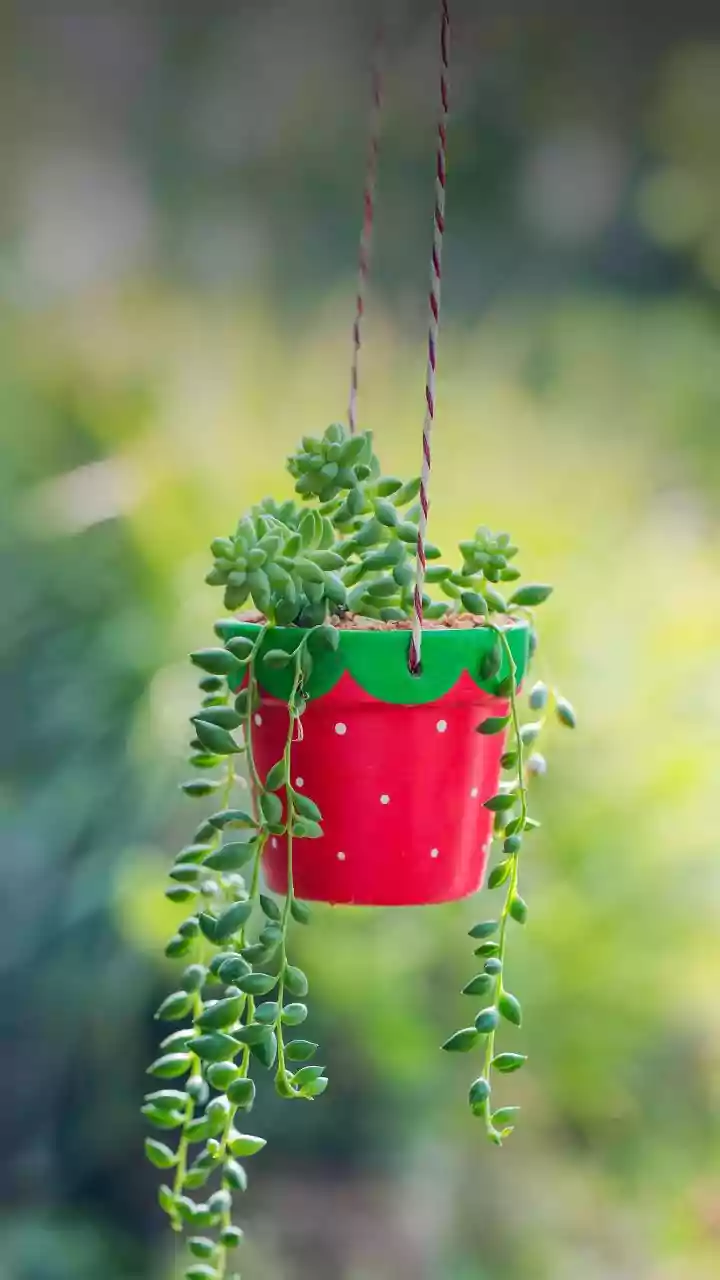
growth habit makes it perfect for hanging baskets or placing on high shelves where its tendrils can drape down, creating a living curtain of green. Beyond its beauty, it's a relatively low-maintenance plant, making it ideal for both seasoned gardeners and beginners. It's a fast grower, with stems capable of trailing two to three feet, offering a high-impact aesthetic for minimal effort.
The Perfect Spot: Light and Location
Finding the right location on your balcony is key. String of Pearls thrives in bright, but indirect, sunlight for about six to eight hours a day. An east-facing balcony that receives gentle morning sun is ideal. While it can handle some direct sun, harsh afternoon light can scorch its delicate leaves, causing them to shrivel. If your balcony gets intense sun, try placing the plant where it can be shielded by a sheer curtain or a larger plant. Consistent temperature is also important; it prefers a warm environment and should be protected from strong drafts.
Watering Without Worry
The most common mistake with String of Pearls is overwatering. As a succulent, its bead-like leaves store water, making it highly drought-tolerant. You should only water the plant when the top inch or two of soil is completely dry. A good rule of thumb is to water thoroughly about once every two weeks during the growing season (spring and summer) and reduce this to about once a month in winter. Wrinkled or flattened pearls are often a sign of underwatering, while mushy, yellowing pearls suggest overwatering and potential root rot. Always use a pot with drainage holes to allow excess water to escape.
Soil and Potting Essentials
This succulent needs well-draining soil to prevent its roots from sitting in water, which leads to rot. A cactus or succulent potting mix is the perfect choice. To improve drainage further, you can add perlite or coarse sand to your mix. When it comes to pots, terracotta is an excellent option because its porous nature helps wick away excess moisture. Choose a pot that isn’t too large; a container that is too big holds more soil and moisture than necessary, increasing the risk of rot.
Troubleshooting and Common Pests
Even with the best care, you might encounter some issues. Shrivelled leaves usually mean the plant is thirsty, while mushy or yellowing pearls are a classic sign of overwatering. If you notice the stems are bare near the soil, it could be a sign that the top of the plant isn't getting enough light. To fix this, you can coil a few strands on top of the soil to encourage rooting and a fuller look. Keep an eye out for common pests like mealybugs and aphids, which can be treated with insecticidal soap or neem oil.
Styling and Easy Propagation
The beauty of String of Pearls lies in its cascading vines. Showcase it in hanging macramé planters or on a high shelf to let it trail dramatically. For a fuller-looking plant, you can place several cuttings in the same pot. Propagation is incredibly simple. Just snip a healthy stem cutting that is a few inches long, let it dry for a day or two, and then either lay it on top of moist succulent soil or place the end in the soil. You can even propagate cuttings in water. Within a few weeks, the cuttings will develop roots, giving you new plants to expand your collection or share with friends.