



First, What Is This Moon Base?
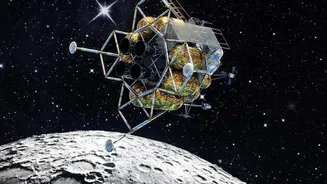
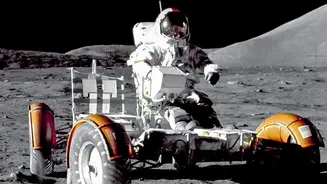
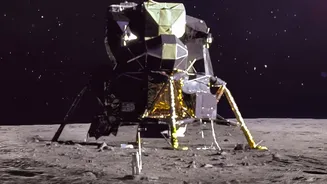
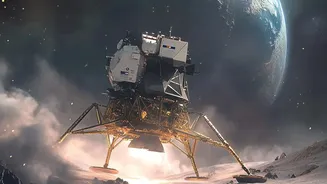
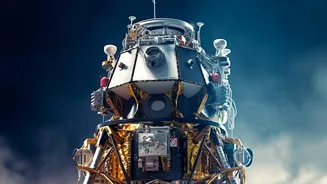
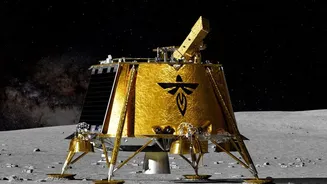
Forget the grainy images of the Apollo era. NASA’s vision for the 21st-century Moon is a permanent, sprawling base near the lunar south pole, built and operated over the next decade as part of its Artemis program. Think of it less like a temporary campsite
and more like the foundation of a city. The goal is to create a sustained human presence where astronauts can live, work, and conduct research for long durations. This ambitious project, expected to cost billions, is designed to be an international effort from the start. NASA is actively seeking partners to contribute everything from robotics and communication systems to scientific instruments and infrastructure. The base will serve as a hub for scientific discovery—particularly searching for water ice in the polar craters—and as a crucial stepping stone for future crewed missions to Mars.
Why Is NASA Tapping India?
The invitation to ISRO isn't a surprise; it's a recognition of India's rapid rise as a major space power. For years, ISRO has been building a reputation for executing complex missions with remarkable cost-effectiveness. Its successful Chandrayaan-3 mission, which made India the first and only nation to land a spacecraft near the lunar south pole, was a game-changer that grabbed global attention. Beyond that, successes like the Mars Orbiter Mission and progress on its own human spaceflight program, Gaganyaan, have proven ISRO's technical prowess. NASA sees a formidable partner in India—one that brings a unique combination of innovative engineering, frugal efficiency, and serious scientific ambition to the table. This partnership builds on years of growing collaboration, including the joint NASA-ISRO Synthetic Aperture Radar (NISAR) satellite and India’s signing of the Artemis Accords in 2023.
What's In It for India?
Joining the Moon Base program would be a massive accelerator for India's own space ambitions. ISRO has bold plans for the coming decades, including launching its own space station by 2035 and landing an Indian astronaut on the Moon by 2040. Partnering with NASA offers a chance to fast-track these goals. It provides invaluable access to cutting-edge technology, decades of NASA's institutional knowledge on human spaceflight, and hands-on experience in planning and executing missions of unprecedented complexity. Instead of developing every technology from scratch, ISRO can leapfrog ahead by integrating with the world's leading space agency. This collaboration would also give India a prominent seat at the table in shaping the rules and standards for the next era of space exploration, boosting its influence in space diplomacy.
This Is About More Than Just Space
The invitation also carries significant geopolitical weight. The U.S.-India strategic partnership has been deepening for years, and space is emerging as a critical new frontier for cooperation. This move is widely seen as part of a broader effort by the United States to build a coalition of like-minded democracies to counterbalance the space ambitions of nations like China and Russia, who are not part of the Artemis Accords. By bringing India into the fold for its flagship lunar project, Washington is solidifying a key alliance in the Indo-Pacific and beyond. For both nations, it’s a strategic alignment that extends from Earth to the Moon, reinforcing a shared vision for a transparent and peaceful future in space.