







The Unseen Network Beneath Our Streets
Beneath the hustle and bustle of modern cities lies a vast, often forgotten network of spaces: subway tunnels, utility corridors, abandoned basements, and old infrastructure. Historically, these areas were simply byproducts of urban development. Today,
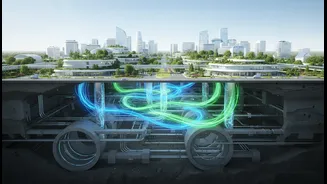
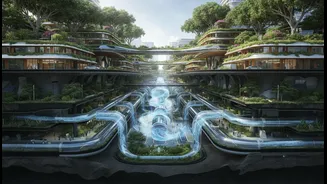
scientists and urban planners see them as a key to tackling one of our most pressing climate challenges: the urban heat island effect. This phenomenon causes cities to be significantly warmer than surrounding rural areas, increasing health risks and energy demand. The idea is to harness these subterranean spaces, leveraging the earth's natural, stable temperature to cool the city above. By channeling air through these underground networks, we can create a passive, large-scale air conditioning system that requires a fraction of the energy of conventional methods.
Harnessing Earth’s Natural Air Conditioner
The science behind this concept, sometimes called an Earth Air Tunnel or geothermal cooling, is elegantly simple. Just a few meters below the surface, the ground maintains a relatively constant temperature throughout the year, insulated from the extreme heat of summer and the cold of winter. In hot climates, the ground is significantly cooler than the surface air. When hot ambient air is drawn into pipes or tunnels buried underground, it transfers its heat to the cooler surrounding soil. By the time this air emerges back into the city, either into buildings or public spaces, it has been naturally and passively cooled. This process has been used for centuries in traditional architecture, from the 'qanats' of ancient Persia to the underground rooms in historical Indian forts in cities like Jaipur.
The Benefits of Cooling from Below
The potential advantages are enormous. Primarily, it’s a powerful strategy for passive cooling, which aims to reduce heat before a mechanical air conditioner even needs to be switched on. Integrating this kind of strategy could cut cooling demands in hot climates significantly, easing the immense pressure on electricity grids during heatwaves. This not only saves money but also reduces the greenhouse gas emissions associated with energy-hungry AC units. Furthermore, by lowering ambient temperatures in urban cores, it can improve public health by reducing the risk of heat-related illnesses and make outdoor spaces more comfortable. Some cities are already putting these ideas into practice. Singapore's Marina Bay uses a district-wide underground chilled water system, and Helsinki utilizes subterranean spaces for thermal comfort.
The Challenges of Going Underground
Despite its promise, implementing underground cooling on a mass scale is not without its hurdles. The most significant challenge is retrofitting existing cities. While incorporating these systems into new construction is relatively straightforward, modifying the dense, complex underground environment of an established city is an engineering and financial puzzle. The initial investment can be high, requiring specialized knowledge for installation and maintenance. There are also environmental considerations; depending on the system, issues like managing condensation, preventing mould growth in pipes, and ensuring radon gas doesn't enter the airflow must be addressed through proper design. Furthermore, the geology and layout of each city are unique, meaning there is no one-size-fits-all solution. A deep understanding of the local subsurface environment is crucial for any project to succeed.