


Saturn Shines All Night
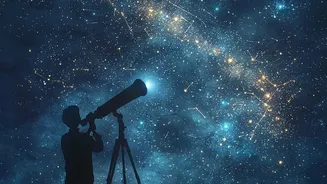
Early October is the best time this year to see Saturn. On October 4, the ringed planet reaches opposition, meaning Earth is directly between it and the sun. This alignment makes Saturn appear at its biggest and brightest for the year, visible all night
long. While you'll need a telescope to see its famous rings, Saturn will be unmistakable to the naked eye as a steady, bright, yellowish point of light rising in the east around sunset and travelling across the sky until dawn. It will be the brightest object in its patch of sky, making it an easy target for even the most casual observer.
The Draconid Meteor Shower
October's first meteor shower, the Draconids, is an unusual one. While most showers are best after midnight, the Draconids are best viewed in the evening, just after full darkness falls. The shower peaks on the night of October 8-9. This year’s viewing conditions are excellent, as the peak coincides with a nearly new moon, meaning darker skies and better chances to spot the meteors. Though typically a modest shower with about 10 meteors per hour, the Draconids are known for occasional, unexpected outbursts of activity. The meteors will appear to radiate from the constellation Draco the Dragon, but you can see them streaking anywhere in the sky.
A Parade of Planets in the Morning
Early risers are in for a treat throughout October, with Mars and Jupiter making bright appearances in the predawn sky. On October 5, you can spot the crescent moon in a close pairing with the reddish hue of Mars above the eastern horizon. Just a day later, on October 6, the moon will have a close encounter with bright Jupiter. Jupiter will be easily visible in the eastern sky in the hours before sunrise all month. While Venus and Mercury also make an appearance this month, they will be very low on the horizon just after sunset, making them difficult to spot for most observers.
The Orionid Meteor Shower
The second celestial light show this month is the Orionid meteor shower, which peaks on the nights of October 21 and 22. These meteors are fragments of the famous Halley's Comet, and they are known for being particularly fast and bright. The shower can produce up to 20 meteors per hour under dark skies. This year, a bright waxing gibbous moon will interfere with viewing in the evening. However, the moon will set a few hours before dawn, opening up a perfect window of dark skies for prime meteor spotting until sunrise. For the best show, find a spot away from city lights and look up after midnight.
The Full Hunter's Moon
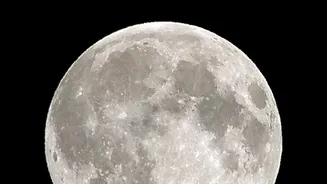
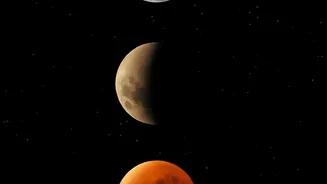
October’s full moon, traditionally known as the Hunter’s Moon, will rise on the evening of October 25 and reach its peak illumination just after midnight on October 26. The name comes from the time of year when hunters prepared for winter, using the moonlight to spot animals in the freshly harvested fields. As it rises near the horizon, the moon may take on a beautiful orange or yellowish tint. This is due to a phenomenon where Earth's atmosphere scatters the blue light, letting more red light pass through to your eyes.