






The Spreading Scourge of Salinity
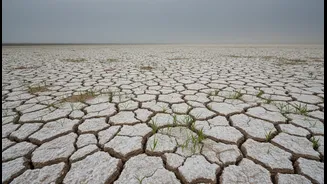
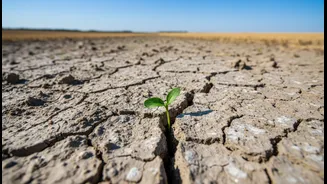
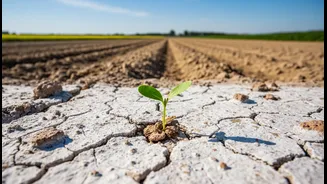
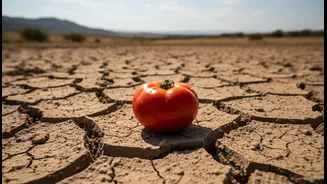
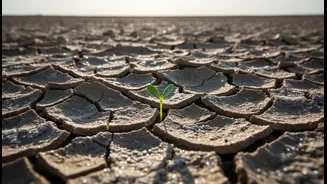
Soil salinity occurs when soluble salts accumulate in the root zone of plants, making it difficult for them to absorb water and essential nutrients. This 'salt stress' leads to stunted growth, lower yields, and in severe cases, complete crop failure.
In India, an estimated 6.7 million hectares of land are affected by salinity and a related condition, sodicity. Projections are alarming, suggesting that by 2050, up to 50% of the country's arable land could be impacted. The issue is particularly acute in states like Gujarat, Uttar Pradesh, Maharashtra, and West Bengal, which together account for about 75% of the nation's salt-affected soils. The causes are a mix of natural and human factors, including rising sea levels contaminating coastal groundwater, and on the plains, inefficient irrigation practices and overuse of chemical fertilizers which leave behind salt deposits.
The Human and Economic Cost
For India’s farmers, this is not a distant scientific problem; it is a livelihood crisis. Farmers report watching their crop yields decline year after year despite using more fertilisers, which can paradoxically worsen salinity. This decline in productivity directly translates to mounting debt and financial distress. The national economic impact is staggering. India loses an estimated 16.8 million metric tons of crops annually due to soil salinity, resulting in massive financial losses. This loss of production not only affects farmer incomes but also puts upward pressure on food prices and threatens the stability of a sector that employs a vast portion of the population. The social consequences are profound, contributing to migration from rural areas as farming becomes untenable.
Old Solutions at Their Limit
Traditionally, farmers and scientists have used several methods to manage saline soils. These include applying chemical amendments like gypsum to reclaim sodic soils and leaching—or flushing—the soil with large amounts of fresh water to wash the salts away. Subsurface drainage systems have also been installed in some areas to remove salty groundwater. While these techniques have been vital, reclaiming over 2 million hectares of land, they are becoming less effective and sustainable. Climate change is a major factor, with erratic rainfall and increased evaporation concentrating salts in the topsoil. Furthermore, depleting groundwater tables, especially in arid and semi-arid regions, make large-scale flushing an increasingly impractical and expensive option.
The Call for Innovative Research
This is where new research becomes critical. The focus is shifting towards a multi-pronged approach that combines smarter farming with cutting-edge science. One of the most promising frontiers is crop genetics. Scientists at institutes like the ICAR-Central Soil Salinity Research Institute (CSSRI) are working to develop new crop varieties that are inherently tolerant to salt stress. This involves conventional breeding as well as modern biotechnological tools. For example, researchers have successfully developed salt-tolerant varieties of rice, wheat, and mustard, which are now being cultivated in affected areas. Work is also being done to identify genes from wild, salt-loving plants (halophytes) that could be used to engineer greater resilience in staple crops like rice.
Technologies for a Sustainable Future
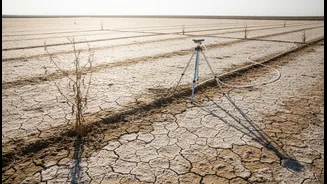
Beyond genetics, new technologies offer hope. Precision agriculture, using tools like drones and remote sensors, allows for the precise monitoring of soil salinity levels across vast areas. This enables targeted interventions rather than one-size-fits-all solutions. Smart irrigation systems, such as drip irrigation, deliver water directly to the plant's roots, minimizing water loss and salt buildup. There is also growing interest in 'biosaline agriculture'—cultivating crops that naturally thrive in salty conditions and exploring soil amendments like biochar, a type of charcoal that can improve soil health and trap salts. Some startups are even developing innovative seed treatments that stimulate a plant's natural defenses against salinity before it is even planted.