


The Science of a Rain Shadow
To understand Ladakh's unique climate, you first need to understand the 'rain shadow' effect. When moisture-laden winds from the sea, like the Indian summer monsoon, encounter a massive mountain range, they are forced to rise. As the air ascends, it cools
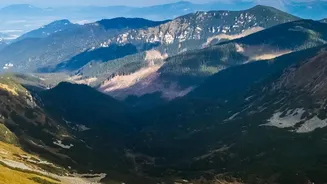
and condenses, releasing its moisture as rain or snow on the windward side of the mountains. By the time this air mass crosses over the peaks to the other side—the leeward side—it has lost most of its moisture. This creates a dry region, or a 'rain shadow'. The Himalayas are the primary mountain range creating this effect for Ladakh.
Ladakh: A High-Altitude Desert
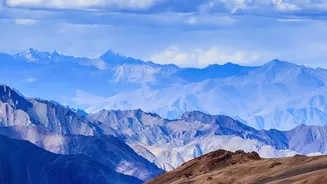
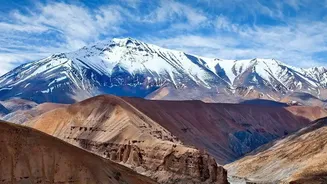
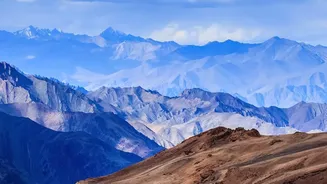
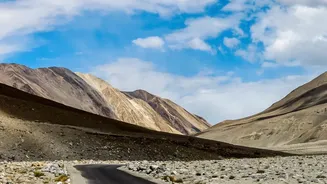
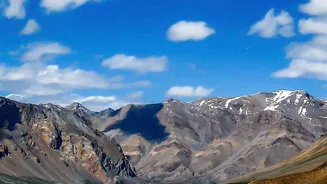
Ladakh is perfectly positioned to benefit from this phenomenon. It lies to the north of the main Himalayan range, which acts as a colossal barrier against the southwest monsoon clouds that drench much of the subcontinent from June to September. These powerful mountains block the clouds, forcing them to deposit their rain on the southern slopes in states like Himachal Pradesh and Uttarakhand. As a result, Ladakh receives incredibly low rainfall, often less than 100mm annually, earning it the title of a 'cold desert'. What little precipitation it gets is mostly in the form of winter snowfall, which feeds the glaciers that are the region's main water source.
The Ideal Monsoon Getaway
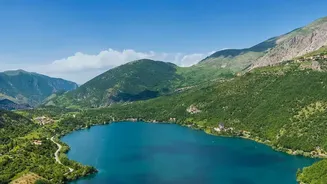
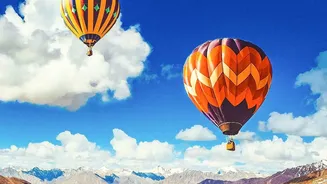
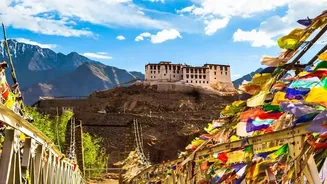
This geographical quirk makes Ladakh an exceptional travel destination during the monsoon months of July and August. While other mountain destinations face landslides and travel disruptions, Ladakh's internal roads and high passes are generally open and stable. This period is considered peak season for a reason: the weather is pleasant, with daytime temperatures in Leh hovering between 20°C and 30°C. The skies are typically clear, offering stunning views of the dramatic landscapes and making it perfect for sightseeing, trekking, and photography. In fact, the minimal rain can even bring out patches of green, adding a rare touch of vibrancy to the arid terrain.
Adventures Under the Sun
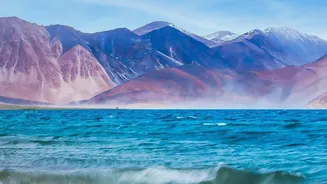
A trip to Ladakh during this time offers a full spectrum of adventure without the worry of constant rain. All major attractions like Pangong Tso, Nubra Valley, and Tso Moriri are accessible. It's an ideal time for road trips, whether on a motorcycle or in a car, with iconic routes like the Khardung La pass open for travellers. Activities like white-water rafting on the Zanskar and Indus rivers are at their peak. You can go on a double-humped camel safari in the Hunder sand dunes, camp under star-filled skies, or attend vibrant monastic festivals that often take place during the summer.
A Few Words of Caution
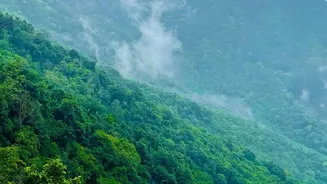
While Ladakh itself is dry, getting there by road can still be challenging. The highways connecting to Ladakh from Manali and Srinagar pass through regions that do experience heavy monsoon rains. These stretches can be prone to landslides and roadblocks. Many travellers opt to fly directly into Leh to bypass these potential disruptions. Once in Ladakh, the primary health concern is Acute Mountain Sickness (AMS) due to the high altitude, which is over 3,000 meters in most places. It is crucial for visitors to acclimatise for a couple of days in Leh before venturing to higher altitudes.