
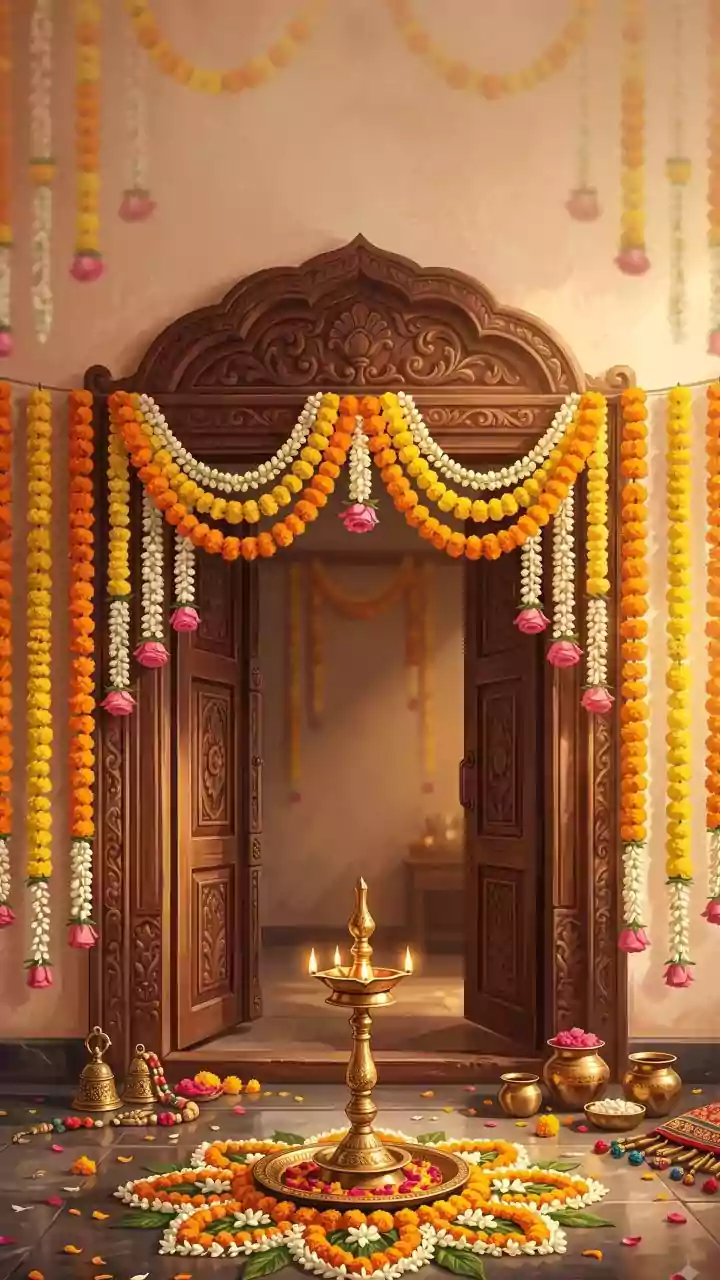



Why Marigold and Rice Flour?
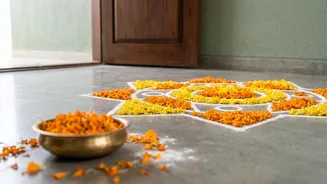
Using natural materials is not only eco-friendly but also deeply symbolic. Marigold flowers, with their vibrant saffron and orange hues, are considered auspicious and represent the sun's energy, prosperity, and positivity. They are believed to offer protection
from negative influences and are a staple in festival decorations for their beauty and durability. Traditionally, rangoli was made with rice flour, a practice that carries its own significance. It was seen as an offering to tiny creatures like ants and insects, symbolizing a harmonious coexistence with nature and gratitude for life's abundance. Together, these materials create a rangoli that is not just visually appealing but also rich in fragrance and cultural meaning.
Gathering Your Simple Materials
The beauty of this type of rangoli lies in its simplicity. You don’t need a long list of supplies to get started. Here is what you will need: Fresh marigold flowers (a mix of yellow and orange looks wonderful), rice flour for your white outlines and filling, a piece of chalk for sketching your design, and a clean, dry surface at your doorstep. You can also gather other natural elements like leaves, rose petals, or even lentils to add more texture and colour to your creation.
Step 1: Prepare Your Canvas
Start with a clean slate. Sweep your doorstep or chosen area thoroughly to remove any dust and debris. Ensure the surface is completely dry before you begin, as moisture will cause the rice flour to clump and the flower petals to stick unevenly. A clean and clear space will not only make your rangoli look better but also signifies a pure and welcoming start to the festivities. In many homes, drawing a rangoli is a daily morning ritual performed after cleaning the entrance.
Step 2: Outline Your Design
Once your area is prepared, it's time to bring your design to life. If you're a beginner, don't feel pressured to create something overly complex. Simple geometric patterns, circles, or a basic five-petal flower can look incredibly elegant. Use a piece of chalk to lightly sketch your design onto the floor. This will act as your guide. Alternatively, you can use the rice flour itself to draw the outline. Hold a small amount between your thumb and index finger and let it flow gently as you trace your pattern. The white outline provides a crisp border that makes the colours pop.
Step 3: Fill with Petals and Flour
This is the most meditative and enjoyable part of the process. Start by separating the petals from the marigold flowers. You can use them whole or tear them into smaller pieces for a different texture. Begin filling in your design from the centre and work your way outwards. Use the vibrant orange and yellow petals for the main sections of your pattern. The rice flour can be used to fill in other areas, providing a beautiful white contrast that makes the marigold colours appear even brighter. Don’t be afraid to experiment by arranging the petals in dense layers for a fuller look.
Finishing Touches for a Festive Glow
To elevate your rangoli, consider adding some finishing touches. Placing small clay lamps or 'diyas' around your design can create a warm and inviting glow, especially in the evening. You can also incorporate other natural elements like green leaves for contrast or rose petals for a splash of red or pink. If you have leftover rice flour, you can add dots or delicate lines around the border to complete the look. Remember, a rangoli doesn't have to be perfect; the act of creating it is a celebration in itself.