




For the first time in over 50 years, humans have journeyed around the Moon. The Artemis II crew returned not just as heroes, but as scientists with a treasure trove of new data, giving us a fresh, stunning perspective on its mysterious far side.
Seeing the Moon with Human Eyes
The Artemis
II mission, which flew in April 2026, was a historic 9-day journey that sent four astronauts on a flyby around the Moon. This was humanity’s first crewed trip beyond low Earth orbit since the final Apollo mission in 1972. While robotic probes have given us incredible images, Artemis II put the most sophisticated sensors back in lunar orbit: human eyes. The crew was specifically trained to act as field geologists, describing textures, colours, and features in real-time. NASA has now released over 800 gigabytes of data from the mission, including thousands of high-resolution photos and hours of crew observations, offering a completely new perspective.
Flashes in the Dark
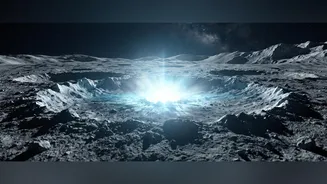
One of the most thrilling discoveries happened during the 40-minute communications blackout as the Orion capsule flew behind the Moon. In the profound darkness, with the Sun blocked and Earth out of sight, crew members witnessed five faint, pinprick-like flashes of light on the lunar surface. Scientists on the ground were ecstatic, quickly confirming these were not camera glitches or cosmic rays but impact flashes — the result of small meteoroids, some perhaps only the size of a grape, striking the Moon. These are likely the faintest impact flashes ever seen by humans, providing crucial data for assessing the risk to future lunar bases from constant micro-bombardment.
A New Lunar Rainbow
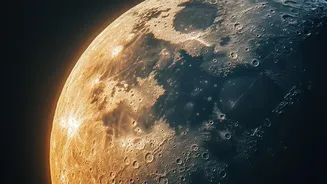
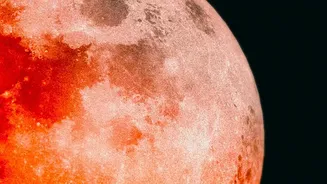
From Earth, the Moon appears to be a world of grey and white. But the Artemis II astronauts saw a far more colourful landscape. During their seven-hour survey, they described seeing a muted rainbow of colours, including brown, tan, and even surprising shades of 'swampy green' and 'jaundiced yellow', particularly around the Aristarchus Plateau and the vast Orientale Basin. These colour variations are not just beautiful; they are geological clues that can help scientists identify different types of rocks and minerals on the surface, guiding where future missions might land to search for resources. The astronauts' ability to notice subtle colour nuances that cameras might miss proved the unique value of human observation.
First Eyes on Unseen Territory
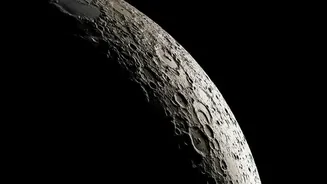
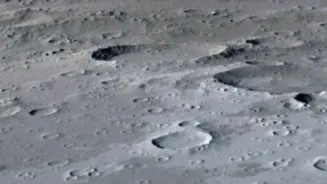
Because the Moon is tidally locked with Earth, one side — the far side — permanently faces away from us. While we have mapped it with orbiters, the Artemis II crew were the first humans in history to see certain illuminated sections of the far side up close. Their observations of the rugged, heavily cratered terrain were revelatory. Astronaut Victor Glover noted the extreme variations in the landscape, describing 'islands of terrain' completely surrounded by darkness, indicating dramatic changes in elevation. They captured detailed imagery of key features like the Hertzsprung Basin, a massive double-ringed structure that helps tell the story of the solar system's violent past.
Why These Observations Matter
The findings from Artemis II are more than just cosmic sightseeing. They represent a critical step in our return to the Moon. The data on impact flashes directly informs the design and safety protocols for the planned Artemis Base Camp. The detailed geological and colour observations, captured through more than 10,000 photos, will refine our maps and help pinpoint the best locations for resource prospecting, such as looking for water ice in permanently shadowed regions. Furthermore, the mission successfully tested new laser communication systems, allowing data to be sent back to Earth at speeds up to 260 Mbps, a massive leap that will be essential for supporting a long-term human presence on the Moon.