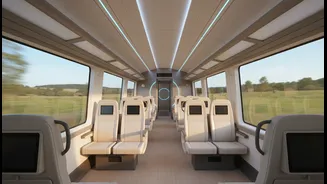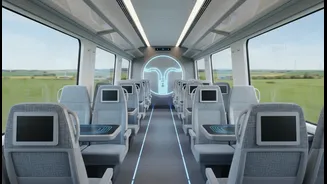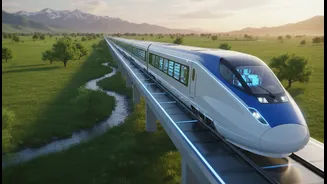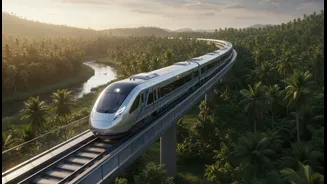






The Green-Signal Moment
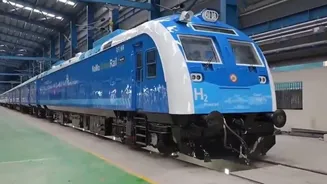
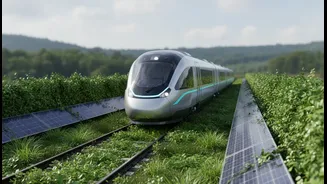
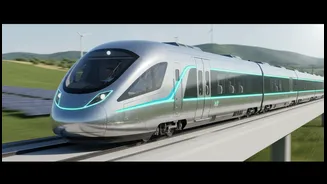
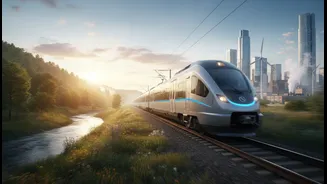
Indian Railways is set to launch the nation's first hydrogen-powered train, with Prime Minister Narendra Modi expected to flag off the inaugural journey on July 17 from Jind in Haryana. This launch marks a significant milestone in India's journey towards
sustainable mobility, placing it among a select group of countries like Germany and Japan that are actively developing hydrogen rail technology. After months of extensive trials, the train is ready for its commercial run on the 89-kilometre Jind-Sonipat route. The successful tests, which saw the train reach speeds of up to 120 kmph, have cleared the path for this pilot project to move forward.
How Do Hydrogen Trains Work?
Unlike conventional trains that burn diesel or draw power from overhead electric lines, a hydrogen train is essentially an electric train that generates its own power onboard. The technology revolves around a fuel cell system. Inside the fuel cell, hydrogen stored in high-pressure tanks reacts with oxygen drawn from the air. This electrochemical reaction produces electricity to power the train's motors, with the only by-product being water vapour, making it a zero-emission mode of transport. The train, a retrofitted Diesel Electric Multiple Unit (DEMU), is the world's longest 10-coach hydrogen train, powerful enough to carry up to 2,600 passengers.
An 'Atmanirbhar' Push with a Little Help
This groundbreaking project is a showcase for the 'Atmanirbhar Bharat' initiative. The train was designed by the Research Design and Standards Organisation (RDSO) in Lucknow and manufactured at the Integral Coach Factory (ICF) in Chennai. The complex task of integrating the propulsion system was handled by Hyderabad-based Medha Servo Drives. While the design, manufacturing, and integration are indigenous, the core fuel cell modules are supplied by Canadian company Ballard Power Systems, highlighting a collaborative approach to adopting this advanced technology. An entirely local ecosystem, including a hydrogen production and refueling station at Jind, has been established to support the train's operations.
Why Hydrogen for Indian Railways?
The push for hydrogen trains is a key part of Indian Railways' ambitious goal to become a 'Net Zero' carbon emitter by 2030. While large-scale electrification is a primary strategy, hydrogen offers a clean alternative for routes that are difficult or costly to electrify, such as heritage lines and hilly terrains. The Jind-Sonipat route was specifically chosen as a pilot because it is a non-electrified line, making it a perfect test case. By replacing diesel-run trains, the new hydrogen service will significantly reduce pollution and India's dependence on fossil fuels. The first train itself is expected to reduce annual carbon dioxide emissions by over 11 metric tons.
The Road Ahead: Challenges and Opportunities
While the launch is a monumental step, scaling up the technology presents challenges. The initial costs of retrofitting trains and building the necessary infrastructure are high. Furthermore, the cost of producing 'green hydrogen'—hydrogen made using renewable energy—is currently higher than diesel, though it is expected to fall significantly by 2030. Ensuring a steady and safe supply of hydrogen across a vast rail network is another logistical hurdle that needs to be addressed. However, the successful pilot on the Jind-Sonipat line will provide invaluable data and experience, paving the way for the 'Hydrogen for Heritage' initiative, which aims to run 35 hydrogen trains on scenic and heritage routes across the country.