



The First Glimpse: A Network of Eyes
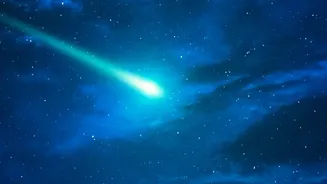
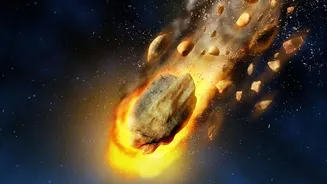
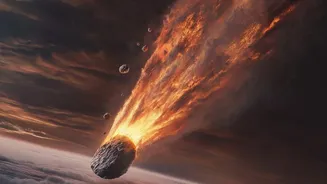
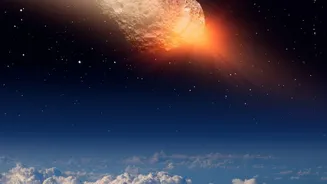
Long before a space rock enters our atmosphere, it's a meteoroid traveling through the solar system. Most are too small for even powerful telescopes to spot in the vastness of space. The first time we typically become aware of them is when they hit the atmosphere at incredible
speeds and burn up, creating the fiery streak we call a meteor. This initial detection is the crucial first step, and it relies on a vast network of observers on Earth. This includes professional systems like NASA's All-sky Fireball Network, which uses specialised video cameras to constantly watch the sky for bright meteors, known as fireballs. But it also includes a global community of amateur astronomers and even the general public, whose reports, photos, and dashboard camera footage provide invaluable initial data.
Triangulation: Turning Light into a Trajectory
A single observation tells you a meteor occurred, but it doesn't tell you where it was or where it was going. This is why having a network of cameras is so important. When the same fireball is captured by multiple cameras from different locations, scientists can use a method called triangulation. By comparing the meteor's path against the background stars from each viewpoint, they can precisely calculate its trajectory, speed, and altitude in the atmosphere. This is the fundamental reason tracking begins on Earth: you need multiple, widespread vantage points on the ground to build a 3D model of the meteor's flight path. A single satellite in orbit wouldn't have the same geometric advantage for calculating this initial atmospheric trajectory.
Beyond the Light: The Role of Radar
The visible part of a meteor's journey is often very short. Once it slows down and cools, it stops glowing and enters a phase called 'dark flight'. At this point, it's invisible to cameras and the naked eye, but not to other tools. This is where weather radar comes in. The same systems used to track rain and storms can detect falling meteorite fragments. By analysing radar data, scientists can see these non-luminous rocks as they fall, allowing them to map a 'strewn field' — a predicted landing area for the surviving pieces. This technique is crucial for meteorite hunters and scientists, as it guides them to where these valuable cosmic samples might be found on the ground.
Working Backwards: Finding a Meteor's Origin
Once the atmospheric trajectory and speed are accurately calculated from ground observations, scientists can do something remarkable: they can rewind. By extrapolating the path backward, out of the atmosphere and into space, they can determine the meteoroid's original orbit around the Sun. This allows them to figure out where it came from, whether it was a fragment from an asteroid in the asteroid belt or icy debris left behind by a comet. Linking a specific meteor shower to its parent body, or even a recovered meteorite to its parent asteroid, is like getting a free sample return mission from a distant part of our solar system. This is only possible because of the precise initial data gathered from the ground.
Why It Matters: Science and Safety
This ground-up approach to meteor tracking is fundamental for two key reasons. First, for science. Each recovered meteorite is a physical piece of another world, offering priceless clues about the formation and history of our solar system. Quickly recovering them after they fall, guided by radar and camera data, ensures they are as pristine as possible, uncontaminated by Earth's environment. Second, for planetary defense. While most meteors are harmless, tracking their paths helps scientists build comprehensive models of the meteoroid environment around Earth. Understanding the flux, or how many objects of different sizes hit our planet, is critical for assessing risks and ensuring the safety of satellites, astronauts, and, ultimately, us on the ground.