




The Sun’s Unseen Temper
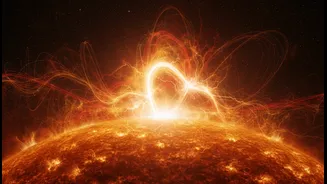
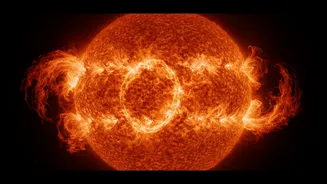
The Sun, the source of all life on Earth, has a volatile side. It periodically releases enormous bursts of energy and matter in two main forms: solar flares and coronal mass ejections (CMEs). A solar flare is an intense explosion of radiation. A CME,
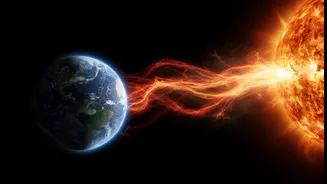
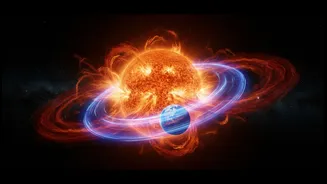
on the other hand, is a massive bubble of plasma and magnetic field that gets hurled into space, sometimes traveling at millions of kilometres per hour. These events are born from the Sun's tangled magnetic fields, often near sunspots. When these magnetic fields snap and realign, they can launch these powerful storms. While many CMEs miss our planet entirely, the ones directed at Earth can have serious consequences, triggering what are known as geomagnetic storms.
A Fragile Digital Infrastructure
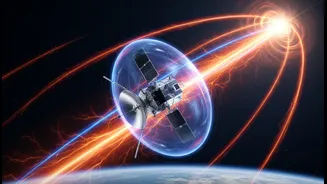
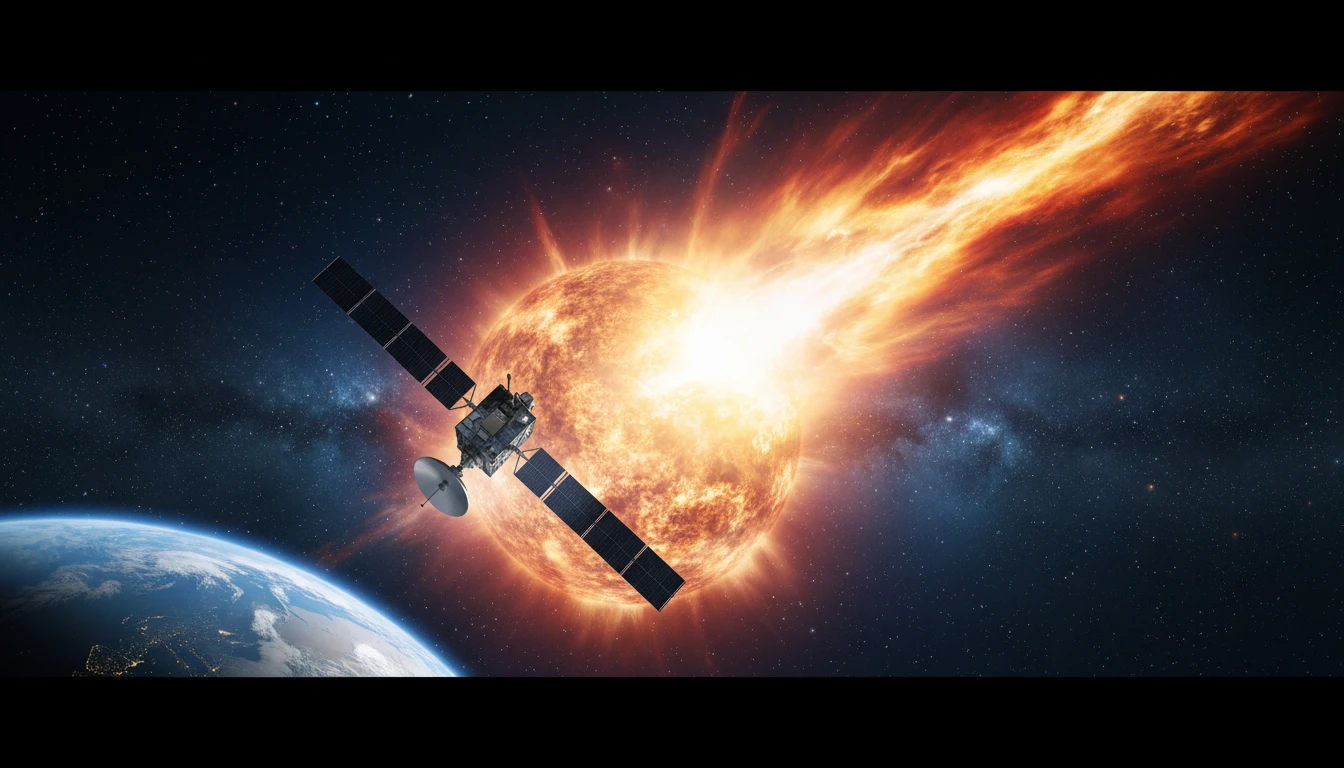
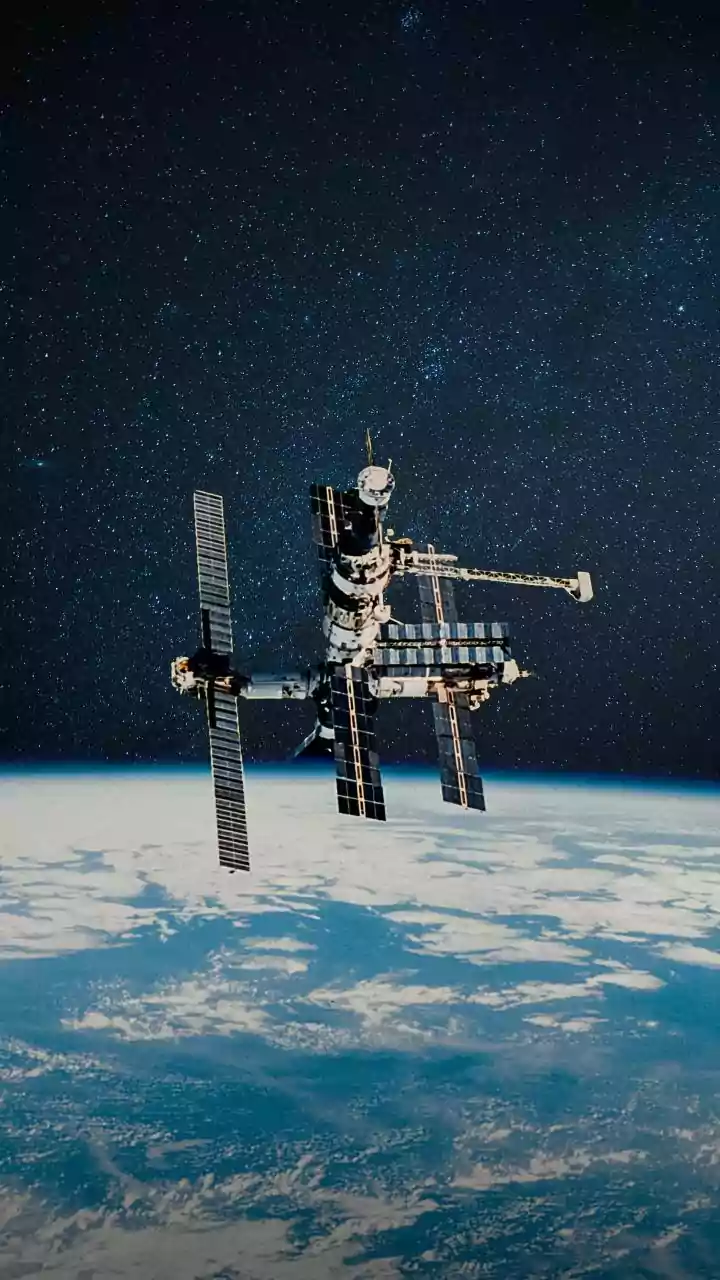
Our increasing reliance on technology makes us vulnerable. When a CME strikes Earth's magnetic field, it can wreak havoc. For satellites in orbit, the effects can be manifold. The surge of charged particles can damage sensitive electronics and degrade solar panels. The storm can also heat and expand Earth's upper atmosphere, increasing drag on satellites in low-Earth orbit. This can cause them to lose altitude and even risk re-entry if not corrected, as seen in a 2022 incident that led to the loss of dozens of Starlink satellites. On the ground, the impact is just as significant. These storms can disrupt the ionosphere, the layer of the atmosphere that GPS signals must travel through. This can lead to positioning errors of several meters or even a complete loss of signal, affecting everything from ride-hailing apps and food delivery services to aviation and precision agriculture. Power grids can also be affected, as geomagnetic disturbances can induce damaging currents in long transmission lines.
The Art of Space Weather Prediction
Just like weather forecasting on Earth, predicting space weather involves constant observation and sophisticated modelling. Scientists use a fleet of space-based and ground-based observatories to monitor the Sun's activity. They watch for the development of complex sunspot regions, which are often precursors to flares and CMEs. By analysing data and images, forecasters can estimate the size, speed, and direction of a CME to determine if it poses a threat to Earth. The fastest CMEs can reach us in as little as 15 to 18 hours, giving us a limited window to prepare. This makes early detection crucial. Advanced forecasting systems now use a combination of real-time observations and historical data to provide probabilistic forecasts, helping operators understand the risk of an impending storm.
From Forecast to Protective Action
An accurate forecast is the first line of defense. When a significant solar storm is predicted to hit Earth, satellite operators can take pre-emptive measures to protect their valuable assets. This can include temporarily shutting down non-essential systems or orienting the spacecraft to better shield sensitive components from the incoming radiation. Airlines can reroute flights that would normally travel over the polar regions, where the effects of solar radiation are strongest, to protect passengers and communications systems. Power grid operators can also take steps to stabilize their networks and prevent the widespread blackouts that a severe storm could cause. The goal is to turn a forecast into actionable intelligence, mitigating the worst of the storm's impacts before it even arrives.
India’s Unblinking Eye on the Sun
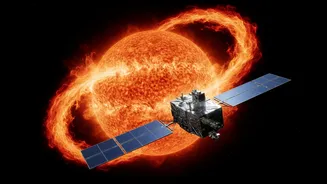
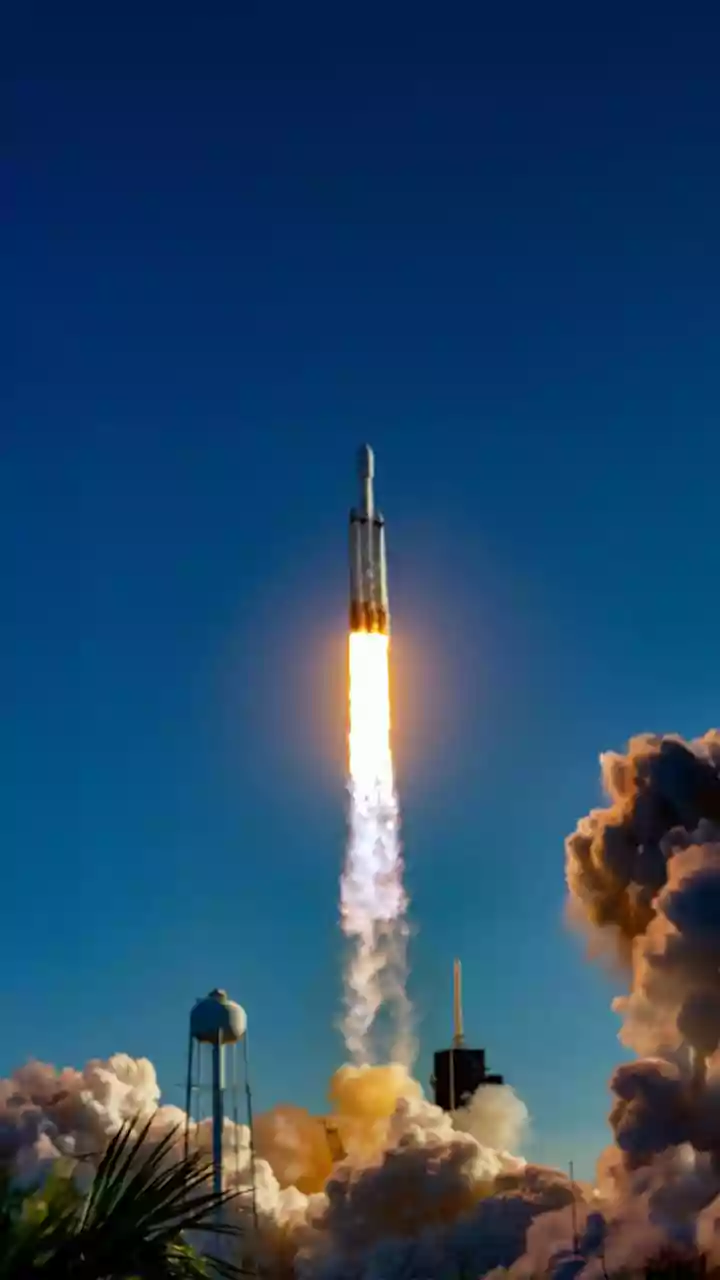
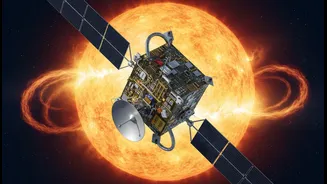
India has taken a significant step in contributing to global space weather monitoring with its Aditya-L1 mission. Launched by ISRO, this is India's first dedicated solar observatory. It is strategically placed at the Lagrange Point 1 (L1), about 1.5 million kilometres from Earth, which gives it a continuous, uninterrupted view of the Sun. Aditya-L1 is equipped with seven instruments designed to study the Sun's atmosphere, the dynamics of CMEs, and the solar wind. The data it collects is crucial not only for Indian scientists but for the global community, providing vital information to improve our understanding of solar dynamics and enhance space weather forecasting models. The mission has already begun collecting valuable scientific data, marking India's arrival as a key player in solar research.