





In our busy lives, simple moments of release are essential. Apanasana, a gentle yoga posture, offers a profound sense of relief for both the body and mind by simply hugging the knees to the chest. It's an accessible tool for everyday wellness.
Understanding Apanasana
Apanasana,
often called the 'Knees-to-Chest Pose' or 'Wind-Relieving Pose', is a foundational posture in yoga. The name comes from the Sanskrit words 'Apana', meaning the downward flow of life force energy, and 'Asana', meaning pose. This name points to the pose's primary functions: aiding elimination and promoting a sense of grounding. The gentle compression of the abdomen massages the internal organs, which can help with digestion, bloating, and gas. It's a restorative pose often used at the beginning of a practice to warm up the hips or at the end to cool down and release tension from the spine.
How to Perform Apanasana Safely
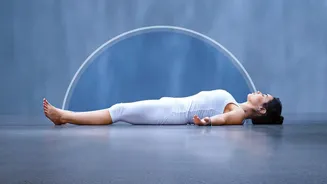
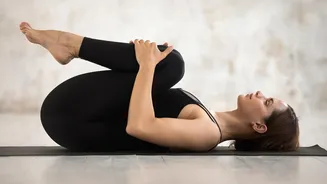
Performing Apanasana correctly ensures you receive its full benefits without strain. Follow these simple steps: 1. Start by lying comfortably on your back on a mat. Extend your legs and let your arms rest by your sides. Take a moment to allow your entire back to relax into the floor. 2. As you exhale, slowly bend both knees and draw them in towards your chest. 3. Gently clasp your hands around your shins, just below your knees. If this is uncomfortable, you can hold the backs of your thighs instead. 4. Keep your shoulders, neck, and head relaxed on the mat. Avoid lifting your lower back; the goal is to lengthen the spine. 5. Hold the pose for 30 seconds to a minute, breathing deeply. With each inhalation, you might feel the abdomen press against the thighs; with each exhalation, you can gently draw the knees a little closer to your chest. 6. To release, slowly lower your feet back to the floor on an exhale and extend your legs to rest.
Key Benefits for Body and Mind
The simplicity of Apanasana belies its wide-ranging benefits. Physically, it is celebrated for its ability to release tension in the lower back, making it a go-to for relieving stiffness from prolonged sitting. The pose gently stretches the glutes and hips, enhancing flexibility and mobility. By compressing the abdominal organs, it stimulates digestion, helping to alleviate issues like constipation and bloating. Mentally, the posture is deeply calming. The fetal-like position can create a sense of safety and comfort, activating the body’s 'rest and digest' response to reduce stress and anxiety. Many find it a perfect addition to a bedtime routine to promote better sleep.
Variations for Every Body
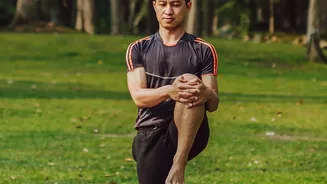
Yoga is about adapting poses to fit your body, not the other way around. Apanasana offers several modifications. One Knee at a Time (Ardha Apanasana): If hugging both knees is too intense, practice with one leg at a time. Extend one leg straight on the mat while drawing the other knee to your chest. This is particularly good for focusing on one side of the lower back and for those with tighter hips. It is often recommended to start with the right knee to stimulate the ascending colon, followed by the left to stimulate the descending colon. Knees Apart: For those with a larger chest or abdomen, or during early pregnancy, separating the knees and drawing them towards the armpits can create more space and comfort. Use a Strap: If you have trouble reaching your shins, loop a yoga strap or a belt around them. This allows you to maintain a relaxed upper body without straining. Gentle Rocking: A slow, gentle rock from side-to-side can provide a pleasant massage for the entire lower and mid_back.
When to Be Cautious
While Apanasana is a very safe and gentle pose, there are situations where caution is advised. Individuals who have recently had abdominal, knee, or hip surgery should avoid this pose until cleared by a doctor. It should also be avoided by those with an active hernia. Pregnant women, especially after the first trimester, should practice a modified version with knees wide apart to avoid compressing the belly. If you have a significant spinal injury, such as a herniated disc, it's crucial to consult a healthcare professional before attempting this or any new yoga posture. The golden rule is always to listen to your body and never push into pain.