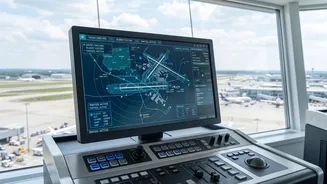







The intricate, invisible system that manages tens of thousands of daily flights is undergoing a massive, multi-decade overhaul. But the focus of the FAA's NextGen program isn't on changing the rules pilots follow, but on rebuilding the engine itself.
What is the NextGen Program?
The Next Generation Air Transportation System, or NextGen, is the Federal Aviation Administration's (FAA) ambitious, multi-billion dollar plan to modernise the United States' air traffic control (ATC) system. Launched over two decades ago, its goal is to shift the nation's aviation infrastructure from a ground-based system reliant on 1950s-era radar and radio voice commands to a modern, satellite-based network. The aim is to handle increasing air traffic more safely and efficiently, reduce delays, and cut down on the environmental impact of flying. Think of it as upgrading the country's aerial highways from analogue to digital, a foundational change designed to support the future of aviation, from commercial jets to new entrants like drones and commercial spacecraft.
The Core Focus: A Digital Engine Swap
Instead of starting with a new book of flight rules, the FAA is prioritising the replacement of the core technological components of the air traffic system. The headline change is the move from ground-based radar, which updates a plane's position every few seconds, to a satellite-based surveillance system called Automatic Dependent Surveillance-Broadcast (ADS-B). With ADS-B, aircraft use GPS to broadcast their precise location every second, giving controllers and other pilots a far more accurate, real-time picture of the airspace. Another key system upgrade is Data Communications (Data Comm), which replaces congested voice radio channels with a secure, text-based messaging system for routine clearances and instructions between controllers and pilots. These technologies, along with System Wide Information Management (SWIM) for better data sharing, form the new digital backbone of the National Airspace System.
Why Technology Must Come Before Rules
The logic behind this systems-first approach is simple: new rules and procedures require new capabilities. The legacy radar and analogue communication systems have fundamental limitations that dictate how far apart planes must be kept and what routes they can fly. More efficient rules, such as those for Performance-Based Navigation (PBN) that allow aircraft to fly more direct, fuel-saving routes, are only possible with the precision offered by GPS and ADS-B. Before the FAA can safely allow for reduced separation between aircraft or more complex, optimised flight paths in congested areas, the underlying technology that makes such operations visible and manageable must be fully in place and operational. The new systems provide the foundational data and communication integrity upon which more advanced procedures and rules can be built. It’s a necessary, albeit slow and expensive, sequence of events.
Real_World Impact for Passengers and Pilots
While much of this modernization happens behind the scenes, the benefits are becoming tangible. The implementation of NextGen technologies has already been credited with billions of dollars in benefits through savings in passenger time, aircraft operating costs, and fuel. PBN procedures, enabled by GPS, allow for more direct routes and continuous descents on arrival, which shortens flight times and reduces fuel burn and emissions. The improved accuracy of ADS_B and better information sharing through SWIM help air traffic managers handle inclement weather more effectively, potentially reducing the cascading delays that can snarl the entire system. For pilots, Data Comm reduces communication errors and workload, while ADS_B provides greater situational awareness by showing nearby traffic directly in the cockpit. Although the program has faced delays and cost overruns, these foundational upgrades are gradually increasing the capacity and resilience of the entire air network.