

The Meaning of Bijoya
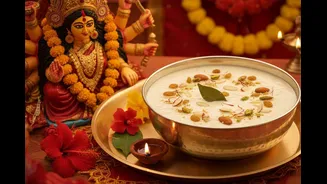
Subho Bijoya, which translates to 'Auspicious Victory', marks the period following the immersion of Goddess Durga's idol on Dashami. It commemorates the victory of good over evil. But beyond the religious significance, Bijoya is fundamentally about reconnecting.
The grand, public spectacle of pandal hopping gives way to personal visits to the homes of friends, family, and neighbours. This tradition, often called 'Bijoya Sammilani' or the Bijoya meet-up, is a cherished time for reinforcing community bonds. Younger people touch the feet of their elders to seek blessings, and peers exchange a warm hug, known as 'kolakuli', all while exchanging the greeting, 'Subho Bijoya!'.
The Savoury Starters (Nonta)
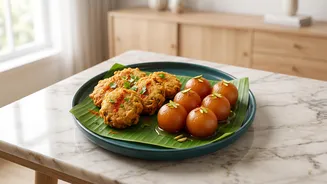
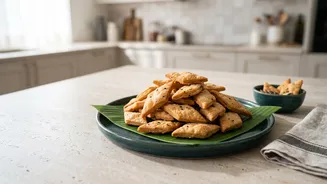
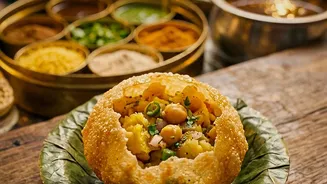
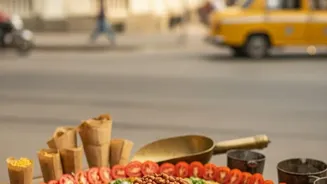
No Bijoya welcome is complete without an array of 'nonta', or savoury snacks. The star of this spread is often the nimki, a crunchy, flaky, deep-fried pastry made from flour and seasoned with salt and nigella seeds. They come in various shapes, from tiny diamond-shaped 'kucho nimki' to intricately folded, layered versions called 'elo jhelo nimki'. Alongside the nimkis, you might find ghughni, a hearty curry made from dried yellow or white peas, often garnished with chopped onions, coriander, and a squeeze of lime. Other popular savoury items include vegetable chops (croquettes often filled with beetroot and other vegetables) and dimer devil, the Bengali take on a Scotch egg, which features a hard-boiled egg encased in a spicy potato or meat mixture before being fried to golden perfection.
The Essential Sweet Course (Mishti)
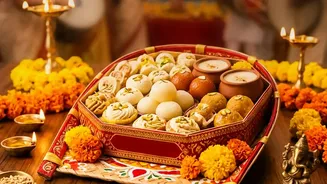
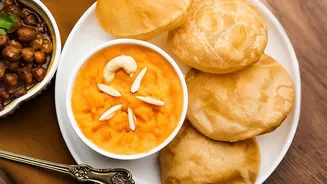
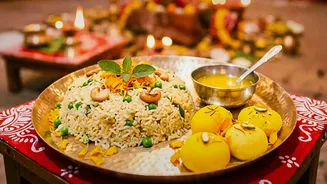
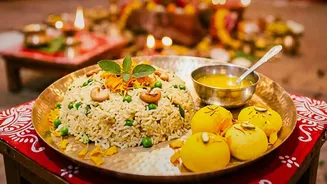
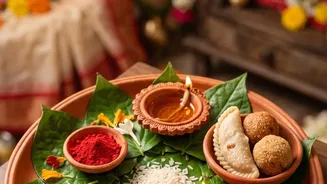
Following the savoury course, the 'mishti-mukh' (making the mouth sweet) is a non-negotiable part of the ritual. It is considered inauspicious for a guest to leave without having tasted something sweet. While readymade sweets are common today, many families still take pride in preparing homemade delicacies. A classic is the 'narkel naru', a simple but beloved laddoo made from grated coconut and either jaggery or sugar. Sandesh, a delicate sweet made from fresh cottage cheese (chhena), appears in countless variations, from the simple 'makha sandesh' to the steamed 'bhapa sandesh'. Of course, no Bengali celebration feels complete without the iconic rosogolla. Other favourites that often grace the Bijoya platter include crispy, syrup-soaked khaja and rich, dense kalakand.
More Than Just a Platter
The act of preparing and sharing this food is a language of love and respect. The effort that goes into making both homemade sweets and savouries is a testament to the host's affection for their guests. The platter itself is a beautiful balance of flavours and textures—the salty crunch of the nimki, the hearty warmth of the ghughni, and the melting sweetness of the sandesh. This balance reflects the essence of life itself, with its mix of salty and sweet moments. In an age of digital greetings, the tradition of visiting a home and sharing a plate of food holds a special significance, offering a tangible connection and a moment of genuine fellowship.