


That humble packet of rava, or semolina, sitting in your pantry holds more potential than you think. It's the key to upma, a classic Indian breakfast that’s quick, comforting, and surprisingly diverse across the country.
The Classic: Simple Rava Upma
Before we travel, let's start at
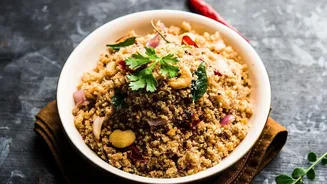
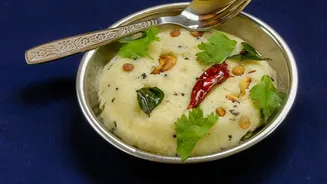
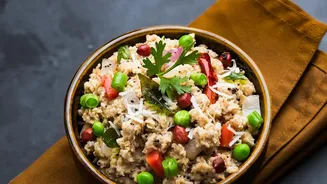
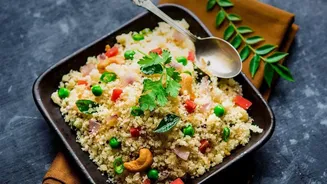
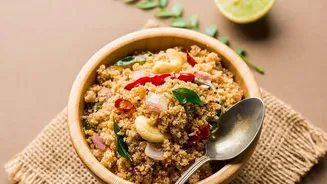
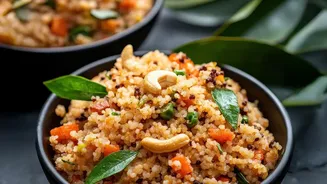
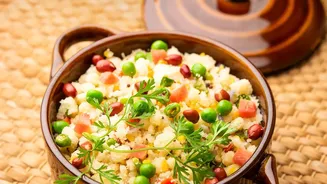
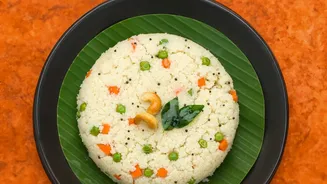
home base. The most common form of upma is a simple, savory porridge made from dry-roasted semolina, called 'rava' or 'sooji'. The preparation is straightforward: a tempering of mustard seeds, curry leaves, lentils like urad dal and chana dal, and perhaps some ginger and green chillies is made in hot oil. Onions are sautéed until soft before hot water is added. The roasted rava is then slowly stirred in to prevent lumps, and cooked until it absorbs the water and becomes soft and fluffy. Often garnished with fresh coriander, a squeeze of lemon, and sometimes a dollop of ghee, it’s a masterclass in creating a satisfying meal from basic pantry staples.
Karnataka’s Flavor Bomb: Khara Bath
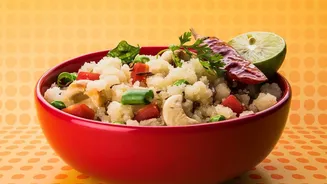
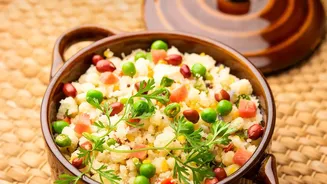
Travel south to Karnataka, and the humble upma transforms into 'Khara Bath'. The word 'khara' means spicy, and this version lives up to its name. While the base is still roasted rava, khara bath is distinguished by the addition of a special spice powder, often vangi bath powder or a similar masala blend, which gives it a distinct aroma and a reddish-brown hue. It's also typically loaded with more vegetables like carrots, beans, and peas, making it richer and more substantial than a plain upma. In Bengaluru's iconic eateries, you'll often find it served as one half of a 'Chow Chow Bath'—a plate featuring a scoop of spicy khara bath alongside a scoop of its sweet counterpart, Kesari Bath.
Tamil Nadu’s Rustic Comfort: Arisi Upma
In Tamil Nadu, many households turn to rice for their upma fix. 'Arisi Upma' is made not from semolina, but from coarse, broken rice (arisi). Often, raw rice is ground together with toor dal and whole black peppercorns to create the base flour. The process is similar to rava upma, involving a tempering of mustard seeds, dals, and curry leaves, but the result is heartier with a more rustic texture. Coconut oil is often used for tempering, lending a unique flavour. This gluten-free variation is a traditional comfort food, often prepared in a 'vengala panai' (bronze pot), which is said to give it an unmatched taste, especially the crispy layer at the bottom.
Maharashtra’s Tangy Twist: Sanza
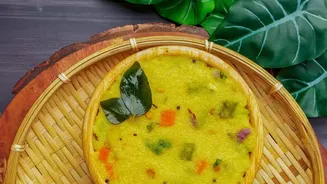
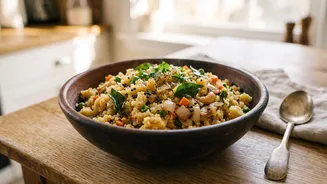
Head west to Maharashtra, and you'll find 'Sanza'. At first glance, it looks like upma, but a few key differences set it apart. Turmeric is a key ingredient, giving Sanza a distinct golden-yellow colour that isn't always present in its southern cousins. The most interesting twist is the use of buttermilk along with water as the cooking liquid, which imparts a subtle, mellow tanginess to the final dish. While it uses a similar tempering of mustard seeds and curry leaves, Sanza often includes peanuts for crunch. The texture is typically drier and fluffier than a typical upma, with each grain of rava remaining distinct.
Beyond Rava: Other Pantry Variations
The spirit of upma is its adaptability. Beyond these regional specialities, cooks across India use various pantry ingredients as a base. 'Semiya Upma', made with vermicelli, is a popular choice for a light, non-sticky alternative that resembles savoury noodles. For a healthier spin, many use broken wheat (daliya), oats, or even millets like foxtail or barnyard millet to create a high-fibre breakfast. And in a true testament to its versatility, there's even 'Bread Upma', where leftover bread is crumbled and tossed with onions and spices to create a quick, delicious snack. Each version proves that with a few basic spices and a little creativity, a simple pantry can produce an endless variety of satisfying meals.