





The Allure and Peril of Monsoon Trails
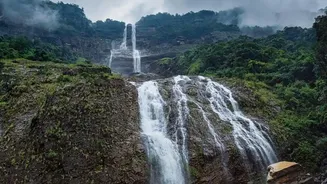
There’s a certain magic to trekking during the Indian monsoon. The dust settles, the forests explode in a hundred shades of green, and waterfalls cascade down hillsides that were barren just weeks before. From the Sahyadris in Maharashtra to the Himalayan
foothills, trekkers seek the unique thrill of walking through clouds and witnessing nature’s dramatic renewal. However, this beauty is deceptive. The same rains that create this spectacle also introduce significant dangers. The most critical risks aren't just slippery paths, but sudden, life-threatening events like flash floods in narrow gullies, swollen river crossings that become impassable, and landslides on saturated slopes. These incidents can happen with terrifying speed, often triggered by heavy rain far upstream, catching even experienced groups off guard.
When Your Smartphone Is Not Enough
In an emergency, our first instinct is to reach for our mobile phones. But in the remote valleys and high ridges where the best treks are found, cell signal is often a fantasy. Heavy rain and dense fog can further weaken what little network might exist. Even if you have a signal, a wet touchscreen or a drained battery can render your phone useless. This communication gap is the most dangerous variable in a backcountry emergency. For years, it has meant that a simple accident—like a twisted ankle or getting disoriented—could escalate into a serious crisis, with no way to call for help. This is precisely the problem that dedicated off-grid communication devices are designed to solve.
The Digital Lifeline: How Beacons Work
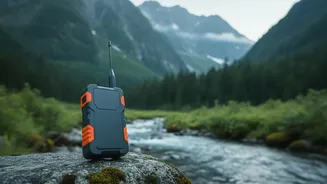
Enter the GPS beacon, or more specifically, the Personal Locator Beacon (PLB). A PLB is a small, rugged device with one primary function: in a life-threatening emergency, you press a button, and it sends a distress signal with your exact GPS coordinates to a global network of search and rescue satellites. This signal is relayed to authorities who then coordinate a rescue. It's crucial to understand that a PLB is a one-way SOS device; it doesn't allow for texting or two-way conversation. Unlike satellite messengers (such as a Garmin inReach), which offer two-way messaging and tracking features for a subscription fee, a PLB is a simpler, often more foolproof device with no ongoing costs. Its powerful 406 MHz signal is monitored by the international Cospas-Sarsat system, a network designed specifically for rescue operations.
A New Standard for Adventure Operators
For adventure tour operators, safety is paramount. The increasing popularity of monsoon trekking, fuelled by social media, has brought more people to the trails, but not all are aware of the risks. Responsible operators are increasingly adopting GPS beacons and satellite messengers as standard equipment for their guides. This technology provides a vital safety net. It allows the operator's base camp to track a group's progress and, most importantly, gives the trek leader a reliable way to signal for help if the worst happens. Recent government proposals for regulating trekking also highlight the need for such equipment, suggesting that carrying GPS devices and satellite phones may soon be mandatory for licensed operators. This tech provides peace of mind not just for the trekkers, but for the organisers who are ultimately responsible for their clients' safety.
From Distress Signal to Rescue Mission
Imagine a trekking group in a remote valley. A sudden downpour causes a stream to swell into a raging torrent, cutting off their return path. One member of the group has a serious injury. With no cell service, they are stranded. This is where a beacon becomes a lifesaver. The guide activates the device. A signal containing their unique ID and GPS location shoots up to a satellite. Within minutes, the alert is routed to an emergency response centre, which contacts local search and rescue (SAR) teams. The SAR team now knows exactly where the group is, saving precious hours or even days of searching. While the rescue itself might still be challenged by weather and terrain, the beacon has eliminated the single biggest hurdle: locating the people in distress.
Technology Is Not a Substitute for Judgment
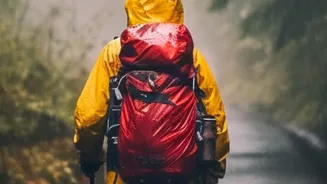
While GPS beacons are a revolutionary safety tool, they are not a magic shield against danger. They are a last resort, to be used when a situation is already critical. The fundamentals of monsoon trekking safety remain unchanged. This includes choosing routes appropriate for the season, avoiding trails known for flash floods or landslides, and carrying the right gear like waterproof layers and high-traction footwear. Trekkers should always travel with experienced guides, check weather forecasts, and be willing to turn back if conditions deteriorate. The best safety tool is always good decision-making. A GPS beacon complements this by providing a lifeline for those rare, unforeseeable events where despite all precautions, something goes wrong.