



Inspect Your Tyres for Maximum Grip
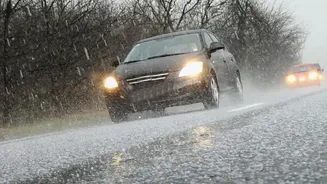
Your tyres are the single point of contact between your car and the slippery road. During the monsoon, their condition is a critical safety factor. Worn tyres are a primary cause of skidding on wet surfaces. Before the rains intensify, check the tread
depth; for monsoon safety, experts recommend at least 3mm. An easy way to check is to insert a one-rupee coin into the tread groove; if the coin's edge is fully visible, your tyres are likely too worn. Also, ensure your tyres are inflated to the pressure recommended by the manufacturer, which is usually listed on a sticker inside the driver's door. Under-inflated tyres increase the risk of aquaplaning, where a layer of water builds between the tyres and the road, leading to a loss of control.
Test Your Braking System
Wet roads significantly increase your car's stopping distance. Brakes that feel perfectly fine in dry weather can become less effective and unpredictable in the rain. Water and mud can accumulate on brake pads and discs, reducing their efficiency. If you hear any squeaking noises or feel that the brake pedal is spongy, it’s a sign that you need an immediate inspection. It's crucial to have your brake pads, brake lines, and brake fluid checked by a professional. Old brake fluid can absorb moisture from the air, which lowers its effectiveness precisely when you need it most.
Ensure Wipers and Windshield are Clear
Visibility is paramount during a downpour. Wiper blades that are cracked or hardened from the summer heat will only smear water across the windshield instead of clearing it. If your wipers leave streaks or skip across the glass, they need to be replaced immediately. Also, top up your windshield washer reservoir with a proper washer fluid, not just plain water, as it helps clean oily road spray. For even better visibility, consider applying a rain-repellent solution to the windshield, which causes water to bead up and roll off easily.
Check All Lights and Electricals
In heavy rain and fog, it is just as important to be seen by other drivers as it is for you to see the road. Walk around your vehicle and test all the lights: headlights (both low and high beams), tail lights, brake lights, and turn indicators. Replace any fused bulbs promptly. High humidity and water ingress can also cause electrical problems, from flickering lights to a dead battery. Ensure the battery terminals are clean, free of corrosion, and tightly secured.
Service Your Air Conditioner and Defogger
During the humid monsoon season, your car's windshield can fog up from the inside within minutes, severely impairing your vision. Your air conditioning system is your primary tool for demisting the glass. Ensure your AC is cooling effectively and that the defogger function, which directs air onto the windshield, is working properly. Don't forget to test the rear defogger as well. A clogged cabin air filter can weaken airflow, so get it cleaned or replaced.
Protect the Body from Rust
Constant exposure to rainwater and mud can lead to rust and corrosion, especially on the underbody of your car. Before the monsoon sets in, it's a good idea to get an anti-rust coating applied to the undercarriage. Regularly washing your car, paying special attention to the underbody and wheel wells, will help remove grime that can trap moisture and accelerate rusting. Promptly touching up any paint chips or scratches will also prevent rust from taking hold.
Prepare a Monsoon Emergency Kit
Even with the best preparation, unforeseen issues can arise. Keeping an emergency kit in your car can be a lifesaver. Your kit should include a tow rope, a powerful torch with extra batteries, a first-aid kit, a reflective warning triangle, and jumper cables. It's also wise to keep a set of basic tools, a waterproof sheet or cover, and some dry cloths. Having these items on hand can help you manage a minor breakdown or wait for assistance safely if you get stranded.