



What is the Urban Heat Island Effect?
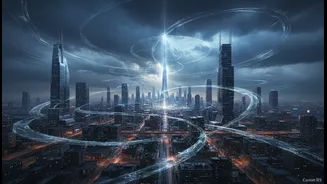
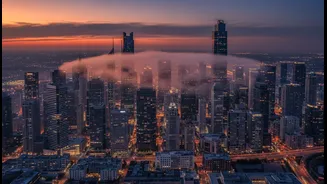
The urban heat island (UHI) is a phenomenon where metropolitan areas are significantly warmer than the surrounding rural areas. Think of our cities as literal islands of heat. This happens because materials like concrete, asphalt, and dark-colored rooftops
absorb and retain far more of the sun's radiation than natural landscapes like forests and fields. During the day, these surfaces soak up heat. After sunset, while the countryside cools down, our concrete jungles slowly release this stored energy, keeping the city warmer throughout the night. The lack of green cover further intensifies this effect. Trees and vegetation provide shade and cool the air through a process called evapotranspiration, where water evaporates from leaves. In densely packed cities with limited parks and green spaces, this natural cooling mechanism is severely diminished.
Why Your Weather App Gets It Wrong
Weather forecasting is an incredibly complex science, but most apps have a fundamental limitation: their sense of scale. They rely on data from numerical weather prediction models, which divide the atmosphere into a grid. Often, these grid cells can be several kilometers wide, and the forecast for that entire area is based on a single set of data points. The data might come from a weather station located at an airport or in a less developed area outside the dense urban core. As a result, the app provides a generalized forecast for a large region, failing to account for the unique microclimate of your specific neighborhood. It doesn't see the dense cluster of high-rises trapping heat in your business district or the vast parking lot baking in the sun near your home. It sees an average, which is often far from your reality.
The Monsoon Complication
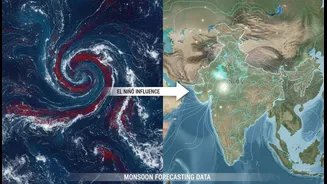
The monsoon adds another layer of complexity. The urban heat island doesn't just make cities hotter; it can actively influence local weather patterns. The pocket of warmer, rising air over a city can alter wind circulation and, in some cases, intensify rainfall downwind of the urban center. This can mean that one part of the city gets a sudden, intense downpour while another remains dry, a level of detail most standard apps cannot predict. Furthermore, the higher temperatures in the city increase the air's capacity to hold moisture. This leads to higher humidity levels, making the 'real feel' or heat index temperature soar far beyond the actual temperature displayed on your app. This combination of trapped heat and high humidity is what creates that oppressive, sticky feeling so common in Indian cities during the monsoon.
More Than Just an Inconvenience
This discrepancy between app forecasts and ground reality is more than just a minor annoyance that leaves you without an umbrella. The amplified heat in cities poses significant public health risks, especially for vulnerable populations, by worsening heat waves and reducing the cooling relief that typically comes at night. This leads to an increased risk of heat stress and other heat-related illnesses. Economically, it drives up energy consumption as residents and businesses run air conditioners more frequently to cope with the unexpected warmth. This puts a strain on power grids and contributes to a cycle of further heat generation. For urban planners, understanding the UHI effect is critical for designing more resilient and livable cities with better green infrastructure.
So, Can We Trust Any Forecast?
While no forecast is perfect, you can develop a savvier approach to reading the weather. Instead of relying on a single app, try comparing two or three different sources. Some apps, like the IMD's 'Mausam' or private services like Skymet, aim to provide more localized data for India. Look for services that brand themselves as 'hyperlocal'. Pay close attention to the 'feels like' temperature, as it often gives a much better indication of how comfortable you will be. Ultimately, it's about using weather apps as a guide, not as a gospel. Combine their data with your own observations. If you live in a dense part of the city, learn to mentally add a few degrees to the forecast, especially on calm, clear days. By understanding the science of your city's microclimate, you can better prepare for the day, no matter what your app says.