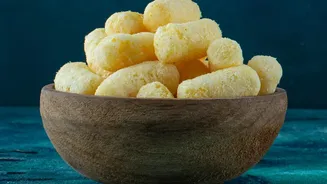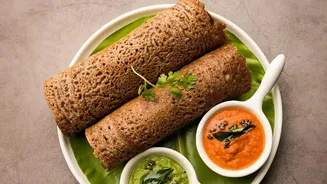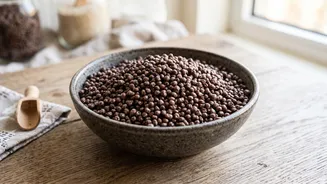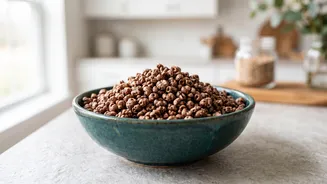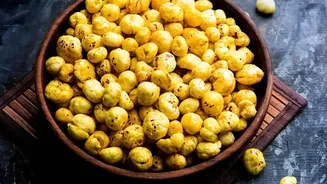






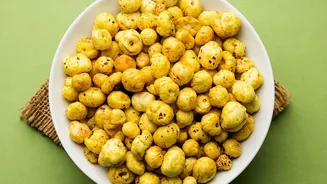
The search for the perfect light snack often leads to a crunchy dilemma. In one corner, we have popcorn, the universally loved movie-night staple. In the other, the nutritious and increasingly popular puffed ragi. Which one wins the battle?
Meet the Contenders
Popcorn is
a whole-grain corn kernel that expands and puffs up when heated. A snack beloved for centuries, its identity is tied to cinemas and cosy evenings. When air-popped, it's celebrated as a low-calorie, high-fibre treat. Puffed ragi, also known as ragi murmura, comes from finger millet, an ancient grain revered in India for its nutritional prowess. These puffs are made by roasting the grain until it expands, creating a crunchy, nutrient-dense snack that is naturally gluten-free. While popcorn is a familiar comfort food, puffed ragi is quickly gaining favour among the health-conscious.
The Nutritional Showdown
On the surface, both are light snacks, but their nutritional profiles differ significantly. Air-popped popcorn is remarkably low in calories, with a cup containing just around 31 calories. It's a good source of fibre and polyphenol antioxidants. However, this changes dramatically once oil, butter, or sugar is added, which can turn it into a high-calorie indulgence. Ragi, on the other hand, is a nutritional powerhouse. It is exceptionally rich in calcium, making it one of the best plant-based sources for bone health. It's also packed with iron and fibre, which aids digestion and helps keep you feeling full for longer. While air-popped popcorn might be lower in calories per cup, puffed ragi offers a much denser package of essential minerals and protein.
A Tale of Two Textures
This is where personal preference reigns supreme. Popcorn delivers a distinctly light, airy, and crisp texture. Each piece is a fluffy cloud with a satisfying but gentle crunch that dissolves quickly. The experience can be inconsistent, with the occasional unstuck kernel to navigate. Puffed ragi offers a completely different mouthfeel. It is crunchier and denser than popcorn. The texture is uniform and consistently crisp, more akin to a healthy breakfast cereal than a fluffy puff. This substantial crunch provides a hearty and satisfying snacking experience that feels more filling bite for bite.
Flavour Profile and Seasoning
In their plainest forms, both snacks have mild flavours. Popcorn has a subtle, toasty corn taste that makes it a perfect blank canvas for a wide array of toppings, from simple salt and butter to elaborate caramel or cheese coatings. Puffed ragi has a slightly nutty, earthy flavour that is distinct but not overpowering. It pairs exceptionally well with traditional Indian spices. Many people enjoy it as a savoury 'namkeen' or 'chivda', tossed with roasted peanuts, curry leaves, turmeric, and a hint of chilli. This makes it incredibly versatile for creating flavourful, spiced snacks without relying on fat or sugar.
The Health and Wellness Angle
For those managing blood sugar, the glycemic index (GI) is an important factor. Ragi generally has a low–to–medium GI, meaning it releases sugar into the bloodstream more slowly, preventing sharp spikes and promoting sustained energy. Corn flour, by contrast, tends to have a higher GI. The high fibre in ragi also promotes satiety, which can help with weight management by keeping you fuller for longer. While plain popcorn can be part of a weight–loss–friendly diet due to its low calorie count and high volume, ragi's overall nutritional density—especially its high calcium and iron content—gives it a clear advantage for anyone looking to boost their nutrient intake.