



Embrace the Entire Vegetable
Too often, we discard the most flavourful parts of our vegetables. The stems of broccoli, cauliflower, and kale, for example, are packed with nutrients and taste but usually end up in the compost bin. This zero-waste approach is not only good for the planet
and your wallet, but it's also the foundation of an incredibly deep and complex soup base. By simmering these scraps, you extract every bit of flavour, creating a broth that is far superior to anything from a carton. Start by collecting your clean vegetable scraps—onion ends and skins, carrot peels, and especially those sturdy stems—in a freezer bag. When the bag is full, you have the makings of a flavourful, free vegetable stock.
Which Stems Work Best?
While many stems are edible, some are better suited for puréed soups than others. Broccoli stems are a fantastic choice; once peeled of their tough outer layer, they become tender and sweet when cooked. Cauliflower stems and cores are also excellent, contributing a mild, creamy base. Other great options include the stems from Swiss chard, kale, and even asparagus ends. Be mindful of strongly flavoured vegetables. While celery ends are a classic broth component, bitter greens or an overabundance of cabbage cores can overwhelm the soup. The key is to aim for a balanced flavour, starting with a base of sautéed onion, garlic, and your chosen stems.
Stale Bread: The Unsung Hero of Thickness
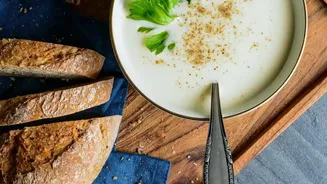
Before cornstarch slurries and chemical thickeners, resourceful cooks used what they had, and stale bread was a common tool for adding body to soups and stews. The starch in day-old bread breaks down when simmered in liquid, creating a velvety, thick consistency without the need for cream or flour. This technique is central to traditional dishes like Italian Ribollita. For a blended soup, simply tear or cube a few slices of stale bread and add them to the pot with your vegetables and broth. Let them simmer until completely soft, and they will disappear into the soup when blended, leaving behind a wonderfully rustic and hearty texture. Nearly any type of bread works, but neutral-flavoured loaves like a simple white or country bread are best to avoid altering your soup's intended taste.
The Technique for Perfect Creaminess
Achieving a silky-smooth texture is all about the right process. Start by sweating your base aromatics like onion and garlic in a little oil until soft and fragrant. Add your chopped vegetable stems and cook for several minutes to tenderize them. Next, add your stale bread chunks and cover everything with vegetable broth. Bring the mixture to a boil, then reduce to a simmer and let it cook until the vegetables are fork-tender and the bread is completely saturated and falling apart, typically around 15-20 minutes. For the safest and most effective blending, use an immersion blender directly in the pot. If using a countertop blender, allow the soup to cool slightly before transferring it in batches to avoid dangerous pressure build-up. Blend until the soup is perfectly smooth and no lumps remain.
Balancing Flavours and Finishing Touches
With the texture perfected, the final step is to balance the flavours. Taste your soup and adjust the seasoning with salt and pepper. The vegetable stems will have provided a deep, earthy base, but you might want to brighten it up. A squeeze of fresh lemon juice or a splash of vinegar can lift the flavours and add a necessary acidic note. Fresh herbs like parsley or thyme, stirred in at the end, can add a burst of freshness. For extra richness without dairy, you can also blend in a small amount of cooked potato, white beans, or even a scoop of nutritional yeast for a cheesy, savoury flavour. These additions complement the creaminess from the bread and stems, creating a truly satisfying and wholesome meal from ingredients that might have otherwise gone to waste.