




A Fluffy, Layered Surprise
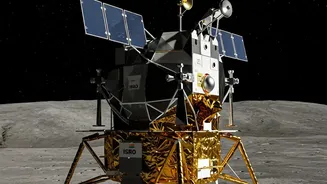
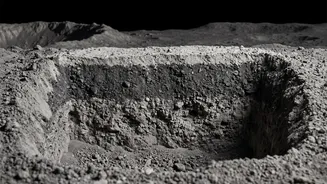
Scientists analysing data from the Vikram lander have discovered that the top 10 centimetres of lunar soil, or regolith, at the landing site is not a uniform pile of dust. Instead, it’s a complex, layered structure. The uppermost layer, extending down
about 3 cm, is exceptionally porous, with researchers estimating it has a porosity of about 80%. This 'fluffy' top layer gives way to denser, more compact material just below. In fact, while the surface might feel like walking on dry flour, the soil just 6.5 cm deeper is twice as dense and five times more cohesive, behaving more like stiff clay. This layered, 'cake-like' structure was an unexpected finding, suggesting a more complicated geological history than previously assumed.
The Instrument Behind the Discovery
The key to this discovery was an instrument aboard the Vikram lander called ChaSTE, or Chandra’s Surface Thermophysical Experiment. Developed by teams at ISRO's Space Physics Laboratory and the Physical Research Laboratory, ChaSTE is a remarkable piece of engineering. It features a slender probe, equipped with 10 temperature sensors, designed to penetrate the lunar surface down to a depth of 10 cm. This allowed it to create the first-ever direct, in-situ thermal profile of the Moon's south polar region. By measuring the temperature at different depths, ChaSTE provided a detailed picture of how heat from the sun travels through the lunar soil.
An Exceptional Insulator
One of the most significant findings from the ChaSTE data is that the porous topsoil is an incredibly effective thermal insulator. The probe recorded a massive temperature difference—as much as 50-80°C—between the surface and a depth of just 10 cm. This shows that the lunar topsoil is a very poor conductor of heat. In the vacuum of space, heat primarily moves through grain-to-grain contact; the high porosity of the top layer means there are fewer contact points, effectively creating a thermal blanket that isolates the subsurface from the extreme temperature swings on the surface.
A Fortuitous 'Hop'
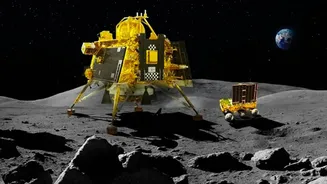
A crucial part of the analysis came from an unplanned bonus experiment. Towards the end of its mission in September 2023, the Vikram lander fired its engines to perform a 'hop', lifting itself about 40-50 cm off the ground and landing a short distance away. This manoeuvre, a demonstration for future sample-return missions, acted like a blower, stripping away the top 3 cm of loose dust. This exposed the older, more compact lunar material underneath, allowing ChaSTE to take a second set of measurements on a different surface profile and confirm the layered nature of the regolith.
Implications for Future Moon Missions
These findings are not just academic; they have profound implications for the future of lunar exploration. Understanding the geotechnical and thermal properties of the regolith is critical for designing future habitats, landing pads, and mining equipment. The 'sticky' and dense subsurface could make drilling and anchoring structures challenging. However, the exceptional insulating properties of the loose topsoil could be a major asset. This material could potentially be used as a construction resource for habitats, providing natural shielding from the extreme temperatures and radiation on the Moon's surface. This detailed understanding will be crucial for selecting sites and planning long-term human presence on the Moon.