


Why Proper Drying Matters
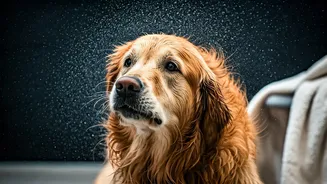
Letting a pet 'air dry' might seem like the natural choice, but it can lead to several problems. Trapped moisture against the skin creates a warm, damp environment that is a perfect breeding ground for bacteria and yeast. This can cause painful skin irritations
like hot spots (acute moist dermatitis), fungal infections, and that persistent 'wet dog' smell. For pets with long or double coats, dampness can also cause the fur to clump and form tight, uncomfortable mats that pull at the skin. In colder weather, a wet coat can even lead to a dangerous drop in body temperature. Taking the time to dry your pet thoroughly helps prevent these issues and keeps their skin and coat healthy.
The Right Towel and Technique
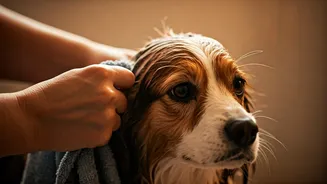
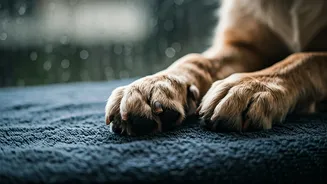
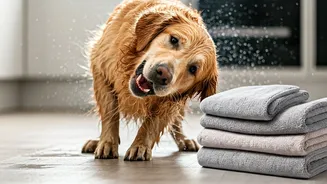
The first step is a thorough towel-dry, but your technique matters. Vigorous rubbing can cause tangles and matting, especially in long-haired breeds. The best method is to press and blot. Use a highly absorbent towel and press it firmly into your pet's fur, allowing the material to soak up the water. Microfiber towels are an excellent choice as they absorb significantly more water than standard cotton towels and are gentle on the coat. Shammy-style towels are also extremely effective, especially for pets with thick undercoats. Work in sections, starting from the head and moving down the body, making sure to gently dry between paw pads and inside skin folds.
Using Air: A Guide to Blow Dryers
For many pets, especially those with thick or long fur, a towel alone won't get them completely dry. This is where a blow dryer can be a groomer's best friend. However, it's critical to use the right tool and technique. Human hair dryers get too hot for a pet's sensitive skin and can easily cause burns. Always use a dryer designed for pets, which uses high-velocity air rather than high heat to push water out of the coat. If you must use a human dryer, only use the coolest setting. Keep the nozzle several inches away from your pet's skin and keep it moving constantly to avoid concentrating heat in one spot. Never point the airflow directly into your pet's face or ears.
The Most Important Tool: Patience
The sound and sensation of a blow dryer can be frightening for many animals. The key to success is a slow and patient introduction. Let your pet investigate the dryer while it's turned off, offering treats and praise. Then, turn it on at the lowest setting from a distance, gradually decreasing the distance as they become more comfortable. Make the experience positive by associating it with high-value rewards like treats or a lick mat. If your pet shows signs of stress like panting, whining, or trying to escape, stop and try again later. For particularly anxious pets, noise-reducing head wraps can help muffle the sound. Building a positive association can turn a stressful chore into a calm bonding experience.
Special Considerations for Cats
While many of the same principles apply, cats often require a different approach. Their tolerance for being wet and handled is generally lower. After a bath, immediately wrap your cat snugly in an absorbent towel—this 'kitty burrito' can have a calming effect while soaking up excess water. Use a second dry towel to continue blotting. If you use a dryer, ensure it's on a low, warm setting and introduce the airflow slowly, starting from the rear of the body and avoiding the face. Many cats feel safer being dried on your lap or in a contained space. Never leave a cat unattended with a dryer. If your cat is too stressed by the process, it's better to towel dry them as much as possible and let them finish in a warm, draft-free room.