




A New Chapter in Cosmic Exploration
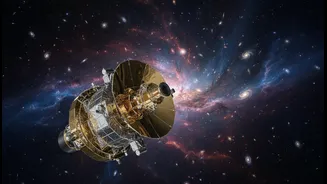
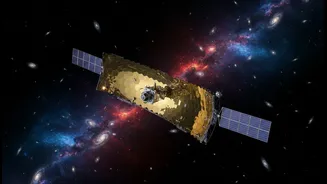
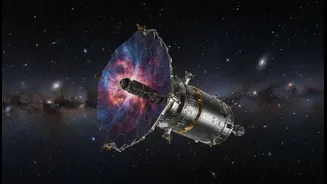
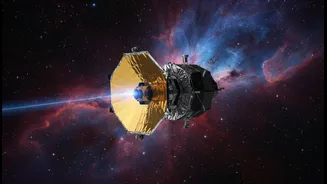
Scheduled for launch around August 2026, the Nancy Grace Roman Space Telescope is NASA's next great observatory. Named after the woman known as the 'Mother of Hubble' for her pioneering role in space astronomy, Roman is designed not just to see farther,
but to see wider. Its primary mission is to investigate two of the most profound questions in science: the nature of dark energy and the abundance of planets beyond our solar system. While the Hubble and James Webb Space Telescopes (JWST) act like precision tools, zooming in on specific cosmic targets, Roman is a grand surveyor. It will create vast cosmic maps with a combination of scale and detail never before possible.
Seeing the Bigger Picture
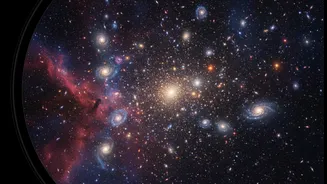
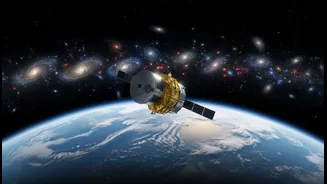
The defining feature of the Roman telescope is its extraordinary field of view. While its primary mirror is the same size as Hubble's at 2.4 meters, its Wide Field Instrument can capture an area of the sky 100 to 200 times larger in a single snapshot. To put that in perspective, where Hubble might capture a single galaxy in stunning detail, Roman will capture thousands of them at once with similar clarity. This incredible survey speed allows it to map huge portions of the universe much faster than its predecessors. While it would take Hubble decades to survey a large patch of sky, Roman can accomplish a similar feat in a matter of months, generating an unprecedented amount of data for astronomers worldwide.
Hunting the Dark Universe
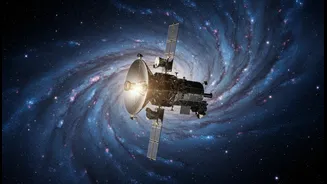
About 95% of the universe is made of mysterious substances we can't see: dark matter and dark energy. Dark energy is the force believed to be causing the universe's expansion to accelerate, while dark matter is the unseen gravitational scaffolding upon which galaxies are built. Roman is specifically designed to probe these phenomena. By surveying billions of galaxies and thousands of exploding stars called supernovae, it will measure how the universe's expansion has changed over cosmic history. These measurements will provide crucial clues about the nature of dark energy, which remains one of the biggest puzzles in physics.
A Census of a Million Worlds
Beyond its cosmological goals, Roman is a planet-hunting powerhouse. It's expected to discover thousands of new exoplanets, potentially more than all other telescopes combined to date. Its primary method will be gravitational microlensing. This technique detects the tiny, temporary brightening of a distant star that occurs when a planet passes in front of it from our point of view. The planet's gravity acts like a lens, magnifying the star's light. This method is particularly good at finding planets that are far from their stars, or even rogue planets that drift through space without a star to orbit at all. Roman will conduct a massive census, helping us understand how common solar systems like our own really are.
A Partner, Not a Replacement
Roman is not intended to replace Hubble or Webb, but to work in synergy with them. It is the ultimate scout; its wide-angle surveys will identify countless fascinating objects—from strange supernovae to potentially habitable exoplanets. Other telescopes, like Webb, can then perform detailed follow-up studies on these targets, analyzing their light to understand their composition and characteristics. Roman will also carry a technology-demonstration instrument called a Coronagraph, designed to block the overwhelming glare of a star to take direct images of the planets orbiting it. This is a crucial step toward future missions that could one day search for signs of life in the atmospheres of Earth-like worlds.