





Prioritise Safe Hydration
Water-borne diseases like cholera, typhoid, and gastroenteritis spike during the monsoon because heavy rains can contaminate public water supplies. The single most important step is to ensure your drinking water is safe. Always opt for boiled or filtered
water. Boiling water for at least one minute is a highly effective way to kill most pathogens. If using a water purifier, ensure it is serviced regularly and the filters are clean. Avoid ice from unknown sources, as it can be made from contaminated water. When outdoors, carry your own water bottle or purchase sealed, packaged water to stay hydrated safely.
Handle Produce with Extra Care
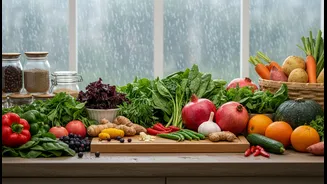
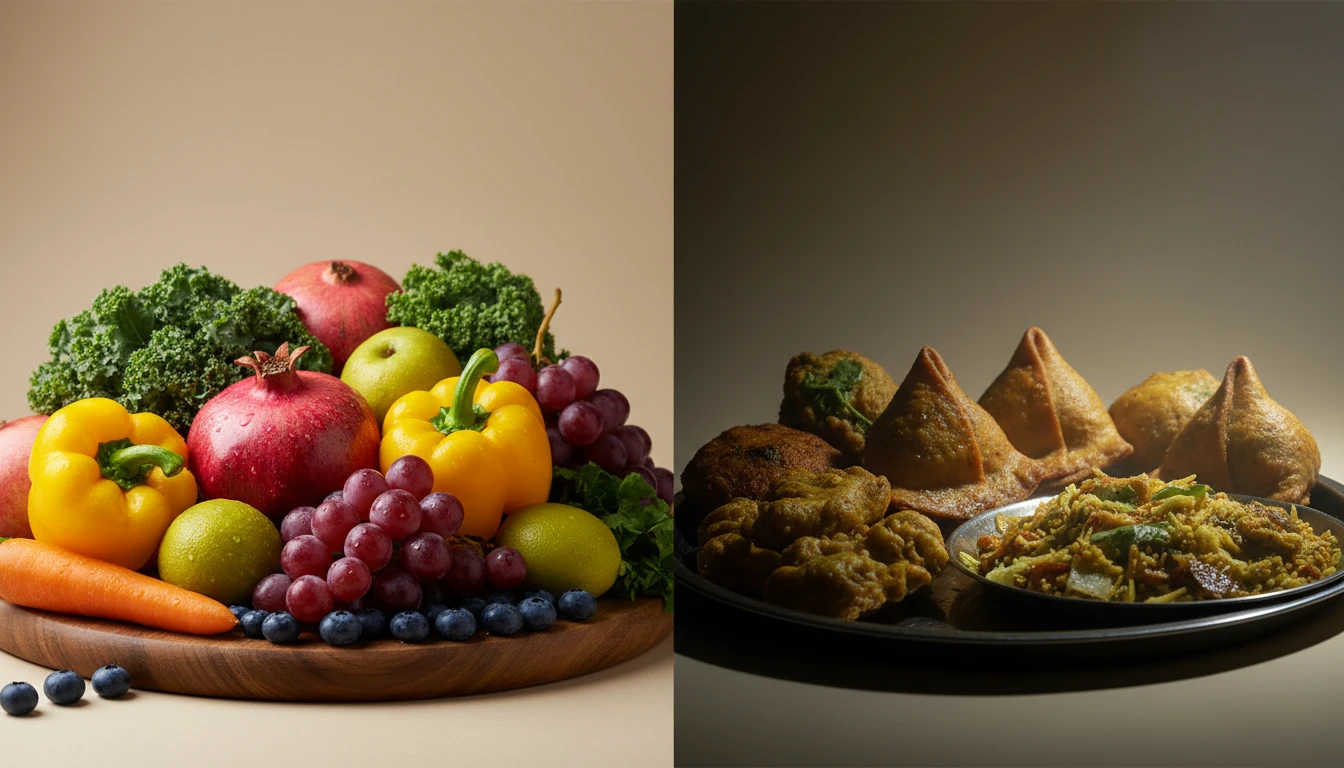
Leafy green vegetables, a healthy choice year-round, require special attention during the rains. The damp soil and humidity can lead to a higher concentration of germs, dirt, and even tiny insects on them. It's crucial to wash all vegetables and fruits thoroughly under clean, running water. For leafy greens like spinach and cabbage, a good practice is to soak them in a bowl of saltwater or a vinegar-water solution for about 10-15 minutes. This helps dislodge hidden pests and reduces microbial load. Root vegetables like potatoes and carrots should be scrubbed with a brush under running water to remove caked-on mud. It's also wise to avoid pre-cut fruits and vegetables sold in the open, as they are highly susceptible to contamination.
Rethink Your Street Food Cravings
The allure of hot, fried pakoras on a rainy day is hard to resist, but street food is particularly risky during the monsoon. High humidity causes food to spoil faster, and the use of contaminated water for cooking or making chutneys is a major concern. Unhygienic conditions, exposure to flies, and improperly stored ingredients increase the risk of food poisoning and other serious infections like Hepatitis A. If you must indulge, choose vendors who maintain high standards of cleanliness and cook food fresh in front of you at high temperatures. Opt for steaming hot items like bhutta (roasted corn), steamed momos, or freshly fried snacks, and steer clear of anything with raw chutneys, salads, or water-based items like pani puri.
Embrace Warm, Cooked Meals
The monsoon season can slow down digestion. Light, warm, and freshly prepared meals are easier on your digestive system and safer to consume. Opt for steamed vegetables instead of raw salads. If you do have a salad, consider steaming the vegetables lightly first to kill any lingering germs. Soups and broths are excellent choices as they are nutritious, hydrating, and easy to digest. Incorporating digestive and antimicrobial spices like ginger, garlic, turmeric, and black pepper into your cooking can also be beneficial. Avoid leaving food, especially cooked meals, at room temperature for long periods, as the humidity encourages rapid bacterial growth. Refrigerate leftovers promptly in airtight containers.
Boost Your Immunity Naturally
A strong immune system is your best defence against seasonal illnesses. Focus on a balanced diet rich in vitamins and minerals. Citrus fruits like oranges and lemons, as well as guava and amla, are packed with Vitamin C, a powerful immunity booster. Seasonal fruits such as jamun, pears, and pomegranates are also great choices. Include probiotic foods like fresh yogurt and buttermilk in your diet to support gut health, which is closely linked to immunity. Spices like turmeric are known for their anti-inflammatory and antibiotic properties. A daily handful of nuts and seeds, like almonds and pumpkin seeds, can provide essential nutrients like zinc and Vitamin E, which are vital for immune function.