



A Familiar Cosmic Neighbour
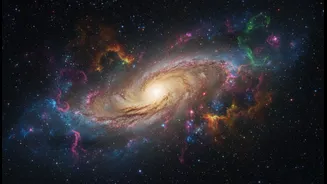
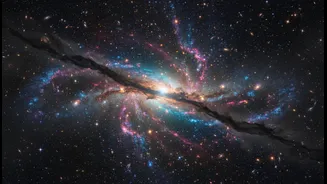
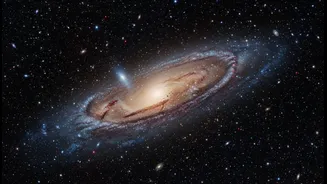
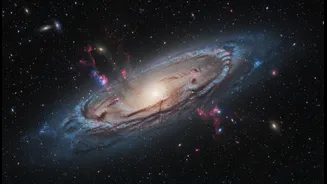
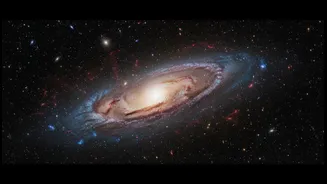
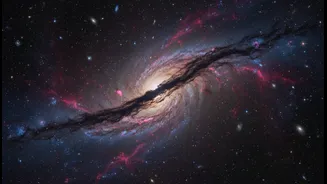
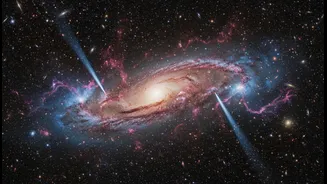
The galaxy in question is Centaurus A, located a relatively close 11 million light-years from Earth. Discovered in 1826, it is one of the brightest and most studied galaxies in our sky. Its strange appearance, the result of a colossal collision with another
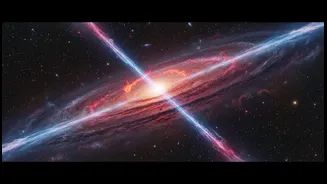
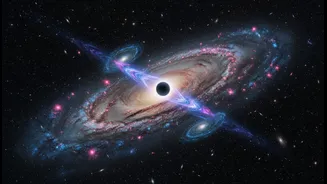
galaxy about two billion years ago, has long fascinated astronomers. Unlike most nearby galaxies, Centaurus A is incredibly active, with a supermassive black hole at its core that is actively feeding on surrounding material. This makes it a perfect natural laboratory for understanding how galaxies and their black holes evolve. However, its most intricate details have always been hidden behind thick lanes of cosmic dust, which block visible light and have frustrated telescopes like Hubble.
Seeing Through the Veil
This is where the James Webb Space Telescope (JWST) changes the game. Webb is designed to see the universe in infrared light, which can pass through the dense dust that obscures visible light. While previous infrared observatories like the Spitzer Space Telescope could see large-scale structures, they lacked the power to resolve fine details. Webb’s advanced instruments, particularly the Mid-Infrared Instrument (MIRI) and Near-Infrared Camera (NIRCam), provide both clarity and depth, piercing the veil to uncover the galaxy's inner workings. The result is a transformation, turning a familiar object into something far richer and more complex than ever imagined.
A New Era of Galactic Archaeology
One of the most stunning revelations is Webb’s ability to resolve millions of individual stars within the galaxy's dense core. What previously appeared as a hazy glow is now a packed field of distinct points of light. Scientists are calling this a new era of “galactic archaeology.” By studying these individual stars of different ages, astronomers can reconstruct a detailed timeline of the galaxy’s history. They can identify which stars existed before the ancient collision, which were born during the upheaval, and which formed in the aftermath, creating a vivid record of Centaurus A's dramatic past.
Perplexing Structures and a Powerful Core
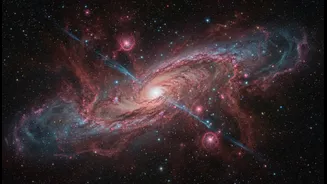
Beyond the stars, Webb has unveiled perplexing dust structures that have left astronomers with new questions. The images show intricate filaments and glowing clouds of warm dust, including a warped, parallelogram-like band cutting across the galaxy's center. An unusual S-shaped feature near the core is also a mystery that scientists are now eager to solve. Furthermore, Webb’s spectroscopic capabilities allow astronomers to measure the movement of gas around the central supermassive black hole. Early findings show fast-moving gas flowing outward, driven by the black hole's activity, providing new clues about how these cosmic engines can both trigger star formation by compressing gas and shut it down by blowing material away.