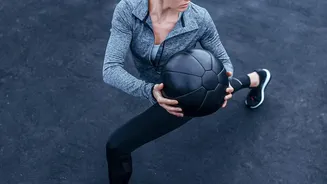





When it comes to making fitness look both effortless and enjoyable, few do it better than Shilpa Shetty. Her latest workout, using a simple ball, offers a fun challenge that combines physical movement with mental focus for a holistic routine.
The Brain and Body Challenge
Shilpa Shetty
recently took to social media to share a workout that goes beyond conventional strength training. The routine involves using one or two small balls to perform coordination drills, such as dropping and catching them in rhythm, sometimes while balancing on one leg. The actor highlighted that this type of 'brain gym' exercise is designed to improve the connection between the mind and body. The goal isn't just to break a sweat, but to enhance focus, hand-eye coordination, and cognitive flexibility. As Shetty demonstrated, fitness doesn't always require heavy weights or intense cardio; sometimes, a simple, playful challenge can provide significant benefits.
The Power of the Stability Ball
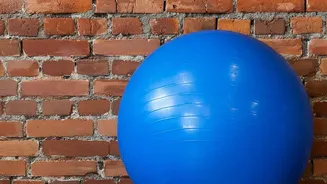
While Shilpa's recent post used smaller coordination balls, she and many fitness experts are also proponents of the larger stability ball—that big, bouncy sphere often seen in gyms. Also known as a Swiss ball or exercise ball, this versatile piece of equipment is a powerhouse for functional fitness. Its primary benefit comes from its inherent instability. When you perform exercises on the ball, whether it’s a simple crunch or a more complex plank, your body has to constantly recruit smaller stabiliser muscles, especially in your core, to maintain balance. This process of constant adjustment helps build a strong, resilient core, which is the foundation for almost all daily movements and athletic activities.
Benefit 1: A Stronger Core and Back
One of the most celebrated benefits of stability ball workouts is the development of deep core strength. Simply sitting on a ball engages your abdominal and lower back muscles to keep you upright. When you perform targeted exercises like crunches or knee tucks on the ball, you intensify this engagement. A strong core does more than just look good; it protects your spine, improves your posture, and provides a stable base for your entire body, including the pelvis, hips, and shoulders. This can lead to a reduction in back pain and a lower risk of injury in both the gym and everyday life.
Benefit 2: Enhanced Balance and Coordination
Training on an unstable surface like an exercise ball is a direct way to improve your sense of balance and body awareness, also known as proprioception. Your body's nervous system is forced to make constant, subtle adjustments to prevent you from falling. This heightened awareness translates directly into better coordination and stability off the ball. Improved balance is crucial for people of all ages, helping with everything from sports performance to preventing falls. The challenge of controlling your body on a wobbly surface trains your muscles and your brain to work together more efficiently.
Benefit 3 : Full - Body Engagement
While famous for core work , stability ball exercises can offer a full - body workout . For example , a stability ball push - up , with either your hands or feet on the ball , challenges your chest , shoulders , and arms while demanding intense core and even glute activation to stay stable . A hamstring curl , where you lie on your back and roll the ball in with your feet , isolates the back of your legs while still requiring your core to keep your hips lifted . This ability to engage multiple muscle groups at once makes for a highly efficient and effective workout session .
How to Get Started with a Stability Ball
Getting started is simple and affordable . The first step is choosing the right size ball . When you sit on it , your knees should be bent at a 90 - degree angle with your thighs parallel to the floor . Start with basic movements to get comfortable with the instability . You can begin by simply sitting on the ball to activate your core , or trying a gentle wall squat by placing the ball between your lower back and a wall for support . As you gain confidence , you can progress to exercises like crunches , planks with your shins on the ball , or hamstring curls . Always focus on slow , controlled movements — quality is far more important than quantity when dealing with an unstable surface .