



Understanding the Rabi Season
India's agricultural calendar is dominated by two main seasons: the Kharif, or monsoon crop, and the Rabi, the winter crop. Sown from October, Rabi crops account for nearly half of the country's total food grain production. This includes staples that
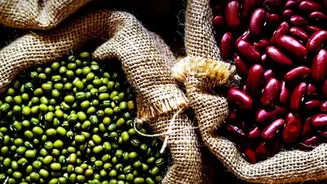
are fundamental to India's food security and economy, such as wheat, barley, mustard, and various pulses like gram (chana). Unlike the rain-fed Kharif crops, the Rabi season is heavily dependent on the water left behind by the southwest monsoon. This residual moisture in the soil and the water stored in reservoirs are critical for the germination and growth of winter crops through the drier months.
A Monsoon of Extremes
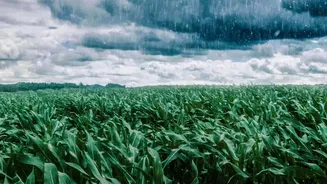
This year's monsoon has been a story of stark contrasts. While the season is drawing to a close, its departure has been far from uniform. The India Meteorological Department (IMD) reported that the country as a whole faced a rainfall deficit of around 15% as of mid-September. However, this national average masks significant regional disparities. On one hand, parts of northwest India received large excess rainfall in recent days. On the other, central and southern India experienced large deficits, with rainfall in these regions being over 70% below normal on some days. This spatial distortion has created a complex picture on the ground. States like Karnataka, Andhra Pradesh, Telangana, and Bihar are grappling with significant deficits, while others have seen more favourable conditions. This patchiness is crucial because it directly influences soil moisture levels, which are essential for sowing.
The Critical Role of Reservoirs
When soil moisture is insufficient, farmers turn to irrigation, making reservoir levels a key indicator of the Rabi season's prospects. Here too, the picture is mixed. While recent rains have helped water levels rebound in western and central India, storage in the northern and especially the southern regions remains sharply below normal. As of early September, national reservoir storage was about 7% below the long-term normal and 20% lower than the previous year. The southern region's reservoirs were particularly stressed, holding water levels significantly below their normal capacity. These low levels in major agricultural states are a cause for concern, as they limit the availability of water for irrigation, potentially forcing farmers to alter their cropping patterns or face the risk of lower yields.
Impact on Key Rabi Crops
The primary Rabi crop, wheat, is predominantly grown in northern and central states where irrigation networks are more robust. However, even here, sufficient groundwater and reservoir support are vital. The real vulnerability lies with other important crops. Mustard, a key oilseed, and pulses like chana are often grown in rain-fed or less-irrigated areas. For these crops, the low sub-soil moisture in states across central and southern India is a significant threat. Farmers in these regions face a tough choice: delay sowing in the hope of late rains, switch to less water-intensive crops, or risk planting in suboptimal conditions. Analysts have flagged that the yields of rainfed crops are particularly vulnerable this season.
Economic Ripple Effects and the Road Ahead
The uncertainty surrounding the Rabi season has broader economic implications. A weak winter harvest could put pressure on food supplies, potentially stoking food inflation which has already been a concern. For millions of farmers, a poor Rabi season following a mixed Kharif season could impact rural incomes and demand for goods and services, from tractors to everyday consumer products. The government and agricultural bodies are monitoring the situation closely. Advisories on water usage and crop selection will be crucial in the coming weeks. The performance of the northeast monsoon, which brings rain to parts of southern India later in the year, will also be a key factor to watch. For now, all eyes are on the sowing data that will emerge from October, which will provide the first concrete indication of how farmers are navigating these challenging conditions.