




Why Robots Must Build First
The Moon is an exceptionally hostile environment for humans. With no atmosphere, it faces extreme temperature swings, constant radiation, and the threat of micrometeorite impacts. Sending people to perform initial construction is dangerous and resource-intensive.
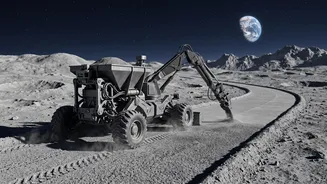
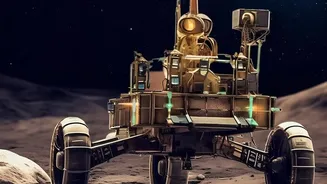
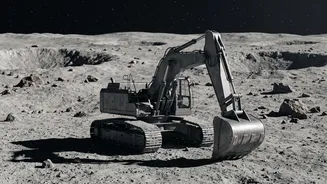
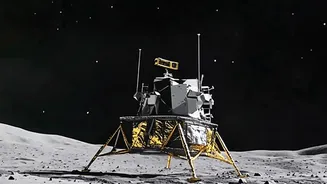
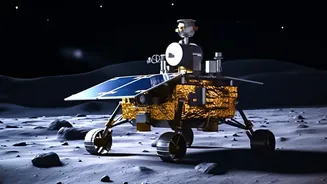
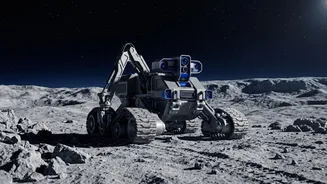
Robots, on the other hand, don't need life support and can work for months in hazardous conditions. They are the logical choice to handle the repetitive and physically demanding tasks of site preparation, digging, and hauling, making the environment safer for eventual human crews. NASA's plans for a permanent base rely heavily on this phased approach, with more than twenty robotic landings scheduled to deploy instruments, test technologies, and begin assembling critical infrastructure before astronauts move in.
The Tech: Turning Dust into Dwellings
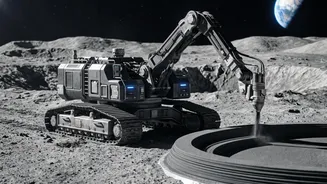
The key to building on the Moon is using what's already there through a process called In-Situ Resource Utilisation (ISRU). Instead of hauling heavy materials from Earth, robots will use lunar regolith—the fine, dusty soil covering the surface. The leading technology is large-scale 3D printing. Companies like ICON, funded by NASA under Project Olympus, are developing systems that can melt regolith with high-powered lasers to form a hard, ceramic-like material. This technique can be used to additively manufacture everything from landing pads and roads to entire habitats, layer by layer. Other methods being explored include sintering, which bonds soil particles together with heat and pressure, and using regolith as the primary ingredient for a type of lunar concrete.
The Key Players in the Robotic Race
NASA is at the forefront with its Artemis program, which aims to establish a sustained human presence at the lunar South Pole. The agency is collaborating extensively with commercial partners. Its Commercial Lunar Payload Services (CLPS) initiative enlists companies like Intuitive Machines and Firefly Aerospace to deliver robotic systems to the Moon. A major player is Texas-based ICON, which received a nearly $60 million NASA contract to develop its 'Olympus' construction system for building lunar infrastructure. Meanwhile, the European Space Agency (ESA) is also developing robotic arms and rovers designed to withstand the harsh lunar environment for construction tasks. Looking ahead, India's ISRO has outlined its own ambitious roadmap, which includes robotic missions as a foundational first phase, leading to a crewed landing by 2040 and a permanent base by 2050.
From Foundations to a Lunar Future
Robotic construction will happen in stages. The first and most critical job is building landing pads to ensure safe and repeatable landings. From there, robots will build roads, dig trenches for radiation shielding, and lay power cables. Once this foundational infrastructure is in place, the focus will shift to vertical construction, such as habitats. These 3D-printed structures offer superior protection from radiation and micrometeorites compared to inflatable or metallic alternatives. Project Olympus, for example, envisions habitats that can house four astronauts for extended periods. These early robotic missions are not just about construction; they are about creating a reliable supply chain and operational experience, paving the way for a true lunar economy and a jumping-off point for future missions to Mars.