




The Ultimate Recycling Program
For long-duration space missions, launching every drop of water, every bite of food, and every breath of air is impossible. The solution is a closed-loop life support system, a miniature, man-made ecosystem that recycles everything. The Environmental
Control and Life Support System (ECLSS) on the International Space Station (ISS) was a major step, but missions to the Moon and Mars require even greater efficiency and reliability. Resupply from Earth will be infrequent and incredibly expensive, making self-sufficiency the only viable path forward. This is less about being eco-friendly and more about fundamental survival; every wasted drop of water or puff of air is a resource that must be replaced at an astronomical cost.
From Wastewater to Drinking Water
On Earth, we take water for granted. In space, it's liquid gold. NASA has been pioneering water recycling for decades, and recent breakthroughs are pushing the boundaries of what's possible. On the ISS, the advanced Brine Processor Assembly recently helped engineers achieve a milestone: recovering 98% of the water from crew urine and sweat. But for a lunar base, the goal is even more ambitious. Newer systems are now in testing, like the Divergent Deployable Wastewater Treatment Facility, which not only purifies wastewater but also converts the waste into nutrient-rich water for growing plants. Other promising technologies like Supercritical Water Oxidation are being developed to process a wider range of organic waste efficiently, closing the loop even further. This means future astronauts will not only drink recycled water but may also eat food grown using nutrients from their own treated waste.
Breathing Easy Millions of Miles From Home
Just as critical as water is breathable air. Every second, astronauts exhale carbon dioxide (CO2), which is toxic in a sealed environment. For years, NASA has used systems that scrub CO2 from the air, but these often rely on bulky materials that need frequent replacement or regeneration. The next generation of technology is far more elegant. Inspired by systems used on submarines, NASA is developing liquid sorbent systems that absorb CO2 much more efficiently and with fewer moving parts. An even more revolutionary technology on the horizon is called Dual Function Material (DFM). These materials can both capture CO2 from the air and, in a subsequent step, help convert it directly back into breathable oxygen and reusable water, all within a single, compact system. This leap would dramatically reduce the mass, power, and complexity of life support, making it ideal for a permanent lunar outpost.
Artemis: The Proving Ground for a New Era
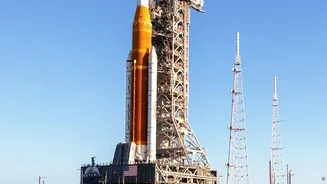
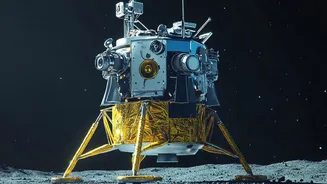
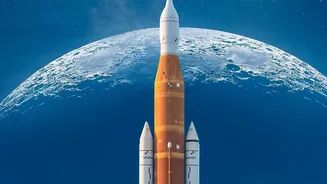
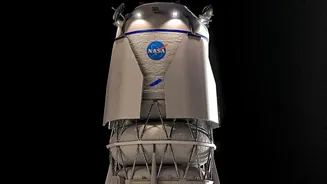
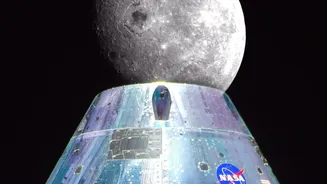
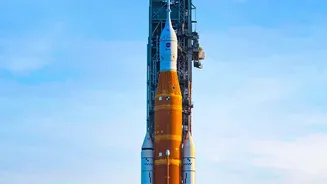
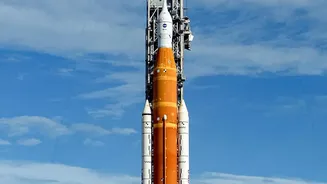
These breakthroughs aren't just happening in a lab; they are being driven by the concrete goals of the Artemis program. NASA's plan to establish a sustained human presence on the Moon is the perfect testbed for the technologies that will one day take us to Mars. The Orion spacecraft and the planned lunar Gateway will incorporate the next generation of life support systems, designed for longer missions with less reliance on Earth. Every component, from water recyclers to CO2 scrubbers, must be hyper-reliable, lightweight, and energy-efficient. The lessons learned and the systems proven on the Moon during the Artemis missions will be the direct blueprint for the equipment that will keep the first Martian explorers alive, paving the way for eventual settlements.